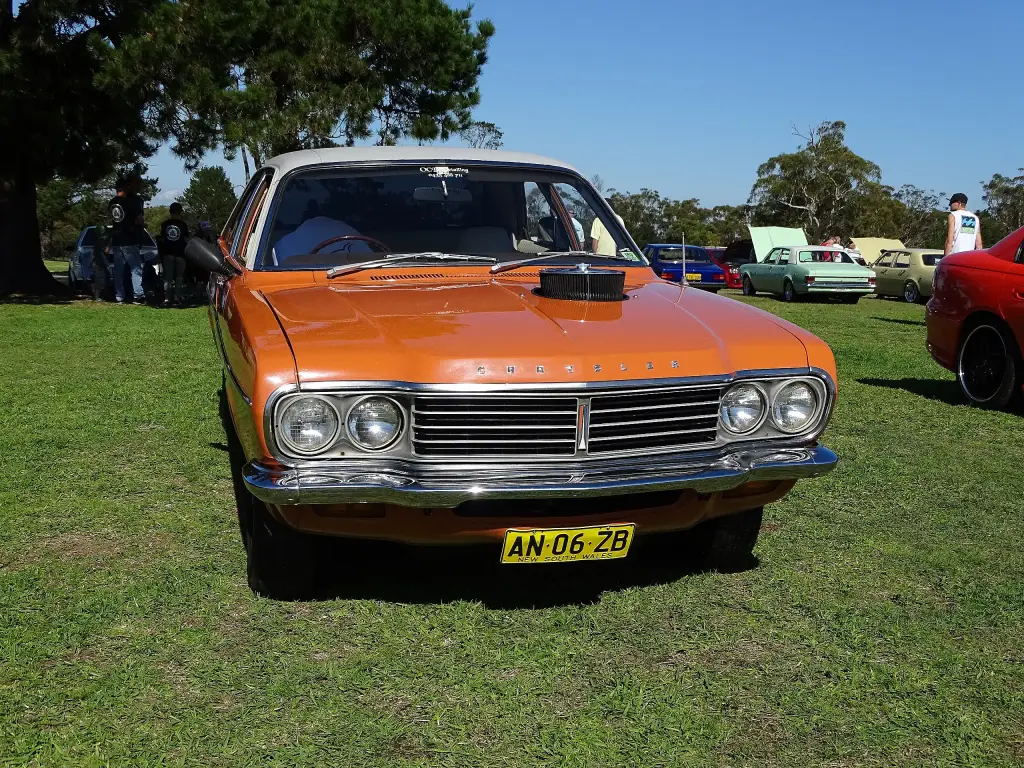
The Chrysler Centura was a mid-size car produced by Chrysler Australia between 1975 and 1978. Based on Chrysler Europe’s Chrysler 180 but fitted with Australian-made Hemi six-cylinder engines, it was built in KB and KC series to the tune of 19,770 cars.
Chrysler Centura at a glance
| Production | 1975–1978 |
|---|---|
| Maker | Chrysler Australia |
| Base | Chrysler 180, imported bodies |
| Series | KB (1975–1977) and KC |
| Engines | 1,981 cc four; 3,523 cc and 4,014 cc Hemi sixes |
| Power | 122 hp four, 142 and 167 hp sixes (SAE) |
| Gearboxes | three-speed automatic, three- or four-speed manual |
| Trims | XL and GL |
| Built | 19,770 |
| Brakes | ventilated front discs on six-cylinder cars |
| Steering | rack and pinion, without power assistance |
History of the Chrysler Centura
Stretching the 180
Engineers from Chrysler Australia and Simca considered modifying a Chrysler 180 saloon and shortening the drivetrain so that the Australian six-cylinder Hemi engines could sit further back, but instead lengthened the nose, which Chrysler Australia felt made a more aggressive and better-looking car and meant fewer changes were needed to Australianise it. Additional changes were largely cosmetic: a new grille, headlights, bonnet, rear panel and tail lamps. A brake proportioning valve was fitted to all cars to reduce rear brake pressure when the nose dived under heavy braking and stop the back of the car sliding. Chrysler also tried a 5.2-litre American V8 but decided the body lacked the rigidity for it, so that version never reached production.
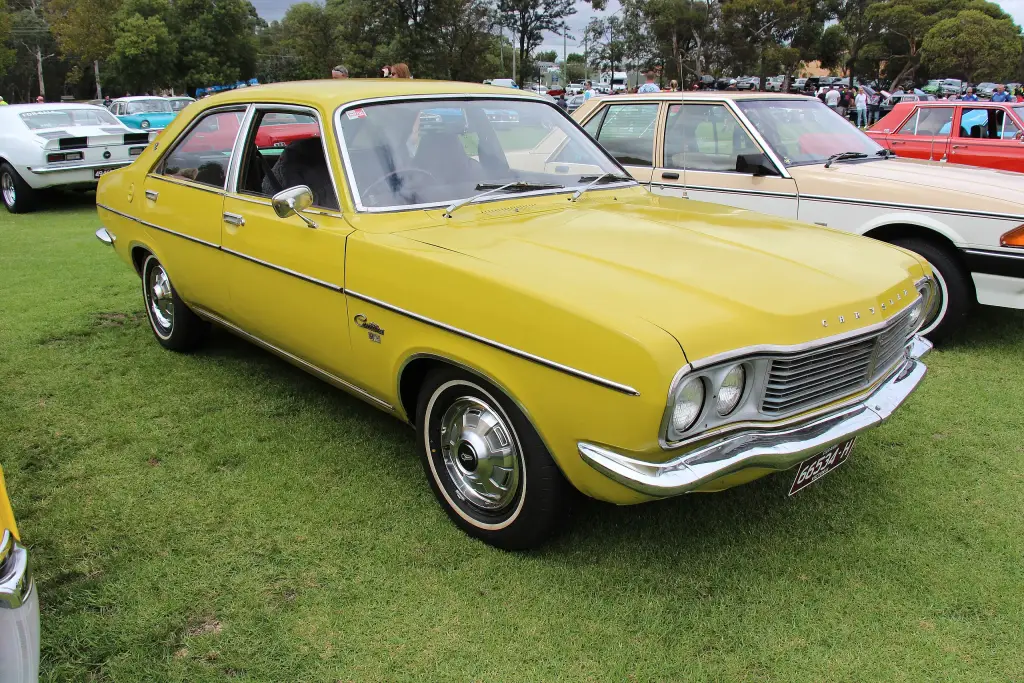
KB Centura
The KB cars assembled and sold in Australia from 1975 used the 1,981 cc version of the Simca four but were also available with Australian-made pushrod Hemi sixes of 3,523 and 4,014 cc, with BorgWarner three-speed automatic and three- or four-speed manual gearboxes. The four produced 122 hp (SAE) and the sixes 142 and 167 hp. The KB came in XL and GL trims, the latter better equipped, and all cars had a tachometer and clock, a low fuel warning light, rear bumper overriders and a console; vinyl roofs were optional. Four-cylinder cars used four-stud wheels and solid front discs, while sixes used a five-stud pattern and larger ventilated front discs with a tandem brake reservoir. All Centuras had rack-and-pinion steering but no power steering option.
Problems and the end
No Centura had a starter relay, so the cranking load went through the ignition switch and shortened its life, and traction in the wet was poor with an open differential, a relatively large Hemi six and little weight over the rear wheels. Importing bodies from France became complicated in 1973 by union action against French nuclear testing in the Pacific, and the bans lasted two years; a myth that early bodies spent months on wharves exposed to salt air was untrue, though the delay held up the launch. Centuras rust less than many cars of the period, but moisture collects below the windscreen, around the firewall, in the sills and behind the vinyl roof. Parts supply became harder after Chrysler Europe went bankrupt in 1978 and was taken over by Peugeot.
Design and features
- Hemi sixes in a European body: Australian 3.5- and 4.0-litre engines in a lengthened Chrysler 180 shell.
- Lengthened nose: a styling decision that also simplified local assembly.
- Brake proportioning valve: fitted to every car to keep the rear wheels from locking.
- Rack-and-pinion steering: standard across the range, though without power assistance.
- Local trim choices: XL and GL levels with tachometer, clock and optional vinyl roof.
Chrysler Centura versions
- KB Centura (1975–1977): 1,981 cc four or 3,523/4,014 cc Hemi six, in XL and GL trims.
- KC Centura: the later series, with Australian-made panels and a tachometer only in the Sports Pack.
- Centura Sports Package: body stripes, styled wheels, woodgrain instruments and Boca Raton cloth.
The Centura was developed from the European Chrysler 180 and used engines from the Chrysler Valiant, whose Hemi six it shared. More cars are in the Chrysler collection.
Video: 265 Hemi Chrysler Centura powerskid
Video by Realper4mance on YouTube.
Sources
- Chrysler Centura, English Wikipedia: development, models, engines, problems
- Chrysler Centura, Wikimedia Commons: photographs