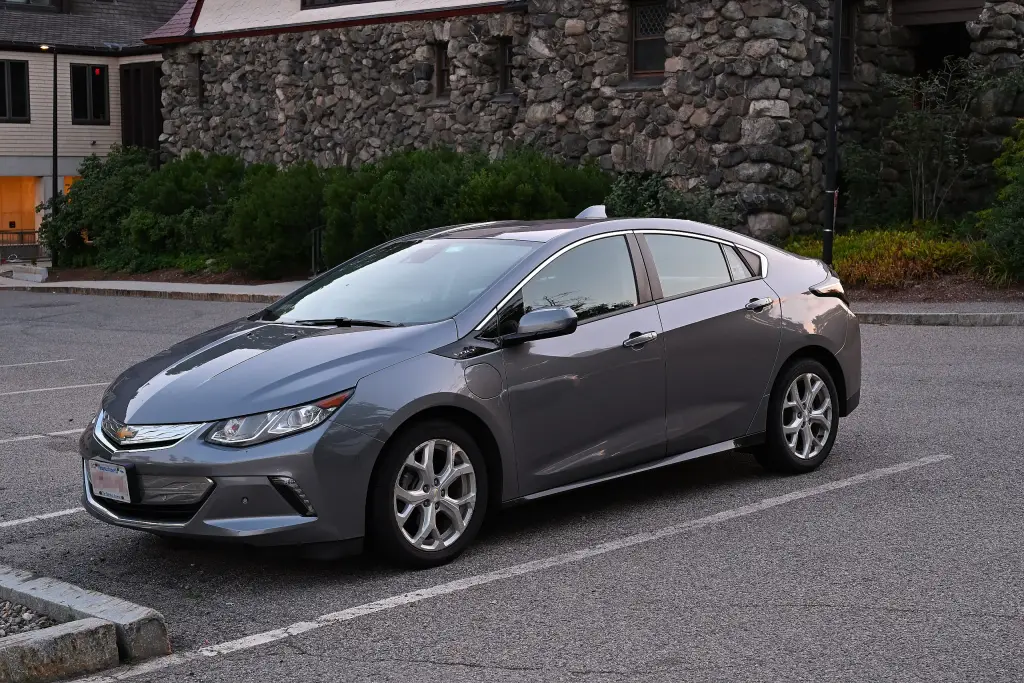
The Chevrolet Volt was a plug-in hybrid that General Motors sold from 2010 to 2019. It worked as an electric car until its battery ran down and then used a petrol engine to generate electricity, and for years it was the best-selling plug-in hybrid in the world.
Chevrolet Volt at a glance
| Production | 2010–2019, two generations |
|---|---|
| Class | Plug-in hybrid, compact car |
| First US sales | mid-December 2010 |
| Electric range, 2013–2015 | 38 miles (61 km) under the EPA cycle |
| Electric range, second generation | 53 miles (85 km) |
| Second generation on sale | October 2015, as a 2016 model |
| Other names | Holden Volt, Opel and Vauxhall Ampera, Buick Velite 5 |
| Global sales | about 177,000 Volt and Ampera cars by October 2018 |
| US sales | 157,054 Volts through the end of 2019 |
| Production ended | February 2019 |
History of the Chevrolet Volt
Sales of the first-generation Volt began in the United States in mid-December 2010, followed by some European countries and other markets in 2011. Global combined sales of the Volt and Ampera family reached about 177,000 by the end of October 2018, with the United States the leading market at 157,054 Volts through the end of 2019, followed by Canada with 16,653. Just over 10,000 Opel and Vauxhall Amperas had been sold in Europe by June 2016. Until December 2018 the Volt and Ampera family was the world’s best-selling plug-in hybrid, and when it was discontinued the Volt was still the top-selling plug-in hybrid in the American market.
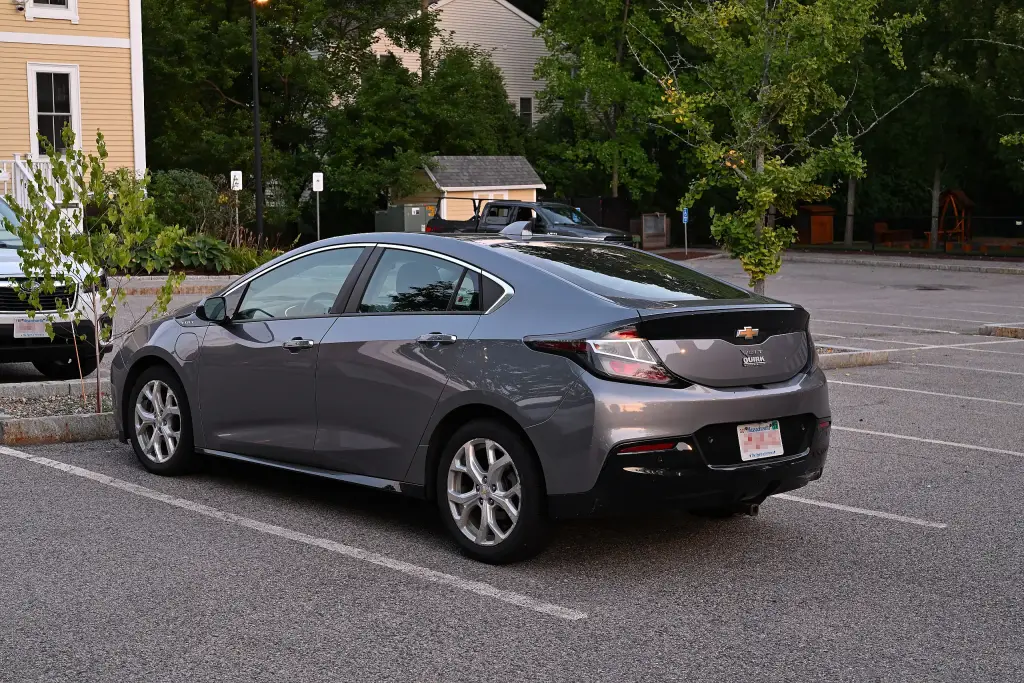
The Volt operated as a pure battery electric vehicle until its battery charge dropped to a set threshold, after which its internal combustion engine drove a generator to extend the range. At high speeds on petrol the engine could be linked mechanically to the gearbox through a clutch, improving efficiency by 10 to 15 percent, and regenerative braking also contributed to the on-board generation of electricity. Under the EPA cycle the 2013 to 2015 Volt had an all-electric range of 38 miles (61 km) and a combined rating of 62 mpg equivalent.
The second generation improved both the battery system and the drivetrain, raising the all-electric range to 53 miles (85 km), the fuel economy in charge-sustaining mode to 42 mpg and the combined all-electric rating to 106 MPG-e from 98. Deliveries in the United States and Canada began in October 2015 as a 2016 model. The car was also sold as the Holden Volt in Australia and New Zealand, the Buick Velite 5 in China, and with a different front end as the Opel Ampera in Europe and the Vauxhall Ampera in Britain. Production ended in February 2019.
Design and features
- Electric first: the petrol engine generated electricity rather than driving the wheels in normal use.
- Range extension: the engine could be clutched to the gearbox at high speed for efficiency.
- Second-generation range: 53 miles of electric running, up from 38.
- Sold under four brands: Chevrolet, Holden, Opel/Vauxhall and Buick.
Chevrolet Volt versions
- First generation (2010–2015): 38 miles of EPA electric range.
- Second generation (2016–2019): 53 miles of electric range and better economy.
- Opel and Vauxhall Ampera: the European version with its own front end.
- Holden Volt and Buick Velite 5: the Australian and Chinese versions.
The Volt came after the EV1 in GM’s electric history and was joined by the Chevrolet Bolt, a pure electric car, while the Spark EV offered a smaller alternative.
Video: Chevrolet Volt test
Video by DW Deutsch on YouTube.
Sources
- Chevrolet Volt, English Wikipedia: production, sales, technology, range, other names