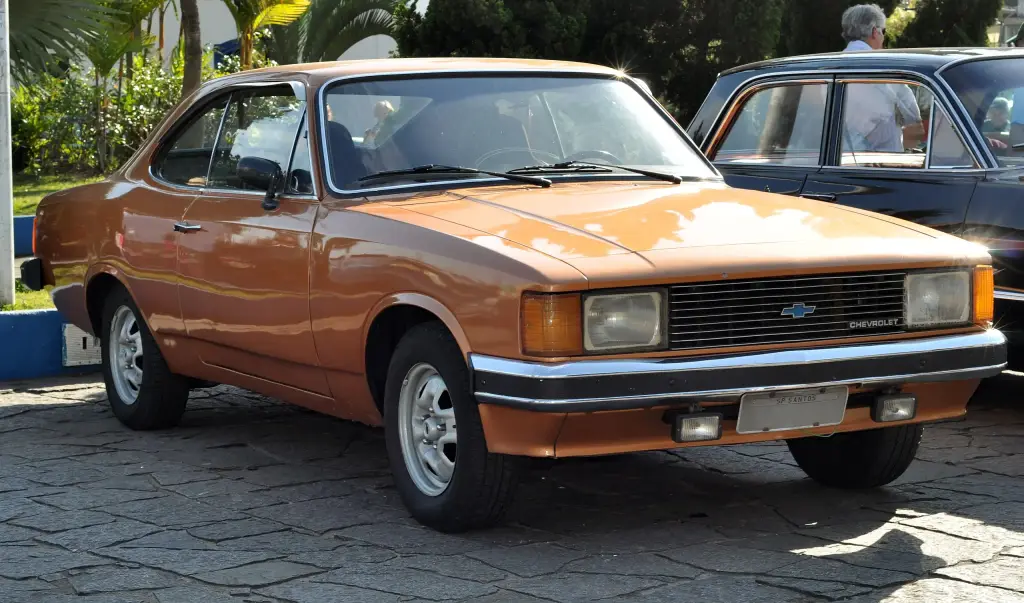
The Chevrolet Opala was the first passenger car built by General Motors do Brasil and the company’s mainstay in the country for almost a quarter of a century. Sold from 1968 to 1992, it combined German Opel bodies with local styling and American-derived engines.
Chevrolet Opala at a glance
| Production | 1968–1992 |
|---|---|
| Maker | General Motors do Brasil |
| Based on | Opel Rekord C and Opel Commodore A |
| Body styles | Sedan, coupé, Caravan station wagon |
| Total built | about one million |
| Main engine | 250 cu in (4.1 L) six |
| Luxury versions | Comodoro from 1975, Diplomata from 1980 |
| Replaced by | Chevrolet Omega in 1992 |
| Users | Brazilian Federal Police, taxi drivers, racing teams |
History of the Chevrolet Opala
The Opala was derived from the German Opel Rekord C and Opel Commodore A, but used local styling and engines based on North American designs. It was the first passenger car that General Motors do Brasil built, and over 24 years the company made about a million of them, in sedan, coupé and Caravan station wagon form. The range was replaced in 1992 by the Chevrolet Omega, another Opel-derived project.
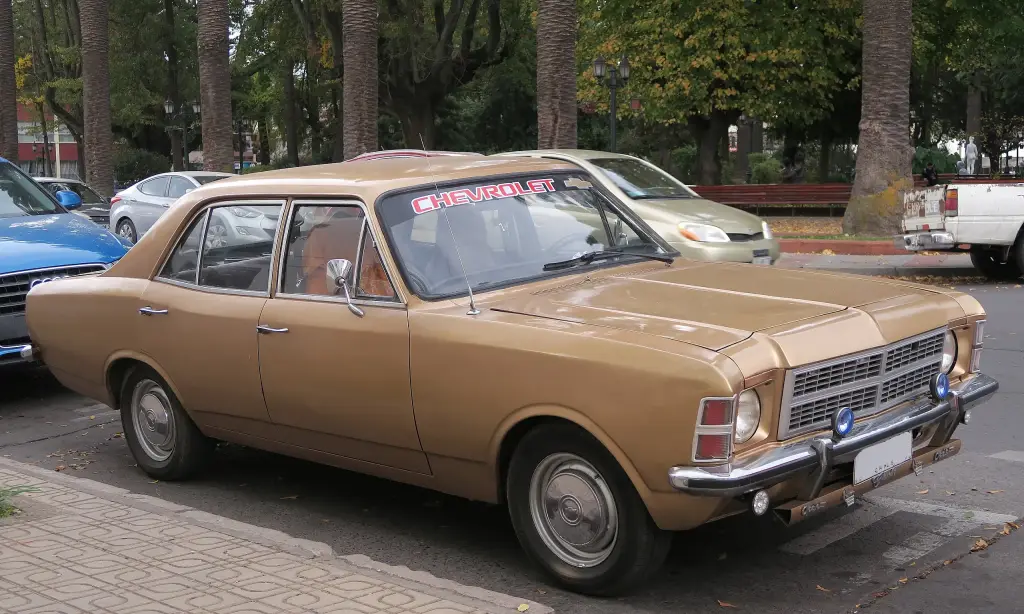
The Opala was a working car as much as a family car. The Brazilian Federal Police used Opalas for many years, and the military government issued them to its agents through the 1970s. Their reliability and easy maintenance made them a favourite of taxi drivers, and they were popular on racetracks too. A luxury version, the Chevrolet Comodoro, was added in 1975 and became the intermediate level in 1980 when the more expensive Chevrolet Diplomata arrived.
The Opala’s long-lived 250 cu in (4.1-litre) engine outlasted the car itself and was used in the Chevrolet Omega from 1995 to 1998 in fuel-injected form. Some of the Opala’s components and chassis went into other Brazilian cars, including the Santa Matilde, the Puma GTB and the Fera XK, a Jaguar XK replica. The Opala coupé stayed a pillarless hardtop into the late 1980s, long after American makers had dropped the body style.
Design and features
- Opel bones: based on the Rekord C and Commodore A but with local styling and engines.
- Long service: 24 years of production and about a million cars built.
- 4.1-litre six: an engine that outlived the car and was used in the Omega.
- Pillarless coupé: kept a body style American makers had abandoned.
Chevrolet Opala versions
- Opala sedan: the four-door family car.
- Opala Coupé: the pillarless two-door, popular on the track.
- Opala Caravan: the station wagon version.
- Comodoro and Diplomata: the luxury versions from 1975 and 1980.
The Opala was the Brazilian flagship before the Chevrolet Monza and belongs with the other Latin American cars in the Chevrolet collection.
Sources
- Chevrolet Opala, English Wikipedia: origins, production, versions, engine