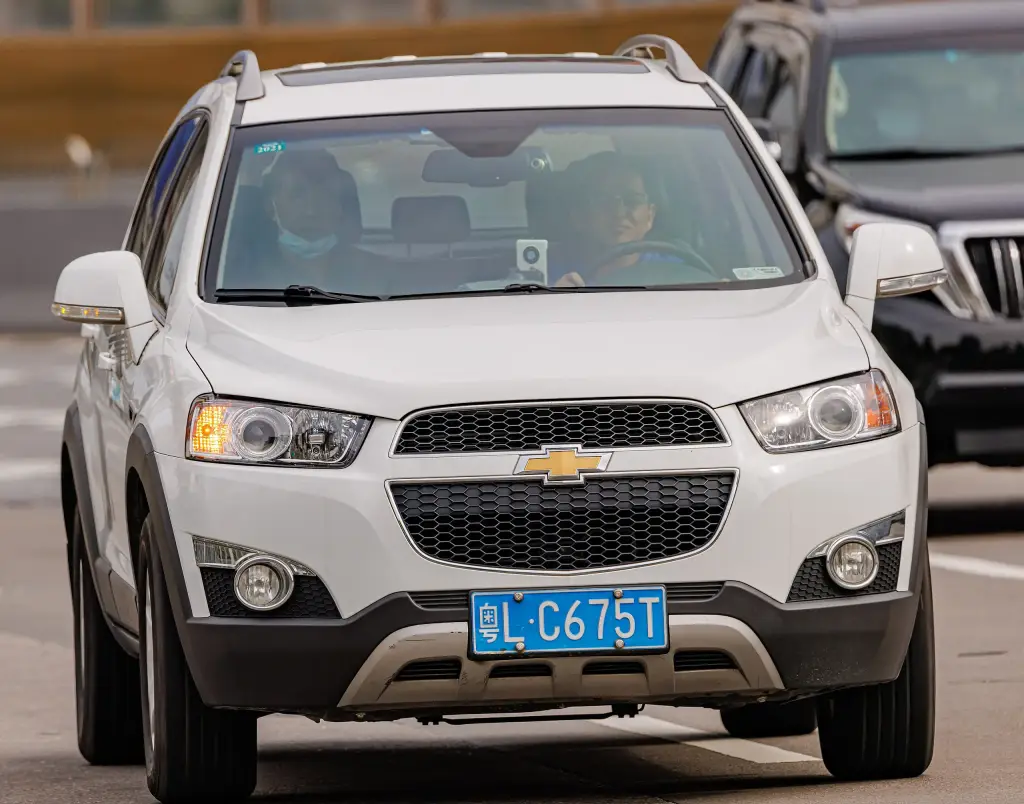
The Chevrolet Captiva is a compact crossover SUV that General Motors launched in 2006. Developed by GM Korea from the 2004 S3X concept, it was sold worldwide under several names, offered five or seven seats, and stayed in production until 2018, when the Equinox replaced it.
Chevrolet Captiva at a glance
| Production | 2006–2018 for the first generation |
|---|---|
| Class | Compact crossover SUV |
| Platform | GM Theta, derived from the 2004 S3X concept |
| Developer | GM Korea, formerly GM Daewoo |
| Seats | Five or seven |
| Drive | Front-wheel drive, with optional active all-wheel drive |
| Engines | 2.4-litre petrol four, 3.2-litre Holden V6, 2.0 and 2.2-litre turbo-diesel |
| Other names | Holden Captiva, Daewoo Winstorm |
| Euro NCAP | four stars |
| Second generation | rebadged Baojun 530, from 2018 |
History of the Chevrolet Captiva
The Captiva was developed at GM Daewoo’s design centre in Bupyeong-gu, Incheon, on the GM Theta platform, and its styling came from the 2004 Chevrolet S3X concept shown at the Paris Motor Show. Launched in 2006, it was sold internationally as the Chevrolet Captiva, in Australia and New Zealand as the Holden Captiva, and in South Korea as the Daewoo Winstorm until the Daewoo brand was dropped in 2011. It shared its underpinnings with the Opel and Vauxhall Antara and the second-generation Saturn Vue, and unlike those it could be ordered with a third row of seats.
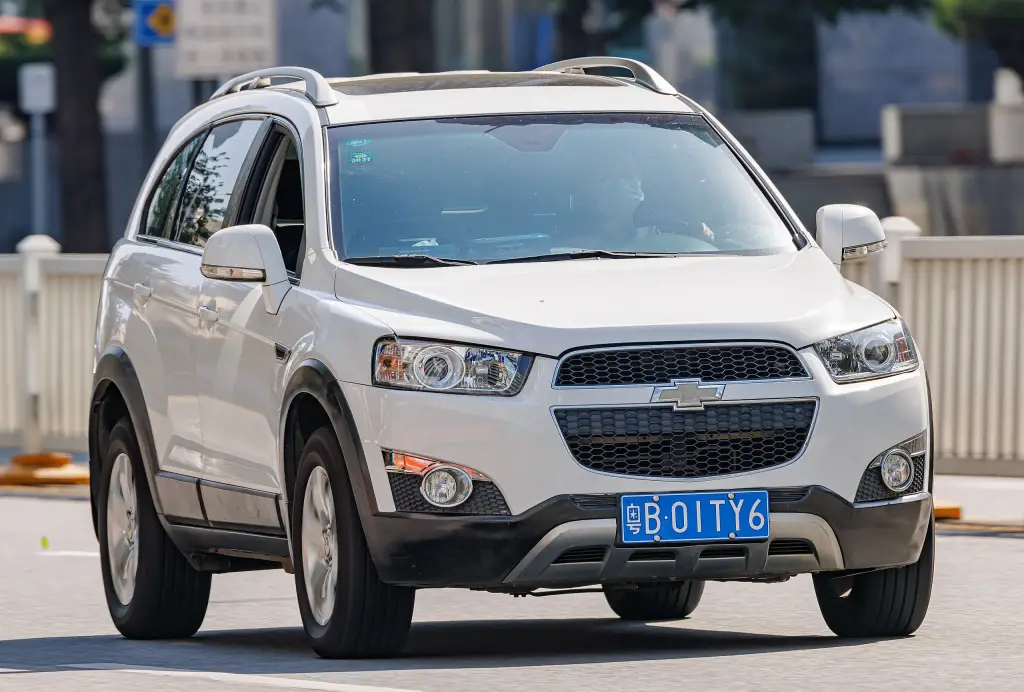
The Captiva came with front-wheel drive or an optional active all-wheel-drive system that worked with the stability control and anti-lock brakes, sending drive to the rear only when traction was lost. Engines were supplied by Holden in Australia, starting with a four-cylinder petrol and the 3.2-litre Alloytec V6, with a 2.0-litre turbo-diesel from VM Motori added later and enlarged to 2.2 litres with 163 or 184 PS. Standard safety equipment included anti-lock brakes, stability control, seatbelt pretensioners and front airbags, and Euro NCAP gave the car four stars out of five.
A facelifted range arrived in the second quarter of 2011 with a new front end resembling the Aveo, LED turn signals in the mirrors, redesigned wheels and revised side vents. A second facelift was unveiled at the Dubai motor show in November 2015 and went on sale in 2016 with new LED headlamps, a new grille and bumper and a redesigned dashboard, while keeping the same body panels; the V6 was no longer sourced from Australia. Production of the first generation ended in 2018 and the Equinox took its place, while the second-generation Captiva, a rebadged Baojun 530 from China, was introduced in Colombia in November 2018 and in Thailand in March 2019.
Design and features
- Seven seats: the Captiva offered a third row that its Opel Antara and Saturn Vue relatives did not.
- Active all-wheel drive: front-wheel drive in normal use, with rear drive engaged automatically when traction is lost.
- Holden engines: the Australian-built Alloytec V6 was the largest engine in the range.
- Facelifts: a 2011 restyle and a 2016 update that kept the original body panels.
Chevrolet Captiva versions
- Five-seat and seven-seat versions: the choice that set the Captiva apart in its class.
- 2.0 and 2.2 VCDi diesels: the VM Motori units with 163 and 184 PS.
- Holden Captiva and Daewoo Winstorm: the Australian and South Korean names.
- 2016 facelift: LED headlamps, new dashboard, and the end of the Australian V6.
The Captiva was sold alongside the smaller Chevrolet Aveo and shared its platform with the Chevrolet Trax generation that followed. More cars are in the Chevrolet collection.
Sources
- Chevrolet Captiva, English Wikipedia: development, engines, facelifts, markets