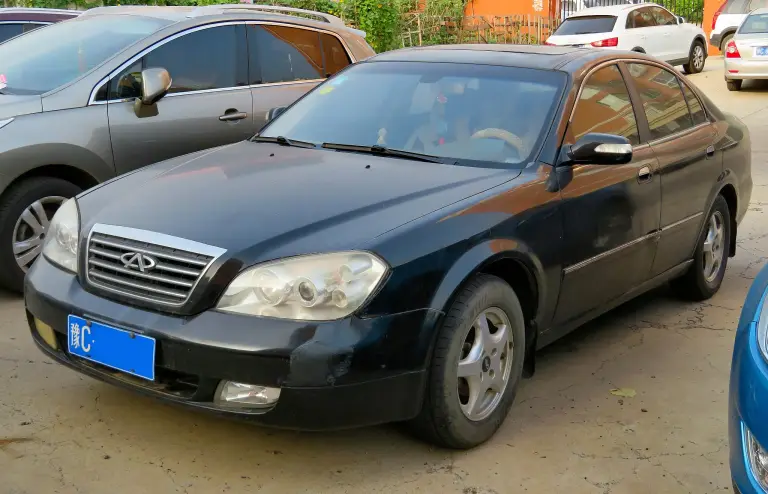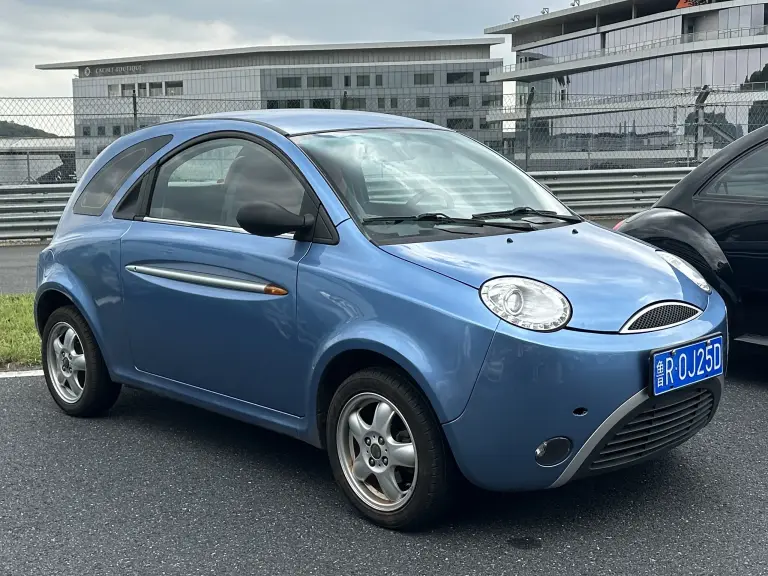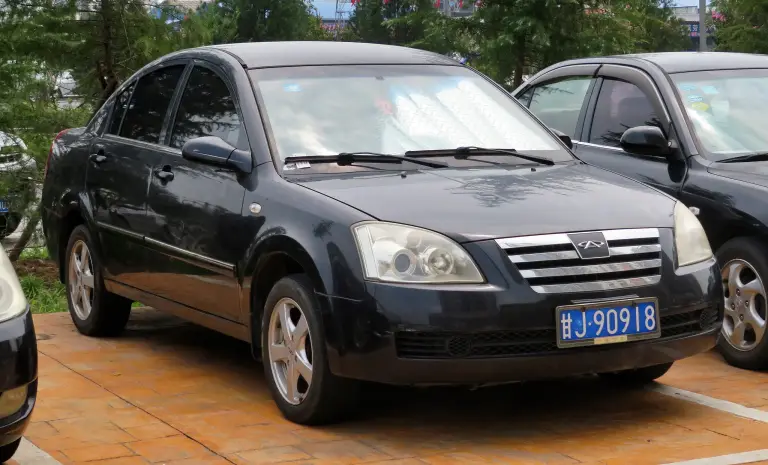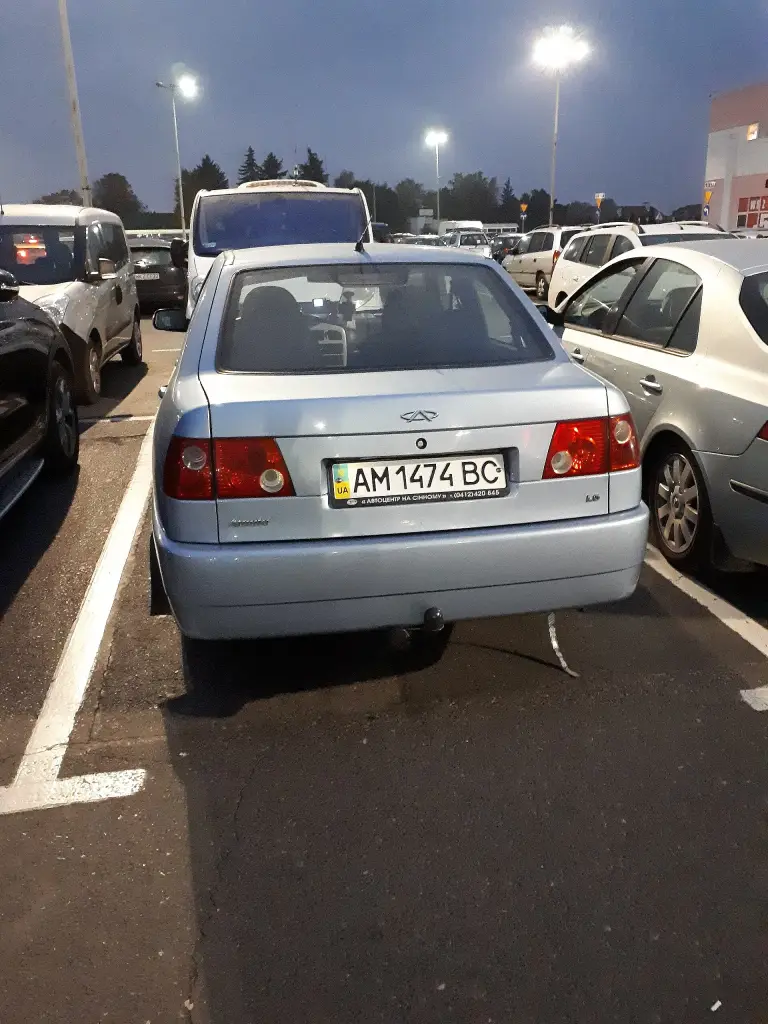
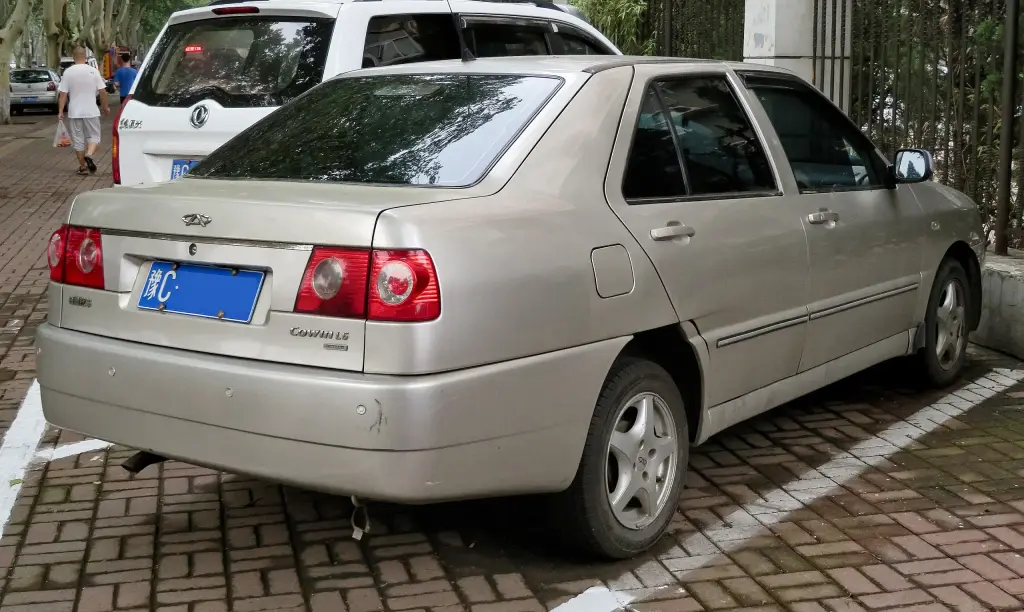
The Chery Amulet is a compact car that Chery produced from 2003 to 2010, also sold as the Chery Cowin, the A15 or the Flagcloud. It was a restyled version of the company’s first car, the Fulwin, and was itself an unofficial copy of the first-generation SEAT Toledo. In Russia it was assembled at Avtotor and later at TagAZ as the Vortex Corda.
Chery Amulet at a glance
| Maker | Chery Automobile, Wuhu, China |
|---|---|
| Production | 2003–2010 in China; 2003–2012 for Russia |
| Also called | Chery Cowin, Chery A15, Flagcloud |
| Basis | Chery Fulwin, a copy of the SEAT Toledo Mk1 |
| Body | five-door liftback |
| Engines in Russia | 1.6 SOHC, 87 hp (Euro-2) and 94 hp (Euro-3) |
| Other engines | 1.6-litre Tritec built in Brazil |
| Gearbox | five-speed manual; ZF automatic and CVT on some markets |
| Russia | Avtotor 2006–2008, Vortex Corda at TagAZ 2010–2012 |
| Exports | more than 30 countries |
| Facelift | Cowin 2, sold from 2010 to 2016 |
History of the Chery Amulet
From the Fulwin
The Amulet was launched in August 2003 as the successor of the Chery A11, and it was a restyled version of that car: the Fulwin was itself a badge-engineered first-generation SEAT Toledo, built by the Spanish company from 1991 to 1999. Chery also called it the Cowin, the A15 or the Flagcloud, and exported it to more than 30 countries in South-East Asia, Latin America and Eastern Europe. In China it was discontinued in 2010 and replaced by the Cowin 2, which stayed on sale until 2016.
Russian assembly
Between 2006 and 2008 the car was assembled in semi-knocked-down form at the Avtotor plant in Kaliningrad; assembly stopped in March 2008 when the plant lost the customs privileges of the Kaliningrad special economic zone. From the end of 2010 a restyled version was built at TagAZ in Taganrog under the name Vortex Corda, and it remained in production until the plant went bankrupt in 2012. Russian cars were offered with two 1.6-litre SOHC engines of 87 hp (Euro-2) and 94 hp (Euro-3) and a five-speed manual gearbox, while other markets also received a Brazilian-built 1.6-litre Tritec engine and automatic or CVT transmissions.
Safety
The Amulet had anti-lock brakes and electronic brake-force distribution, but it was one of the poorest performers in Russian crash testing. The magazine Autoreview found that a Cowin tested to the Euro NCAP standard did worse than the one-star Brilliance BS6, and that the dummy had to be dismantled to be removed from the car; the magazine called for the model to be withdrawn from the market. Its own ARCAP test in 2007 produced the same conclusion.
Design and features
- Toledo origins: an unofficial copy of the first-generation SEAT Toledo, as was the Fulwin before it.
- Liftback body: five doors and a large tailgate.
- Russian assembly: built at Avtotor and later at TagAZ as the Vortex Corda.
- Poor crash results: criticised by Autoreview in both Euro NCAP-style and ARCAP testing.
Chery Amulet versions
- Chery Amulet: the export name used in Russia and other markets.
- Chery Cowin and A15: the Chinese and international names.
- Cowin 2: the facelifted car sold from 2010 to 2016.
- Vortex Corda: the Russian-built version from 2010 to 2012.
The Amulet was the successor of the Chery Fulwin, the first car of the brand, and was replaced in the range by the Chery A13. More models are in the Chery collection.
Video: Обзор от NormAvto: Chery Amulet 1.6 (94 л.с.)
Video by NormAvto on YouTube.
Sources
- Chery Cowin (Amulet, A15), English Wikipedia: production years, Toledo basis, exports, safety
- Chery Amulet, Russian Wikipedia: Russian engines, Avtotor and TagAZ assembly, ARCAP test