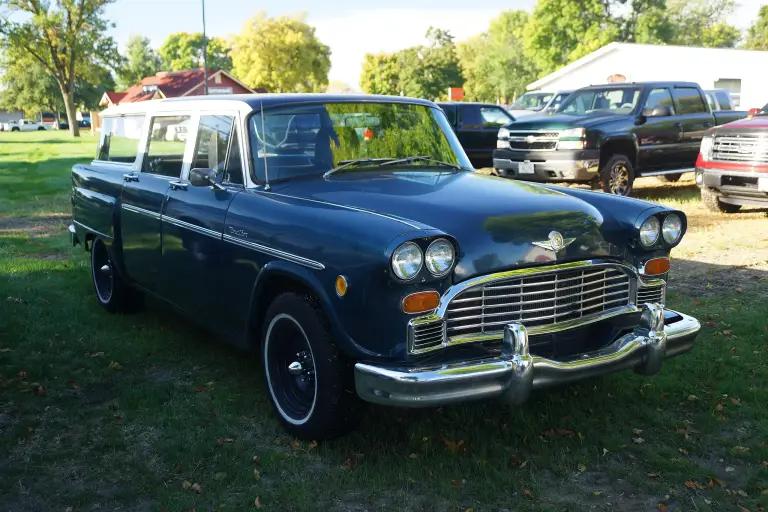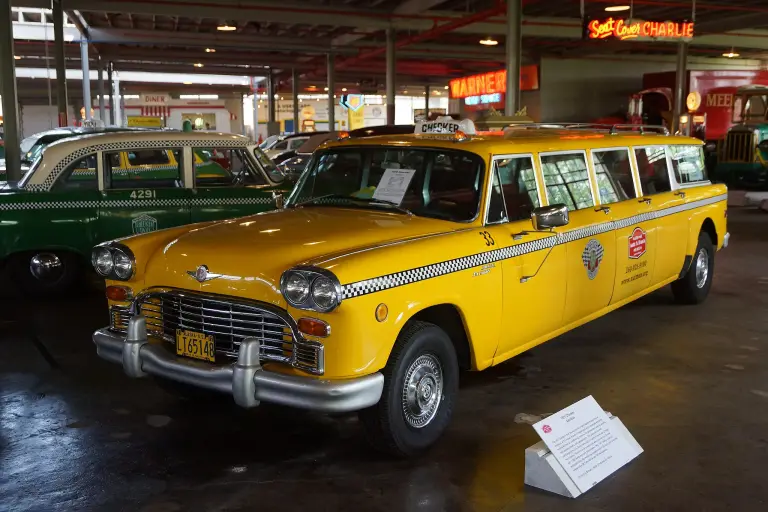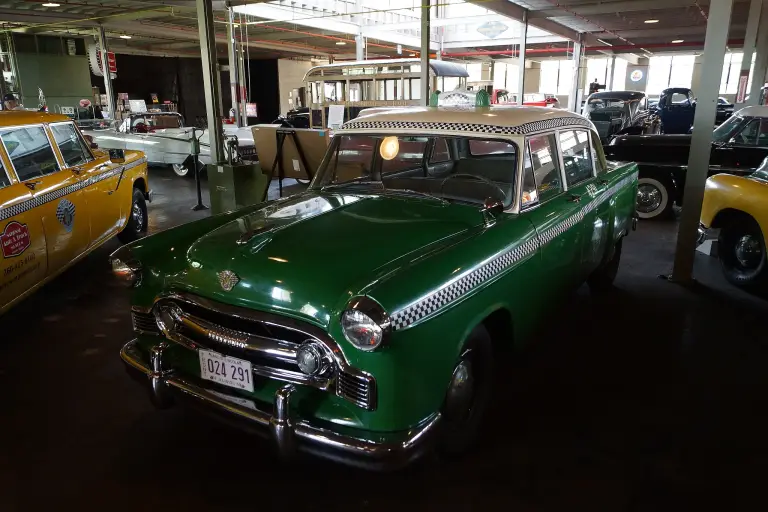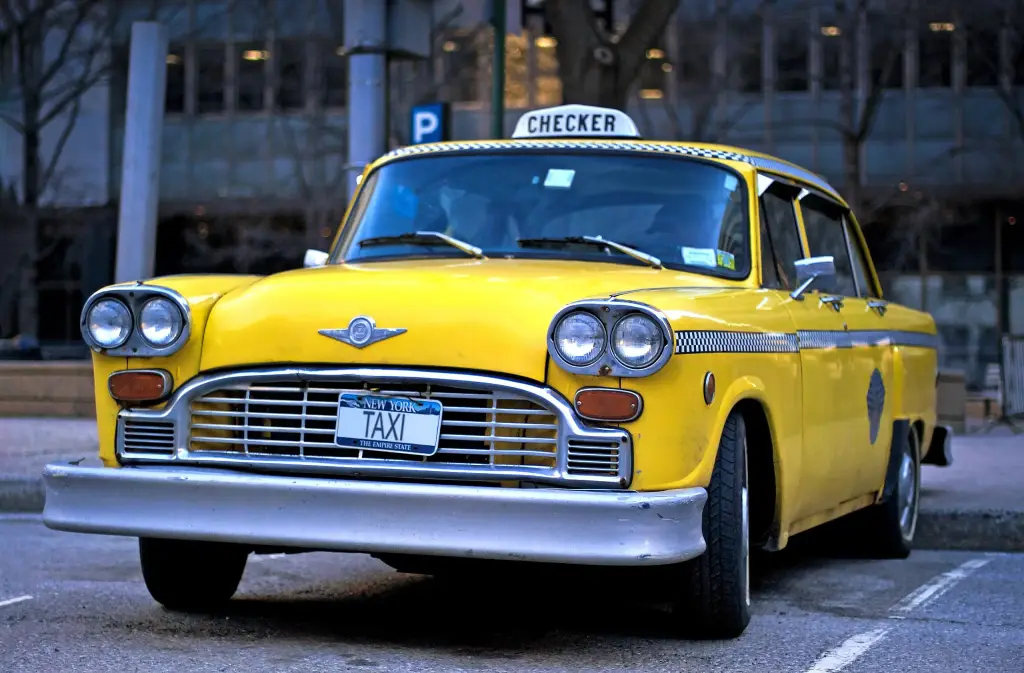
The Checker A11 denotes the chassis code Checker Motors used for its taxicabs from 1963. The cars it described were the direct descendants of the pre-war Model A, the purpose-built cab that established Checker as a builder of taxis rather than of ordinary passenger cars.
Checker A11 at a glance
| Maker | Checker Motors Corporation, Kalamazoo, Michigan |
|---|---|
| Chassis code | A11, used for taxis from 1963 |
| Predecessor | Checker Model A, introduced in 1939 |
| Model A production | approximately 1,250 built |
| Model A engine | Continental L-head inline six |
| Model A gearbox | three-speed manual |
| Model A features | open front fenders, rear-hinged doors, electric disappearing top in the landaulet |
| Model A replacement | new body in 1947 (Model A2), chassis and drivetrain retained |
| Survivors | one known Model A, restored in maroon and black |
Based on one main source: the English Wikipedia article on the Checker Model A, with the A11 chassis code taken from the article on the Checker Marathon.
History of the Checker A11
The story of the A11 begins with the Model A of 1939, a taxicab designed by Checker Motors Corporation for city fleets. It was offered in a new landaulet version with an electrically disappearing top, an early form of sunroof, and it came with an automatic signal warning pedestrians that the car was reversing. The Model A carried a Continental L-head inline six-cylinder engine and a three-speed manual gearbox, and, as with earlier Checkers, it had open front fenders and rear-hinged doors. Its stylised headlamp lenses sat inside heavy chrome bezels in the Art Deco manner.
About 1,250 Model As were produced and they became a common sight in big cities such as New York and Chicago. Hard service on rough streets wore them out quickly, and by the late 1940s most had gone; only one known survivor remains, restored in a maroon and black two-tone finish and kept in upstate New York. The dies for the Model A were lost after the Second World War, so in 1947 Checker replaced the body with a new design, the Model A2, while retaining the basic chassis and drivetrain.
The A-series that followed kept the same philosophy of a robust, slowly changing cab built for fleet work. After a minor facelift for 1963 the company reworked its chassis codes, and from then on A11 identified the taxi version of the Marathon line, while A12 was used for the passenger cars. That is why the A11 name is associated with the long-running Checker taxi of the 1960s and 1970s rather than with a single model year: it describes a specification for fleet cabs rather than a new body.
Design and features
- Purpose-built cab: the A-series was designed for taxi work, not adapted from a passenger car.
- Simple body: open front fenders and rear-hinged doors on the early cars, in the Checker tradition.
- Fleet specification: the A11 code marked the taxi chassis, with A12 reserved for passenger versions.
- Long life: the basic chassis and drivetrain survived the loss of the Model A body dies in 1947.
Checker A11 versions
- Model A (1939–1941): the original cab, with a Continental six and three-speed manual.
- Model A landaulet: a version with an electrically disappearing passenger-compartment top.
- Model A2 (1947): a new body on the retained Model A chassis.
- A11 taxi (from 1963): the chassis code for taxis of the Marathon generation; A12 was the passenger car.
The A11 belongs to the same family as the Checker taxi and the Checker Marathon, and the long-wheelbase airport version is described in the Checker Aerobus article. More cars are in the Checker collection.
Sources
- Checker Model A, English Wikipedia: Model A history, engine, production, survivor
- Checker Marathon, English Wikipedia: A11 chassis code for taxis from 1963