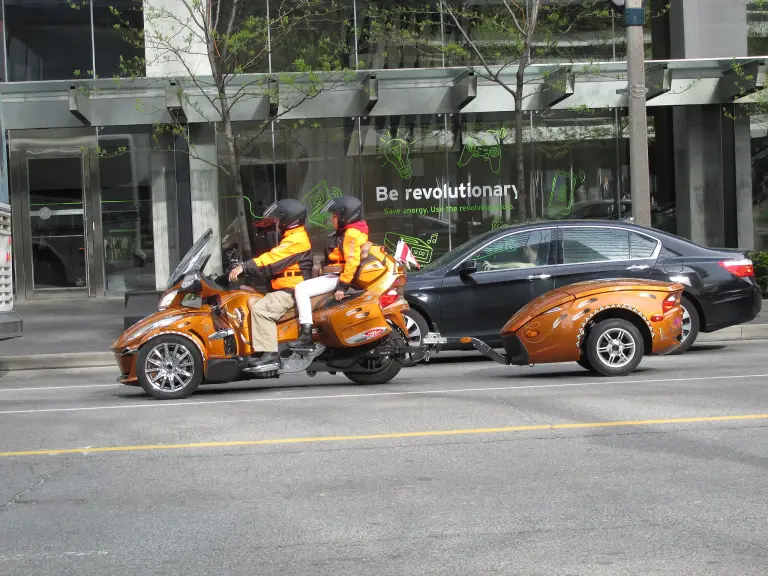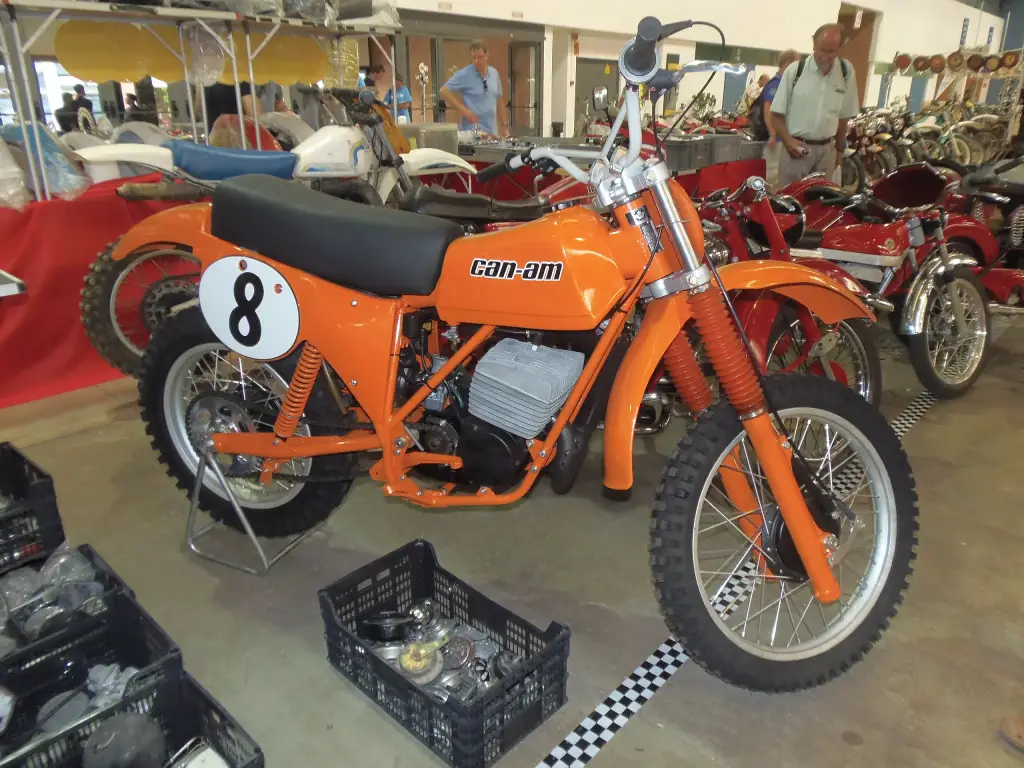
Can-Am is a Canadian subsidiary of Bombardier Recreational Products, founded in 1972 and based in Valcourt, Quebec. The company produced off-road motorcycles from 1972 to 1987; in 1997 it was reformed and began building all-terrain vehicles, followed in 2007 by the three-wheeled Spyder.
Can-Am Bombardier at a glance
| Founded | 1972, Valcourt, Quebec, Canada |
|---|---|
| Parent | Bombardier Corporation at first; today Bombardier Recreational Products (BRP) |
| Motorcycles built | 1972 to 1987 |
| Engines | Rotax, then another Bombardier subsidiary |
| Design team | Gary Robison, Bob Fisher, Camille Picard and Jeff Smith |
| Racing | ISDT medals and a 1-2-3 in the 1974 AMA 250cc motocross championship |
| Road racer | 1983, two 125 cc Rotax engines on a conjoined crankshaft |
| From 1983 | brand licensed and production moved to Armstrong-CCM, Lancashire |
| Revival | ATVs from 2006, the Spyder from 2007 |
| Electric models | Pulse and Origin announced in 2022, in production from 2024 |
based on one source, the English Wikipedia article on Can-Am motorcycles.
History of the Can-Am Bombardier
Beginnings
Can-Am was created as a subsidiary of the Bombardier Corporation in 1972. The barn that housed the original headquarters still stands at the Bombardier test facility within the Circuit Yvon Duhamel, a few miles south of Valcourt, Quebec: the right side held the design and engineering offices, the left side was used for fabrication. The name came out of a Bombardier employee competition based on the anticipated Canadian versus American market, and because a Can-Am racing series already existed, the company had to buy the rights to the name.
The first motorcycles followed the Bultaco principle of a standard-size frame that could take a range of differently sized engines. Engineers Gary Robison, Bob Fisher and Camille Picard, with former 500cc Motocross World Champion Jeff Smith, designed a competition motorcycle from scratch around engines supplied by the Austrian firm Rotax, another Bombardier subsidiary. The design used steering head bearing cups that allowed the steering head angle to be adjusted, mainly to simplify production on the assembly line.
Racing
The machines made an immediate impact, with riders winning gold, silver and bronze medals at the International Six Days Trial, the oldest annual competition sanctioned by the FIM. In 1974 the Can-Am factory racing team swept the AMA 250cc motocross national championship, with Gary Jones, Marty Tripes and Jimmy Ellis finishing first, second and third, although Tripes had raced most of the season on a Husqvarna before being hired for the last race. Can-Am enduro rider Skip Olson finished second to Dick Burleson in the 1976 AMA Enduro national championship. The racing success built the brand’s image and its reputation for high horsepower outputs. In 1983 Can-Am released a 250 cc road racing motorcycle, using two 125 cc Rotax motors with a conjoined crankshaft in a bespoke frame with an aluminium swingarm.
The end of the motorcycles
The 1973 oil crisis reduced sales of recreational vehicles and forced Bombardier to cut snowmobile and motorcycle production. The company shifted its priority to transit equipment and later to aircraft manufacturing, investment in product development fell sharply, and Can-Am could not keep pace with the Japanese makers as motocross technology advanced through the 1970s and 1980s. In 1983 Bombardier licensed the brand and outsourced development and production of the motorcycles to Armstrong-CCM Motorcycles of Lancashire, England. 1987 was the final year of Can-Am motorcycle production.
Revival
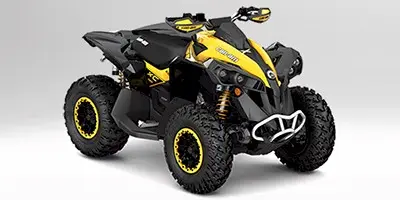
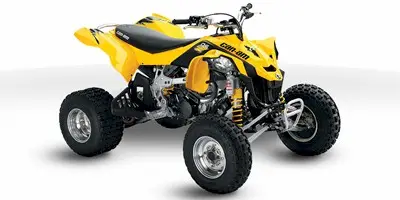
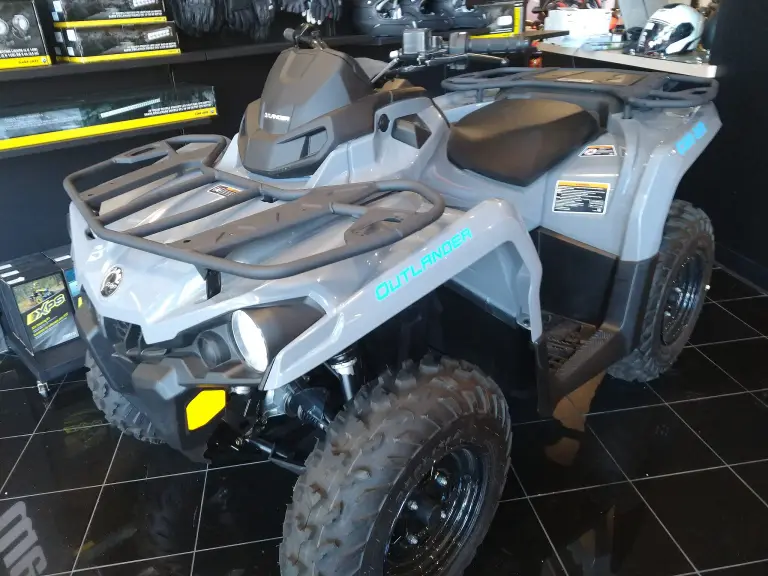
In 2006 Bombardier reintroduced the Can-Am brand with its Can-Am Off-Road range of all-terrain vehicles, and in 2007 the name was also used for the three-wheeled Can-Am Spyder. After 35 years without two-wheeled vehicles in production, Can-Am announced in March 2022 two new electric motorcycles, the Pulse, an electric naked-styled commuter, and the Origin, an electric adventure bike. They began production in 2024 and were released for the 2025 model year in two trim levels each; 2026 brought continued production at a reduced price, the high price having been the most consistent complaint about the previous model year.
Design and features
- Rotax power: the engines came from Rotax, another Bombardier subsidiary, and gave the brand its reputation for high horsepower.
- Adjustable steering head: bearing cups let the steering head angle be set, a design driven mainly by simpler assembly.
- One frame, many engines: the Bultaco principle of a standard-size frame that could take engines of different sizes shaped the first competition bikes.
- Racing image: ISDT medals and the 1974 AMA motocross title sweep established the marque in North America.
Can-Am Bombardier versions
- Competition motorcycles from 1972: off-road machines designed from scratch around Rotax engines.
- 1974 factory motocross bikes: the machines that finished first, second and third in the AMA 250cc championship.
- 1983 road racer: a 250 cc racer with two 125 cc Rotax engines on a conjoined crankshaft.
- Armstrong-CCM-built Can-Am, 1983–1987: the licensed and outsourced machines of the final years.
- Modern namesakes: the Off-Road ATV range from 2006, the Spyder from 2007 and the Pulse and Origin electric motorcycles from 2024.
The revived name is carried by the Can-Am Spyder, the Outlander, Renegade, Commander and DS. More in the Can-Am collection.
Sources
- Can-Am motorcycles, English Wikipedia: brand history, racing, production years, revival