CAIO Induscar is the Brazilian company that owns the Caio marque and builds its bus and coach bodies at Botucatu in the state of São Paulo. In 2017 it was described as the largest manufacturer of urban buses in Brazil by sales, with half of all buses sold in that segment. The marque itself dates from 1945, when the Companhia Americana Industrial de Ônibus opened in the Penha district of São Paulo.
CAIO Induscar at a glance
| Company | CAIO Induscar, owner of the Caio marque |
|---|---|
| Business | bus and coach body manufacture |
| Founded | 19 December 1945, as Companhia Americana Industrial de Ônibus |
| Founder | José Massa, an Italian immigrant |
| First works | Rua Guaiaúna, Penha, São Paulo |
| Botucatu plant | opened 1982; 400,000 m² site, 101,000 m² built |
| Capacity at Botucatu | up to 40 buses a day |
| Bankruptcy | decreed December 2000 |
| Induscar lease | from 25 January 2001 |
| Brand ownership | Induscar owner of the Caio marque since March 2009 |
| Busscar | plant and brand acquired by the group in 2017 |
| Exports | more than 50 countries |
| ISO certification | 2006 |
The models have no Wikipedia articles of their own; this page uses the Portuguese article on CAIO Induscar, which gives the company history and the production years of each model line. Based on one source.
History of the CAIO Induscar
The Companhia Americana Industrial de Ônibus was founded on 19 December 1945 in Rua Guaiaúna, in the Penha district of São Paulo, by the Italian immigrant José Massa, great-grandfather of the Formula One driver Felipe Massa. The works stayed at that address from 1945 until 1980 and produced thousands of bodies that were sold all over Brazil.
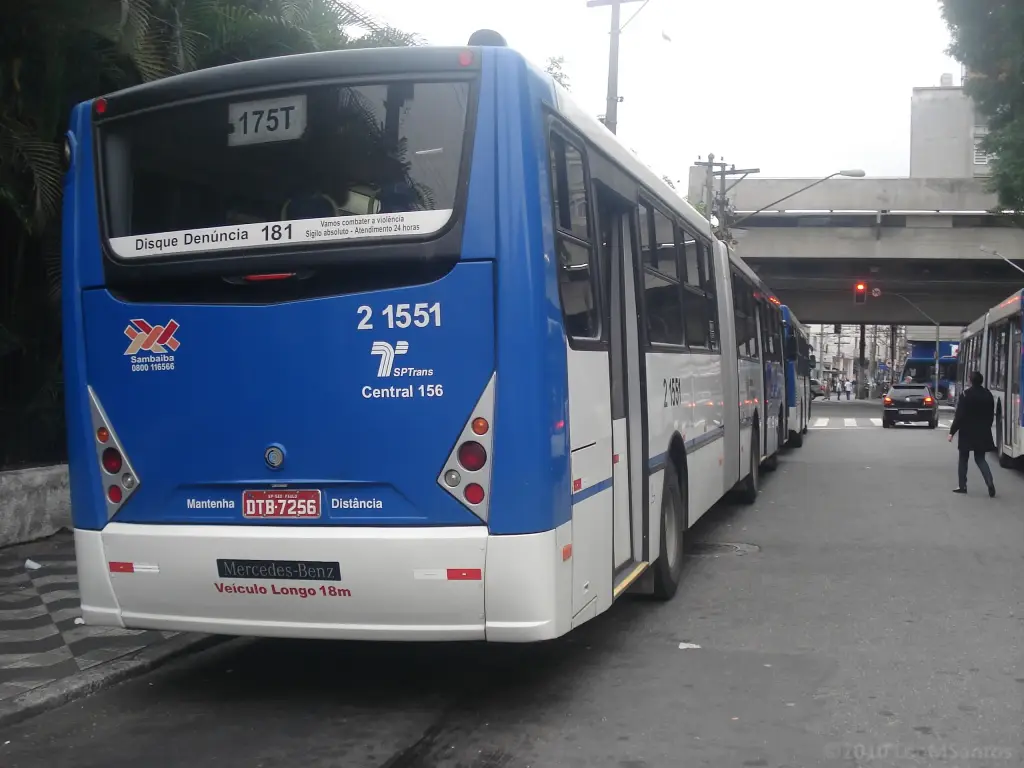
In 1982 the company opened a new plant at Botucatu in the interior of São Paulo, on a site of 400,000 m² with 101,000 m² built, able to turn out up to 40 buses a day. The model list of those decades reads as a history of Brazilian urban transport: the Gabriela I of 1974–1977 and Gabriela II of 1976–1984, the Amélia I of 1980–1988 and Amélia II of 1985–1988, the Vitória of 1988–1996 and the Alpha of 1995–1999, alongside the Carolina micro-buses of 1974–2000 and the Corcovado road coach of 1977–1984.
At the end of the 1990s the company ran into serious financial difficulty and its bankruptcy was decreed in December 2000. A court authorised the lease of the bankrupt estate, and on 25 January 2001 it was taken over by Induscar – Indústria e Comércio de Carrocerias Ltda., a company run by a group of investors. The four-year lease covered the use of the Botucatu works and of the Caio brand. In March 2009 Induscar became the definitive owner of the marque and of the factory.
The group invested again in 2013, buying the industrial complex and settling four companies there: Tecglass for tempered glass, CPA for aluminium processing, GR3 for aluminium distribution and CEAC, the administrative centre. In April 2013 it announced a new factory at Barra Bonita, also in São Paulo, with an investment of R$25 million; the plant began operating in early 2015 and created 500 direct and 3,000 indirect jobs. In 2017 partners and investors of the Caio Induscar group bought the works and brand of Busscar, the road-coach builder, to widen the group’s reach at home and abroad.
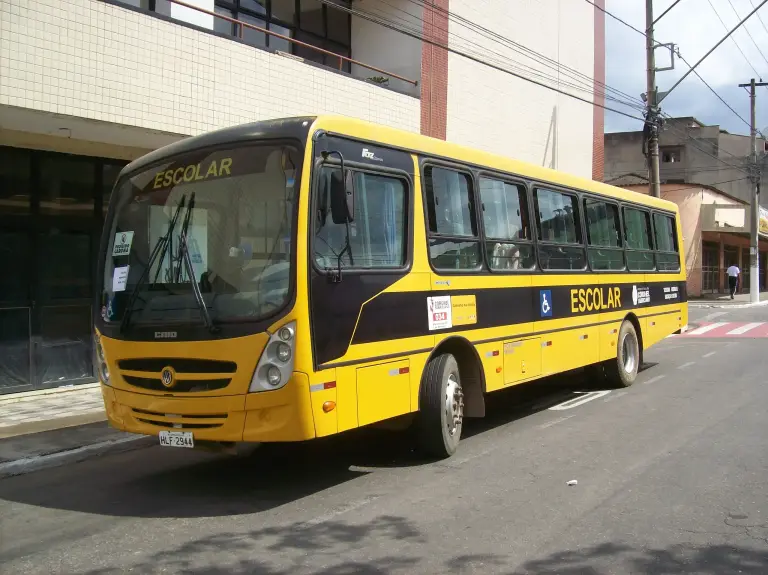
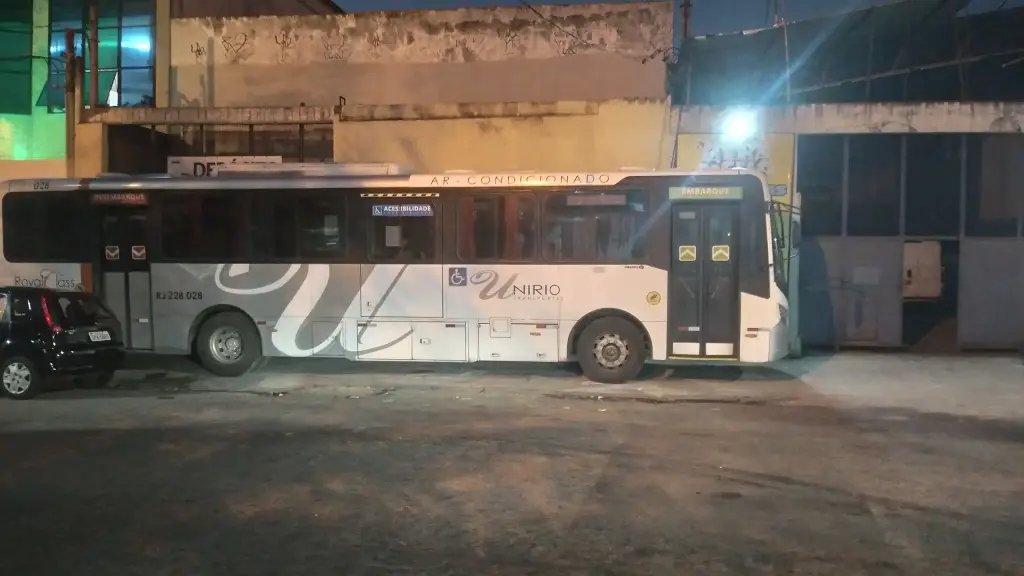
The modern range was built on two urban families. The Millennium arrived in 1997 and passed through five generations, from the Millennium I of 1997–2001 to the Millennium V of 2022, with articulated and BRT versions and, from 2022, the electric eMillennium. The Apache began with the S21 of 1999–2007 and is now in its Apache VIP line: VIP I of 2001–2009, VIP II of 2008–2012, VIP III of 2012–2014 and VIP IV of 2014–2022, followed by the VIP V and the electric eApache VIP. The Mondego covered the H/HA of 2005–2015 and L/LA of 2006–2015 and is still offered as the Mondego II for export. The road range was carried by the Giro 3200, 3400 and 3600 of 2002–2014 and the Solar 3200, 3400 and 3600 of 2013–2020, while the Foz has served the micro-bus and school market since 2005.
Caio bodies have been sold throughout Brazil and in South Africa, Angola, Argentina, Chile, Costa Rica, Ecuador, Honduras, Jordan, Lebanon, Mexico, Nigeria, Paraguay, Peru, the Dominican Republic, Tahiti and Trinidad and Tobago, among other markets; the company says it is present in more than 50 countries. Under the new group it was certified to ISO in 2006.
Design and features
- Urban range: the Apache VIP and Millennium families, in standard, articulated and BRT form.
- Micro-buses and midis: the Foz and the F2500 for school, tourism and charter work.
- Electric models: the eMillennium and eApache VIP joined the range in the 2020s.
- Own supply chain: glass, aluminium processing and distribution companies sit within the group.
- Export business: bodies sold in more than 50 countries, including several in Africa and Latin America.
CAIO Induscar versions
- Apache VIP: the main urban model since 2001, now in its fifth and sixth generations.
- Millennium: the other urban family, from 1997, with articulated and BRT versions.
- Mondego: urban body of 2005–2015, still built for export as the Mondego II.
- Foz: micro-bus body of 2005 onwards, used for school transport and charter.
- Giro and Solar: road-coach bodies of 2002–2014 and 2013–2020.
- Carolina and Gabriela: micro-bus and urban bodies of the 1970s and 1980s.
The micro-bus side of the range is described in the article on the Caio Foz. More pictures of Caio buses are in the Caio collection.
Sources
- CAIO Induscar, Portuguese Wikipedia: company history, plants, model list with production years, exports