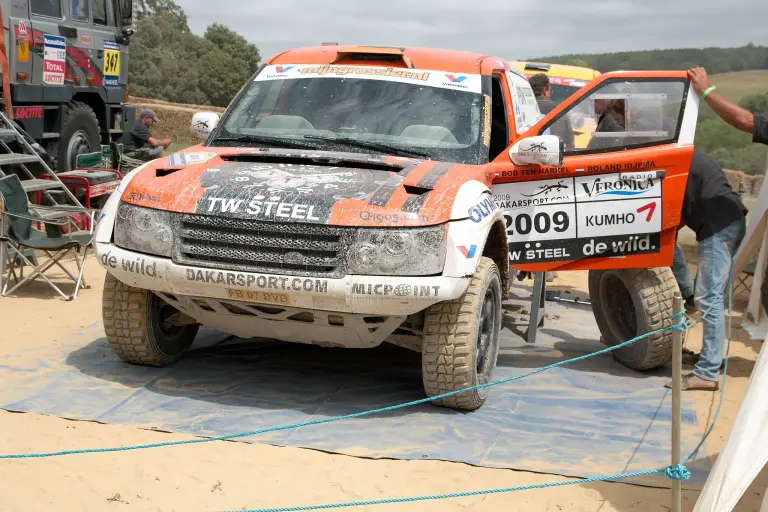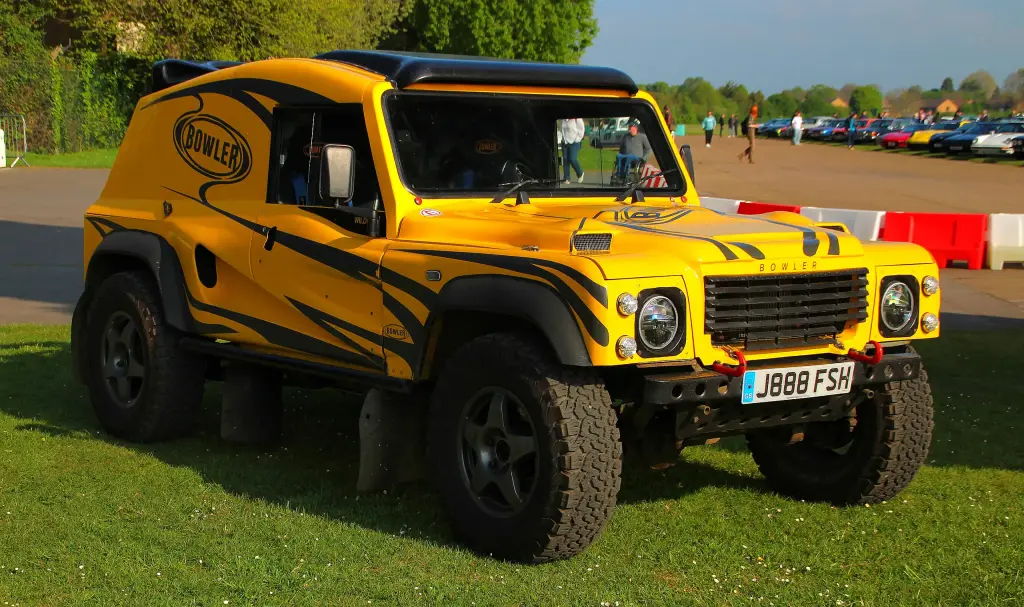
The Bowler Wildcat was an off-road vehicle made by the British firm Bowler Offroad from 1998 to 2007. It was an evolution of the earlier Bowler Tomcat and used some components from the Land Rover Defender, wrapped in a tubular spaceframe with an integral roll cage.
Bowler Wildcat at a glance
| Maker | Bowler Offroad, United Kingdom |
|---|---|
| Production | 1998–2007 |
| Predecessor | Bowler Tomcat |
| Successor | Bowler Nemesis |
| Chassis | tubular spaceframe with integral roll cage |
| Body | fibreglass panels |
| Suspension | Land Rover Discovery beam axles front and rear |
| Engines | 4.0, 4.6 or 5.0-litre V8; 2.2 or 2.5-litre turbodiesel |
| Example output | 221 PS (163 kW) and 400 Nm from the 4.6-litre V8 |
| Transmission | six-speed |
| Motorsport | Dakar Rally, Rallye des Pharaons |
Based on one source, the English Wikipedia article on the Wildcat. The Tomcat, the Wildcat’s predecessor, has no article of its own and is described here from the same page.
History of the Bowler Wildcat
From the Tomcat to the Wildcat
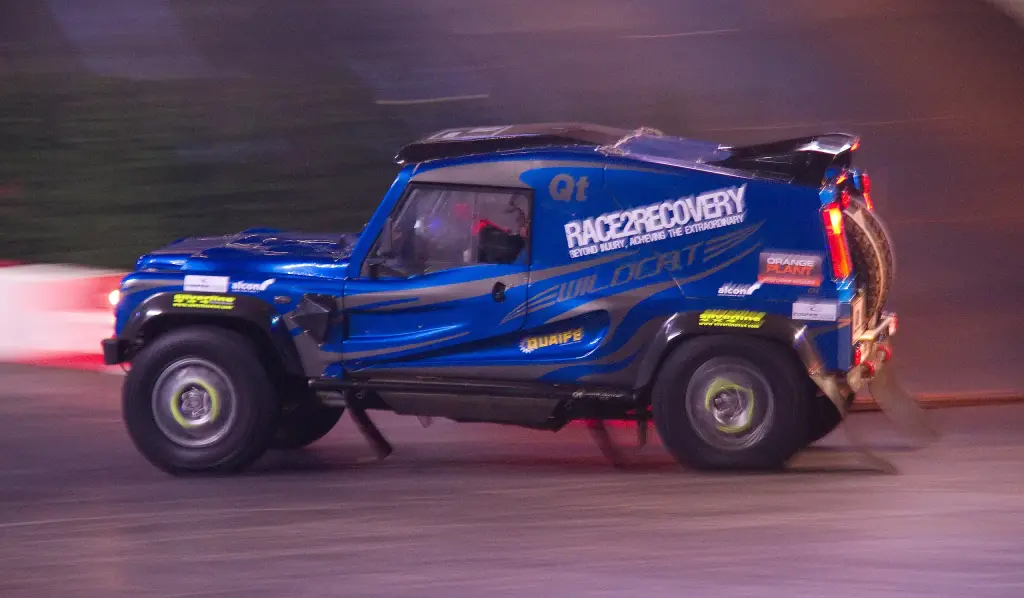
The Wildcat grew out of the Bowler Tomcat, a box-section chassis off-roader with a 100-inch wheelbase. The first Wildcat, the Wildcat 100, kept a tubular chassis with the same 100-inch wheelbase and the same body style as the Tomcat 100. The Wildcat 200 that followed was a bigger step: a completely new spaceframe with a 106-inch wheelbase and fibreglass body panels. The design borrowed components from the Land Rover Defender, which gave owners a familiar mechanical base for a competition car.
Racing and later life
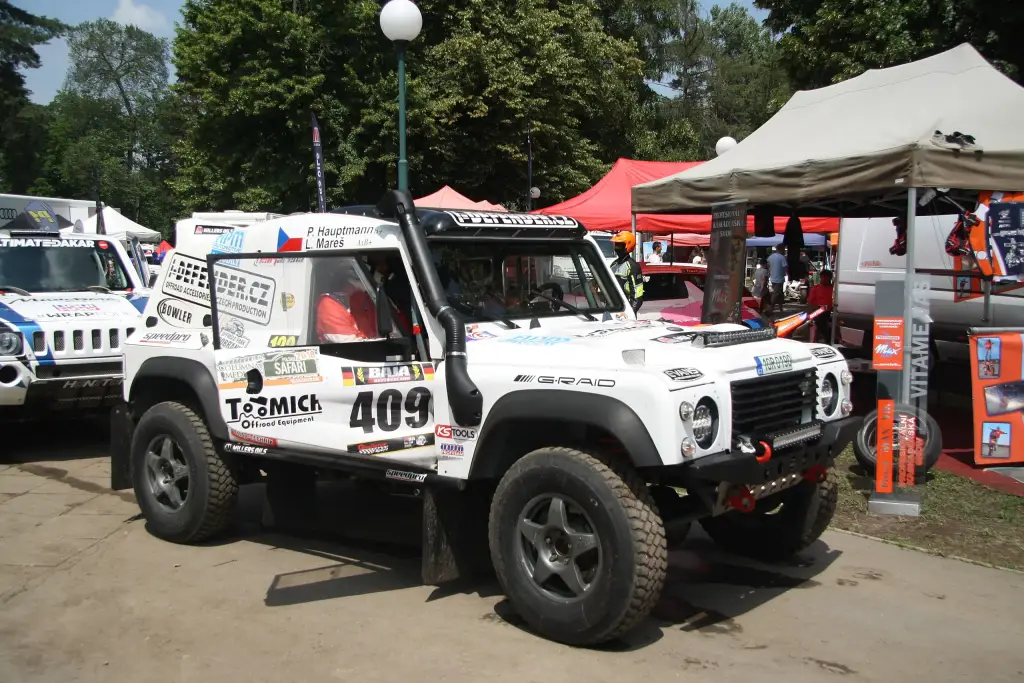
The Wildcat was entered in various off-road rally raids, most notably the Dakar Rally and the Rallye des Pharaons. In December 2007 Bowler sold the manufacturing rights to QT Services, so that existing owners would continue to be supported while Bowler concentrated on the newer Nemesis. QT Services has since continued to support owners in competitive events and has made further developments to the vehicle. In 2011 Supacat began marketing a militarised Wildcat in collaboration with QT Services; promotional material showed it with a Kongsberg Protector Super Lite remote weapon station.
Research and television
Two Wildcats were retrofitted by BAE Systems with fly-by-wire control systems, high-performance computing payloads and sensors for estimating the local terrain, including lidars and cameras. One was used by the BAE Systems Advanced Technology Centre in its autonomous systems research, the other by the Mobile Robotics Group at Oxford University in work on lifelong infrastructure-free navigation for autonomous vehicles. The Wildcat also appeared in the first episode of the second series of the British motoring programme Top Gear, broadcast on 11 May 2003.
Design and features
- Spaceframe and roll cage in one: the tubular steel frame incorporates the roll cage as an integral part of its structure.
- Land Rover axles: beam axles from the Land Rover Discovery front and rear, the front located by radius rods and a Panhard rod, the rear by trailing arms and a Watts linkage.
- Wide engine choice: 4.0, 4.6 or 5.0-litre V8s in several levels of tuning, or a 2.2 or 2.5-litre turbodiesel.
- Fibreglass body: light panels that are easy to replace after a rally stage.
- Optional lift device: a large steel plate on a hinged sub-frame under the frame, lowered by a hydraulic ram controlled from inside, to help dig the car out of soft ground or change a wheel; raised, it also protects the underside.
Bowler Wildcat versions
- Wildcat 100: tubular chassis, 100-inch wheelbase, Tomcat 100 body style.
- Wildcat 200: new spaceframe with a 106-inch wheelbase and fibreglass panels.
- V8 and diesel versions: petrol V8s from 4.0 to 5.0 litres or 2.2 and 2.5-litre turbodiesels.
- Militarised Wildcat: marketed by Supacat with QT Services from 2011, shown with a remote weapon station.
The Wildcat was replaced in the Bowler range by the Nemesis, which kept the spaceframe idea but switched to fully independent suspension. More cars are in the Bowler collection.
Video: Bowler Wild Cat – Top Gear – BBC
Video by BBC on YouTube.
Sources
- Bowler Wildcat, English Wikipedia: history, construction, engines, lift device, research, Top Gear