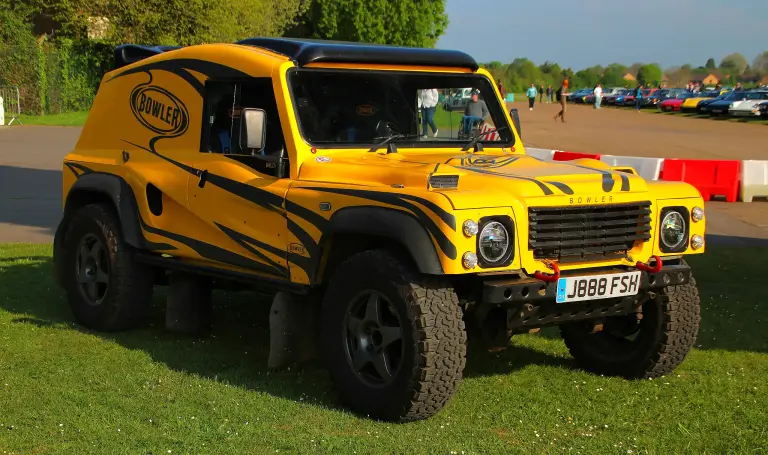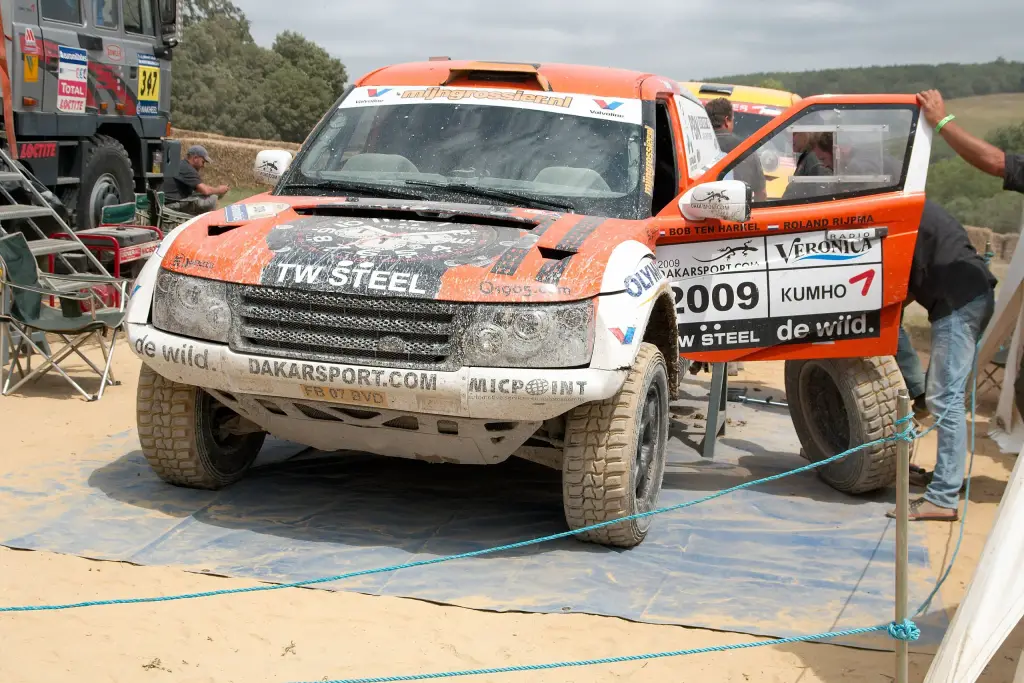
The Bowler Nemesis is an off-road racing vehicle designed, manufactured and sold by Bowler Off-Road. Like the Wildcat before it, it was built for endurance rally raids, above all the Dakar Rally and the Rallye des Pharaons.
Bowler Nemesis at a glance
| Maker | Bowler Off-Road |
|---|---|
| Type | off-road racing vehicle |
| Intended use | endurance rally raids (Dakar, Rallye des Pharaons) |
| Styling | grille, headlights and rear lights from the Range Rover Sport |
| Chassis | tubular steel spaceframe with integral roll cage |
| Approval | Motor Sports Association, for racing |
| Suspension | fully independent, unlike the Wildcat |
| Engines | 4.0 or 4.4-litre naturally aspirated V8; 4.2-litre supercharged V8 |
| Gearbox | six-speed manual; optional dog-engagement racing transmission |
| Drive | 60/40 torque split limited-slip centre differential, limited-slip front and rear |
| Body | Twin-tex composite with carbon fibre reinforcements |
| Fuel | 415-litre racing fuel cell |
| Road version | EXR-S: 5.0-litre supercharged V8 or 3.0-litre turbodiesel V6 |
Based on one source, the English Wikipedia article on the Nemesis.
History of the Bowler Nemesis
Designed for the desert
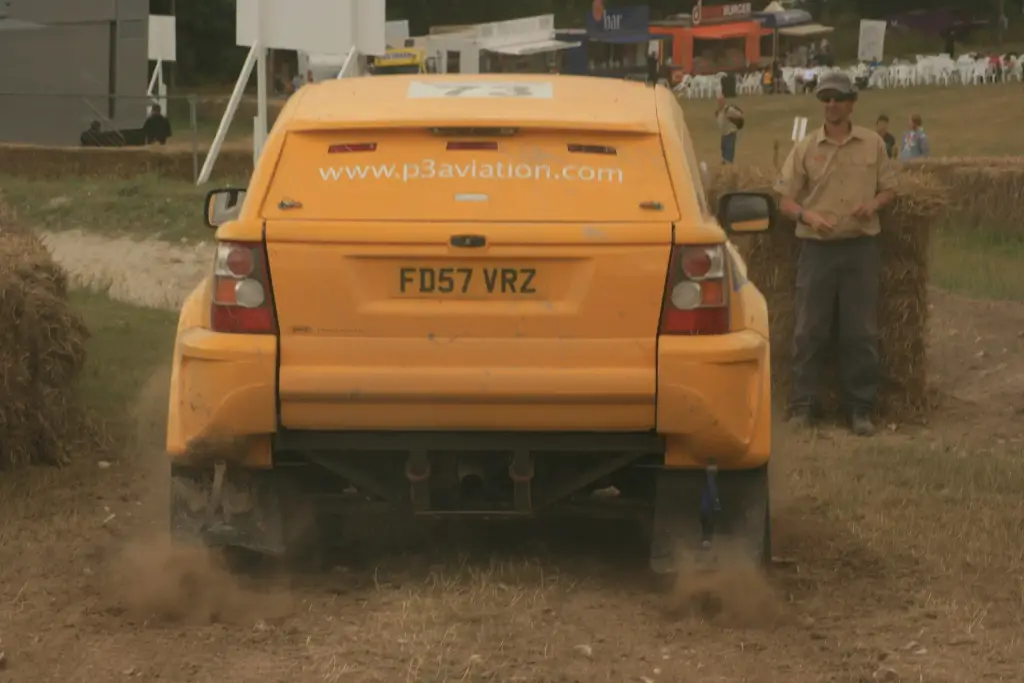
The Nemesis was conceived as a rally raid racer first and a road car second. Its styling borrows elements from the Range Rover Sport, notably the grille, headlights and rear lights, but underneath it is a competition machine. It follows the Bowler Wildcat in using a tubular steel spaceframe with the roll cage built into the frame structure; the spaceframe and cage are approved by the Motor Sports Association for racing. The major change compared with the Wildcat is suspension: the Nemesis has a fully independent design instead of beam axles.
The engine range was built around V8s: 4.0 or 4.4-litre naturally aspirated units, or a 4.2-litre supercharged V8. A six-speed manual gearbox was fitted as standard, with a dog-engagement racing transmission available as an option. The drivetrain uses a 60/40 torque split limited-slip centre differential with over-lock, plus limited-slip front and rear differentials. Body panels are made of a composite called Twin-tex, with carbon fibre pieces where higher strength is needed, and a 415-litre racing fuel cell gives the car the range to run the longest Dakar Rally stages.
The EXR-S road car
Bowler also made a road-legal version of the EXR called the Bowler EXR-S. It was offered with two engines: a 5.0-litre supercharged V8 from the Jaguar XKR with up to 600 hp (447 kW), or a 3.0-litre turbocharged V6 diesel with 291 hp (217 kW). The EXR-S also appeared in video games, among them Smash Bandits Racing, the Forza franchise, Blur and Sega Rally 3, where it is a secret vehicle.
Design and features
- Racing-approved spaceframe: a tubular steel frame with an integral roll cage, approved by the Motor Sports Association.
- Independent suspension: a departure from the Wildcat’s beam axles, aimed at rally raid terrain.
- V8 engines: naturally aspirated 4.0 and 4.4-litre units or a 4.2-litre supercharged V8.
- Competition drivetrain: six-speed manual as standard, optional dog-engagement racing transmission, and a 60/40 torque split centre differential.
- Long-range fuel cell: a 415-litre tank sized for the longest Dakar stages.
Bowler Nemesis versions
- Naturally aspirated Nemesis: 4.0 or 4.4-litre V8.
- Supercharged Nemesis: 4.2-litre V8.
- Racing transmission option: dog-engagement gearbox instead of the standard six-speed manual.
- EXR-S: road-legal version of the EXR with a 5.0-litre supercharged V8 or a 3.0-litre turbodiesel V6.
The Nemesis followed the Wildcat in the Bowler range, keeping the spaceframe construction but moving to independent suspension. More cars are in the Bowler collection.
Sources
- Bowler Nemesis, English Wikipedia: design, construction, engines, EXR-S, appearances in games