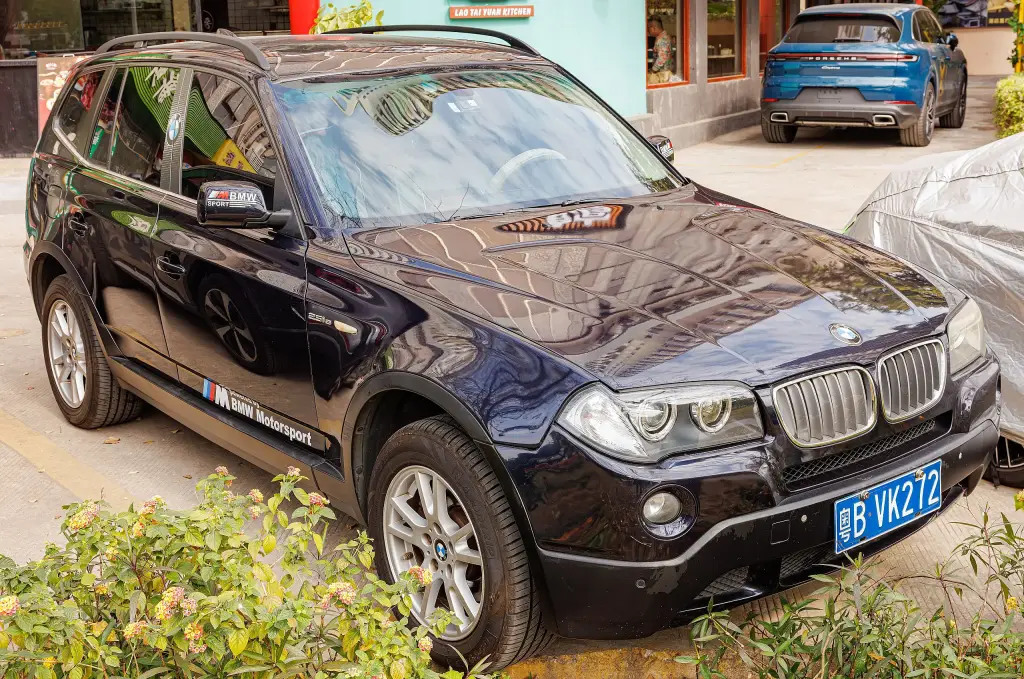
The first-generation X3 arrived in 2003 as a smaller companion to the X5, built on the 3 Series platform and made under contract by Magna Steyr in Graz. It was the first BMW to officially carry the xDrive name and the first premium compact SUV on the market. BMW called it a Sports Activity Vehicle rather than an SUV.
BMW X3 (E83) at a glance
| Maker | BMW with Magna Steyr, Graz |
|---|---|
| Production | 2003–2010 |
| Platform | BMW 3 Series |
| Premiered | Frankfurt Motor Show, September 2003 |
| Drive | permanent all-wheel drive, first BMW sold as xDrive |
| Torque split | 40:60 front to rear by default, up to 50% to the front |
| Rear suspension | shared with the E46 330xi |
| Engines | 2.5i and 3.0i petrol, 2.0d diesel from 2005 |
| Updates | model upgrade in 2005, facelift in 2007 |
| Award | X3 3.0i, Canadian Car of the Year Best SUV 2005 |
| Criticism | harsh ride, plain interior, limited off-road ability, high price |
| Precursor | xActivity concept shown at Detroit in 2003 |
Based on one source, the English Wikipedia article on the X3; the German article was not available, and the material covers the first generation only.
History of the BMW X3 (E83)
Development
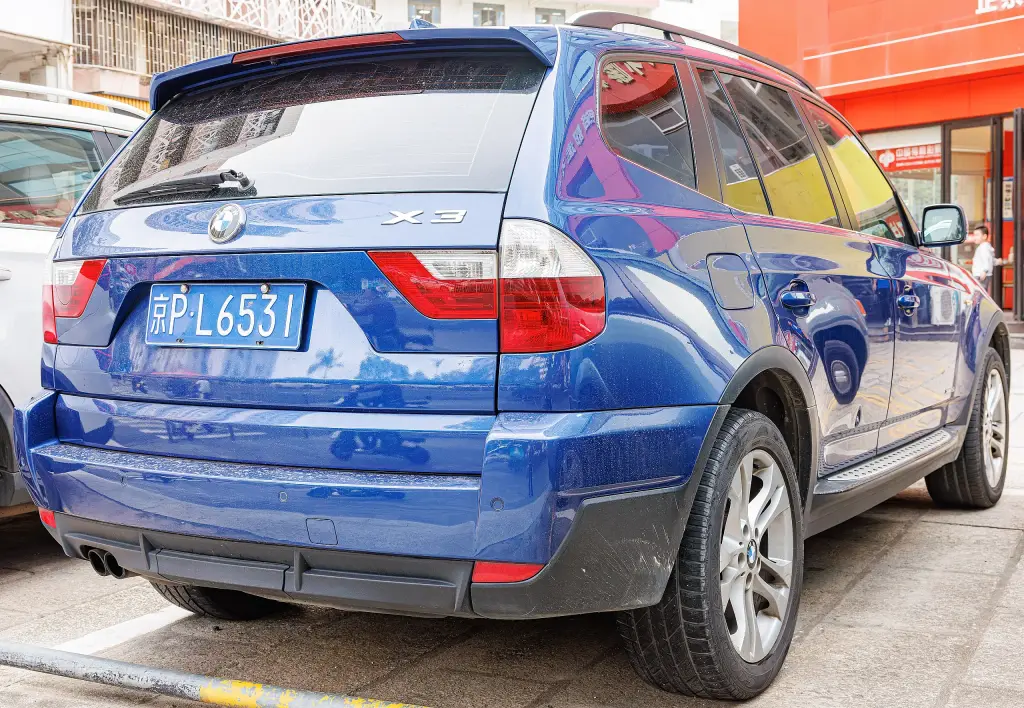
The X3 was designed by BMW together with Magna Steyr of Graz, Austria, which also built every first-generation car under contract. Before it, in 2003, BMW showed the xActivity concept at the Detroit Auto Show, a fixed-profile open car on the 3 Series platform with reinforced rails joining the A-pillars to the rear in place of B- and C-pillars. The production X3 premiered at the Frankfurt Motor Show in September 2003, sharing its rear suspension with the E46 330xi. The idea was to combine the agility of a compact car with the driving experience of the X5, with an upright, high seating position marketed as command seating; the styling used the concave and convex surfacing of the period along with a reinterpreted Hofmeister kink.
All-wheel drive
Every X3 had all-wheel drive with a default 40:60 torque split between the front and rear axles. An electronically controlled multi-plate clutch could vary the torque sent forward up to 50% of the engine’s output, while the rear axle was driven directly from the gearbox. That rear-biased arrangement helped acceleration and towing, when weight shifts rearward, and the traction control could act like an electronically controlled limited-slip differential at each axle. It was the first BMW model to introduce the xDrive name officially.
Changes and reception
BMW upgraded the car in 2005 and facelifted it in 2007 with revised bumpers, engines, interior trim and suspension. From 2005 a 2.0d engine joined the 2.5i and 3.0i for some markets. Early cars were criticised for a harsh ride, an austere interior, limited off-road ability and a high price, although the X3 3.0i won the Canadian Car of the Year Best Sports Utility Vehicle award in 2005. American cars were well equipped, with an eight-speaker audio system, leatherette seats, dual power front seats, keyless entry and 17-inch alloy wheels, while options included a ten-speaker system with digital sound processing, satellite radio, a dashboard navigation screen using a version of iDrive, larger wheels, leather, heated seats front and rear, a panoramic roof and adaptive xenon headlights. A second generation, the F25, followed in 2010.
Design and features
- xDrive: the first BMW model to launch with the xDrive name, with a rear-biased 40:60 split.
- 3 Series foundations: the platform and rear suspension came from the E46, including the 330xi layout.
- Command seating: an upright, high seating position intended to give a view over traffic.
- Contract production: designed and built with Magna Steyr in Graz, Austria.
- Compact premium SUV: the first car of its kind in the premium segment.
BMW X3 (E83) versions
- 2.5i: six-cylinder petrol model from launch.
- 3.0i: the larger six, winner of a Canadian SUV award in 2005.
- 2.0d: four-cylinder diesel added in 2005 for some markets.
- 2005 update: softer suspension, one-piece front fenders and revised interior trim.
- 2007 facelift: new bumpers, engines, interior trim and suspension settings.
The X3 sat below the X5 (E53) and shared its platform with the 3 Series (E46). Its successor is the X5 (E70)’s stablemate in the range, and more cars are in the BMW collection.
Sources
- BMW X3, English Wikipedia: first generation development, xDrive, equipment, reception