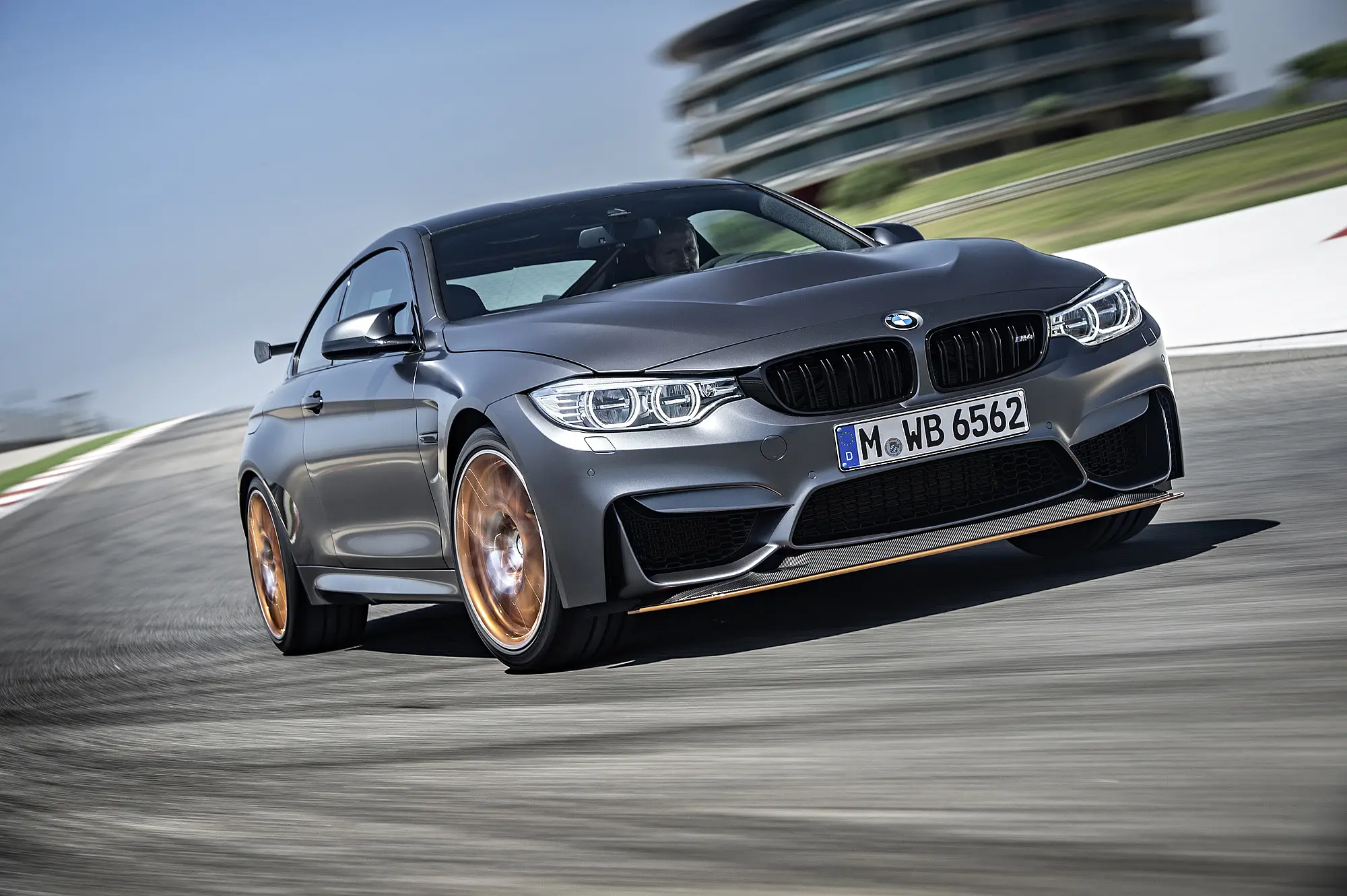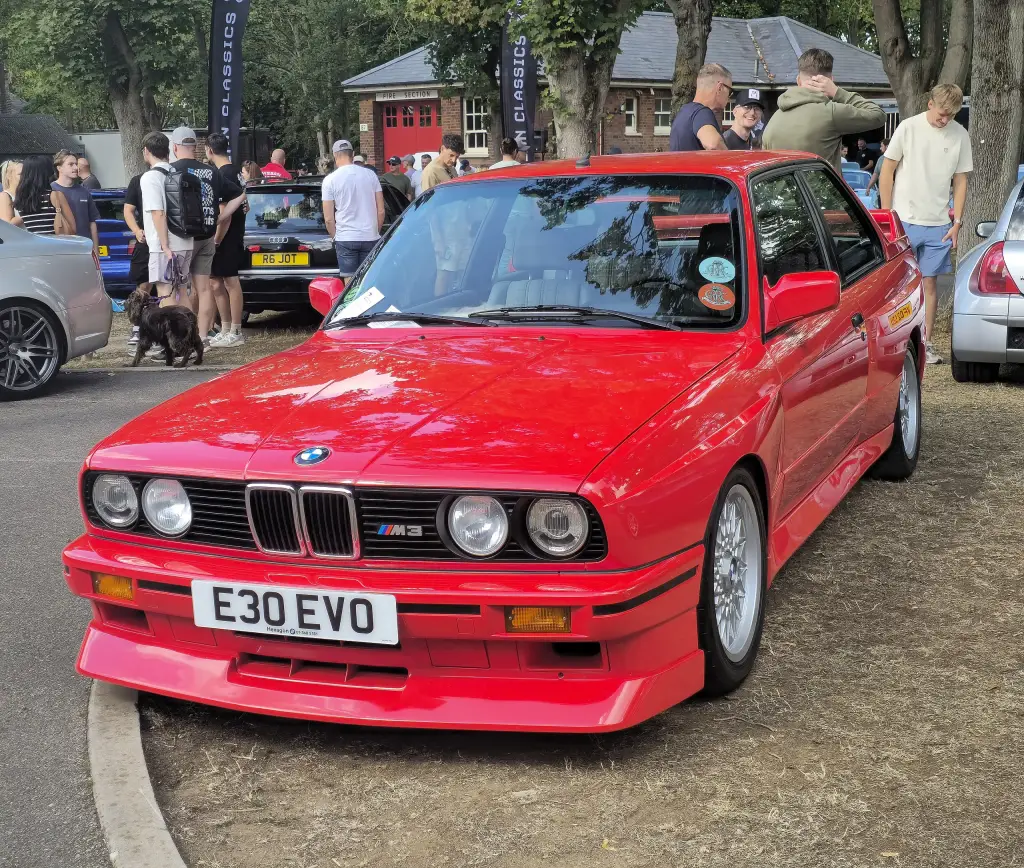
The M3 is the high-performance version of the BMW 3 Series, developed by BMW M GmbH and built since 1986. The first one existed to satisfy touring car rules and shared only its bonnet, roof and sunroof with the regular 3 Series. Later generations grew into comfortable road cars, and from 2014 the coupé and convertible versions were renamed M4.
BMW M3 at a glance
| Maker | BMW M GmbH |
|---|---|
| Produced since | 1986 |
| Bodies | coupé and convertible throughout; saloons in the E36 and E90 generations |
| First engine | S14 four-cylinder, 2.3 litres, 7,250 rpm redline |
| E30 drag coefficient | 0.33, against 0.38 for the standard 3 Series |
| E30 production | March 1986 to June 1991 |
| E36 engine | S50 six, 3.0 then 3.2 litres, up to 321 PS |
| E46 engine | S54 six, 343 PS, 8,000 rpm limit |
| E90 engine | S65 V8, 420 PS, the only V8 M3 |
| E30 editions | Evolution 1, Evolution 2, Sport Evolution, Ravaglia, Cecotto |
| M4 split | from 2014 the coupé and convertible became M4 |
| M3 Touring | the first estate M3 appeared in 2022 |
The generations from 2014 onwards are described briefly here: the coupé and convertible have been sold as the M4 since then.
History of the BMW M3
E30 (1986–1991)
The first M3 was built to satisfy Deutsche Tourenwagen Meisterschaft and Group A rules, which required 5,000 road cars plus 500 evolution models. It was shown at the Frankfurt Motor Show in 1985 and produced from March 1986 to June 1991, mostly as a coupé with a limited number of convertibles. Almost every panel changed: the rear window was flattened, the boot lid was glass-reinforced plastic and raised about 40 mm, and the windscreen was bonded in, cutting the drag coefficient to 0.33. The S14 four-cylinder had a head derived from the S38 six and a block from the M10, with a 7,250 rpm redline; catalytic cars made 143 kW (195 PS) and others 147 kW (200 PS), with a top speed of 235 km/h. A five-speed Getrag 265 with dogleg ratios in Europe and a clutch-type limited-slip differential were standard.
Editions and the E36
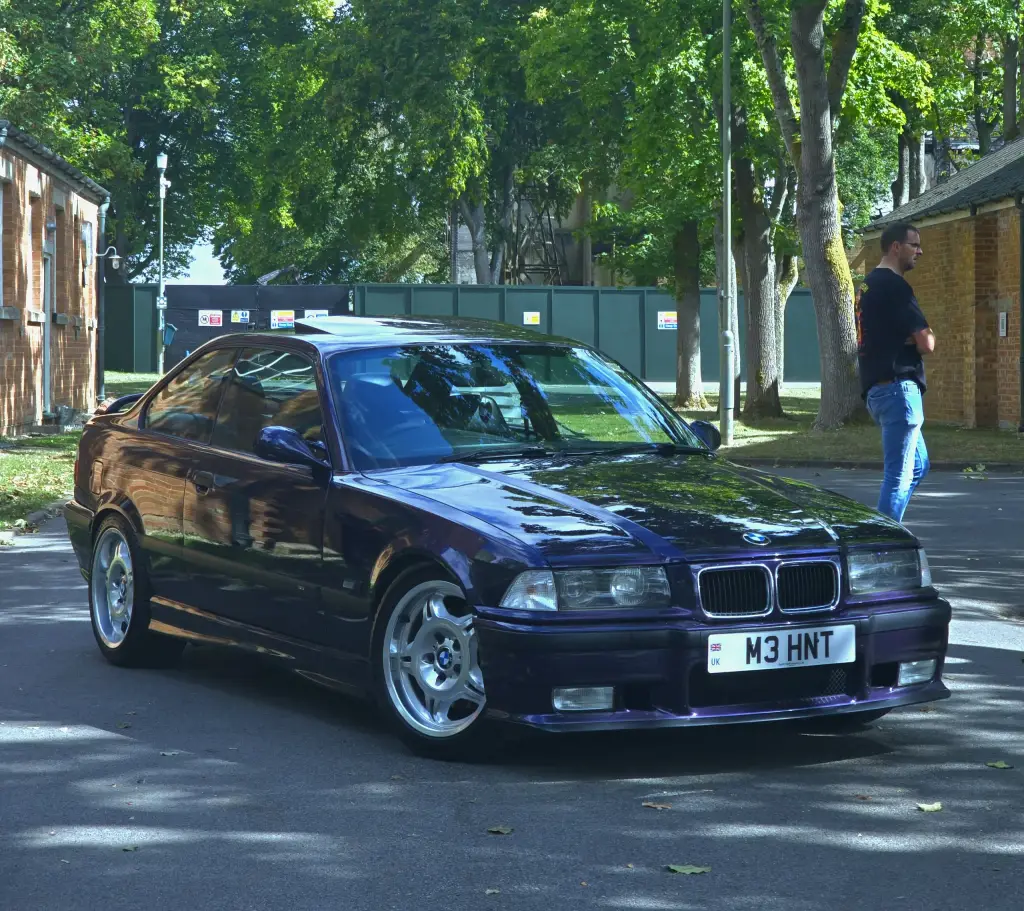
The Evolution 1 of 1987 had a revised cylinder head and 505 units were built; BMW France ordered 50 more to mark the win on the 1987 Tour de Corse. The Evolution 2 of 1988 (501 cars) raised compression to 11.0:1 and output to 162 kW (220 PS), with thinner glass, a deeper air dam and a taller final drive. The Sport Evolution of 1990 came in 600 units with a 2,467 cc engine of 175 kW (238 PS) and an adjustable front splitter and rear wing. The Ravaglia edition numbered 25 cars and the Cecotto 480, plus 80 Swiss cars at reduced power. The E36 M3 of 1992 used the S50 six of 3.0 litres and 210 kW (286 PS); the 3.2-litre S50B32 raised this to 236 kW (321 PS), brought a six-speed gearbox, the first double VANOS in a BMW and compound front brakes. A saloon joined in 1994 and a convertible was offered as well.
E46 and E90
The E46 M3 of 2000 to 2006 used the S54 straight-six, 3.2 litres and 252 kW (343 PS) at 7,900 rpm with an 8,000 rpm limit, 80% of its torque available from 2,000 rpm. It had the aluminium bonnet with the raised “powerdome”, a variable M differential lock working between 0 and 100% and compound brakes at both ends; a Touring version stayed a concept. The fourth generation of 2007 to 2013 came as a coupé first, then a convertible and a saloon, all with the S65 V8 of 309 kW (420 PS). The coupé had a carbon fibre roof, an aluminium bonnet and bumper carriers of glass-fibre reinforced thermoplastic, yet weighed 1,655 kg, almost 100 kg more than the E46. A seven-speed dual-clutch gearbox was added in May 2008. The fifth generation arrived in 2014 as a saloon only with its own code, F80, while the two-door cars became the M4; the M3 Touring estate followed in 2022, and in June 2026 BMW showed the M Concept Neue Klasse as a preview of an electric M3.
Design and features
- Homologation roots: the E30 was built to legalise a touring car racer, with only three body panels shared with the standard car.
- High-revving engines: the S14, S50, S54, S65 and later units were built for revs rather than torque.
- Track hardware: limited-slip differentials, compound brakes and, on the E46, a variable M differential lock.
- Lightweight parts: aluminium bonnets and control arms, carbon fibre roofs and thinner glass across the generations.
- Wide range of bodies: coupé, convertible, saloon and, from 2022, estate.
BMW M3 versions
- E30 (1986–1991): S14 four-cylinder coupé and convertible, with five special editions.
- E36 (1992–1999): S50 six of 3.0 or 3.2 litres, coupé, saloon and convertible.
- E46 (2000–2006): S54 six, coupé and convertible, plus the CSL.
- E90/E92/E93 (2007–2013): S65 V8 in saloon, coupé and convertible.
- F80 (2014–2020): saloon only, with the two-door cars renamed M4.
- M3 Touring (2022): the first estate version of the M3.
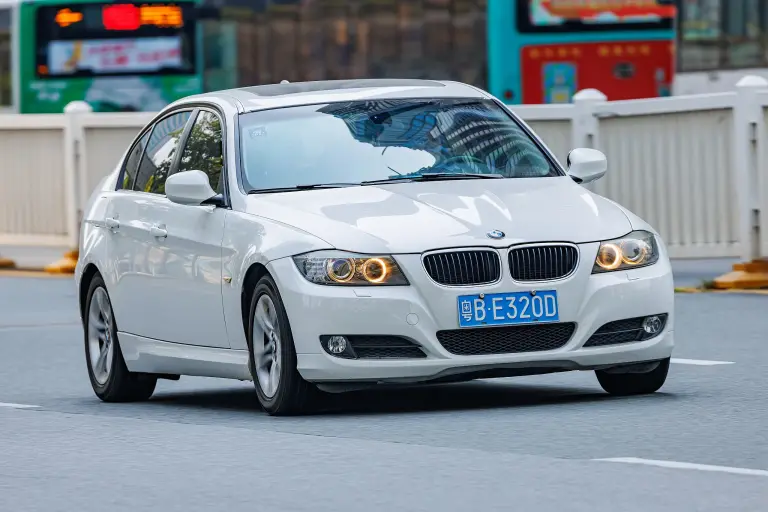
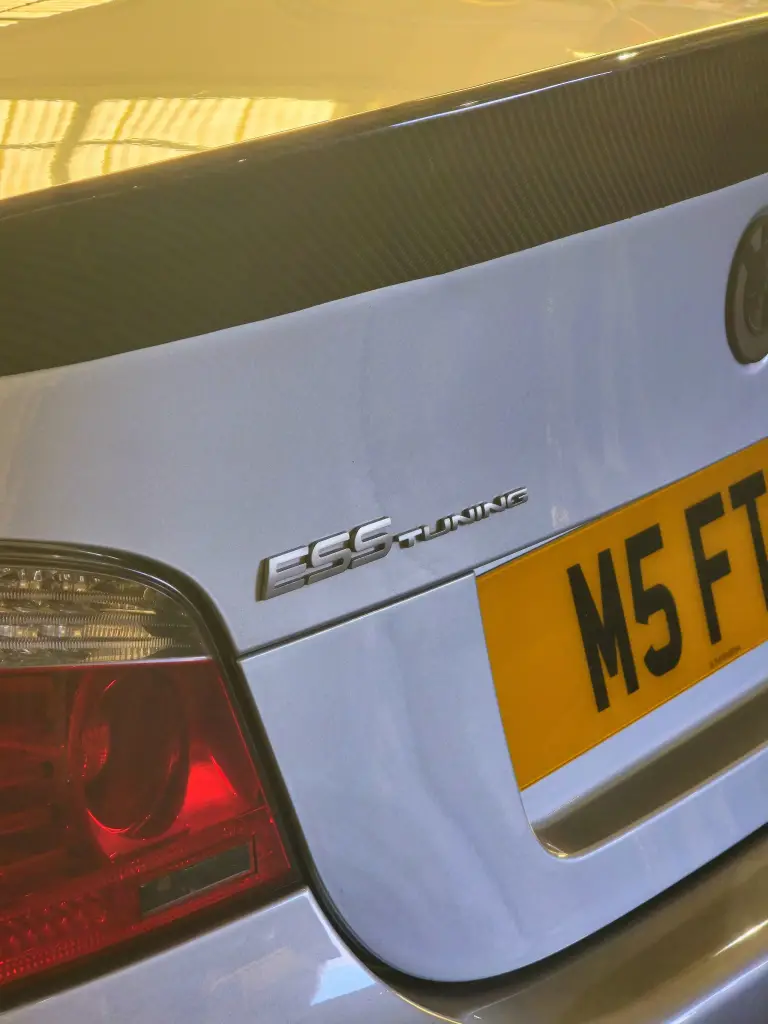
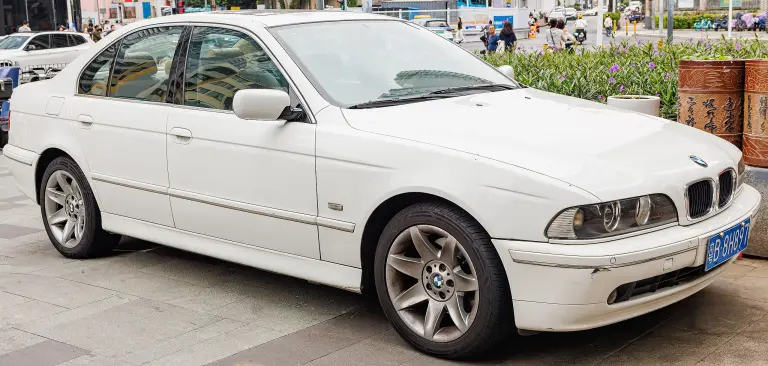
Each M3 is based on a 3 Series generation: the E36, the E46 and the E90. The same division built the M5, and more cars are in the BMW collection.
Sources
- BMW M3, English Wikipedia: E30 development, editions, specifications
- BMW M3, German Wikipedia: E36, E46 and E90 engines, generations, M4 split
- BMW M3, Italian Wikipedia: E30 origin, evolution models, racing programme