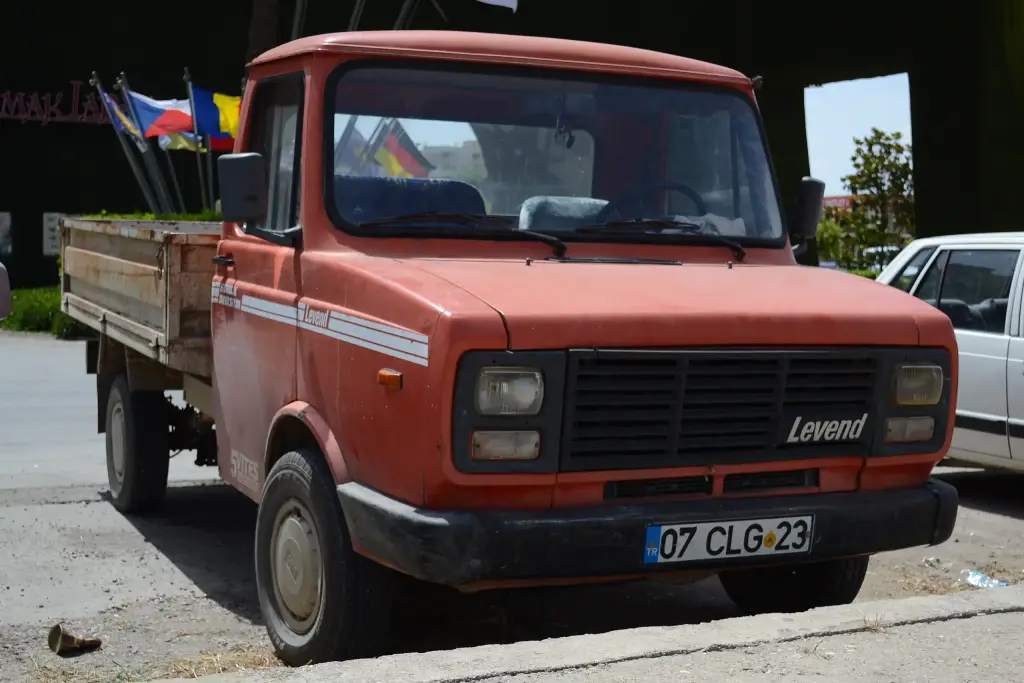
The BMC Levend was a series of light commercial vehicles and minibuses produced by BMC in Turkey between 1980 and 2009. It replaced the TM 25, began life as the Leyland TM 30 and took the Levend name in 1990, and over three decades it grew into two generations and a large family of pickups, vans and minibuses.
BMC Levend at a glance
| Maker | BMC, Turkey |
|---|---|
| Production | 1980–2009 |
| First name | Leyland TM 30 |
| Levend name | from 1990 |
| First generation | 1980–2009, Leyland Sherpa-based |
| Second generation | 1992–2009, Mercedes-Benz MB100 body |
| First-generation engine | 1.8 L BMC diesel, 52 hp, 152 Nm |
| Second-generation engine | 2.5 L Nissan Diesel TD25, 75 hp; 3.0 L BD30 from 1995 |
| Bodies | pickup, panel van, minibus |
| Replaced by | BMC Megastar |
Based on the Turkish Wikipedia article; one source.
History of the BMC Levend
The Levend began as a licence-built version of the Leyland Sherpa, the British van developed by British Leyland as a rival to the Ford Transit. BMC started producing it in Turkey in 1980 as the Leyland TM 30, replacing the TM 25. The engine was moved from under the floor to a front compartment, and the first version used a 1.8-litre BMC four-cylinder diesel producing 52 hp and 152 Nm, with a five-speed BMC 15 gearbox.
In 1990 the vehicle took the Levend name and was sold under the BMC marque. When the second generation arrived in 1992, the original model became the entry-level Levend and only its pickup versions stayed in production. In 2003 it was facelifted with parts from the LDV Pilot and renamed Levend 60 and Levend 80: the 60 kept the 1.8-litre engine, while the 80 TDI used a turbocharged version of the same engine with 80 hp. In 2005 the Levend 80 gave way to the Levend 100 with the 3.0-litre BD30 engine used in the second generation.
The first generation was built as four pickup models: the BDC with a double-row body and dropside bed, the BDK double-row cab without a bed, the BDS single-row dropside and the BDT single-row cab without a bed. Pickups with the flat “pool” bed were especially popular in the early years and stayed in production for a long time.
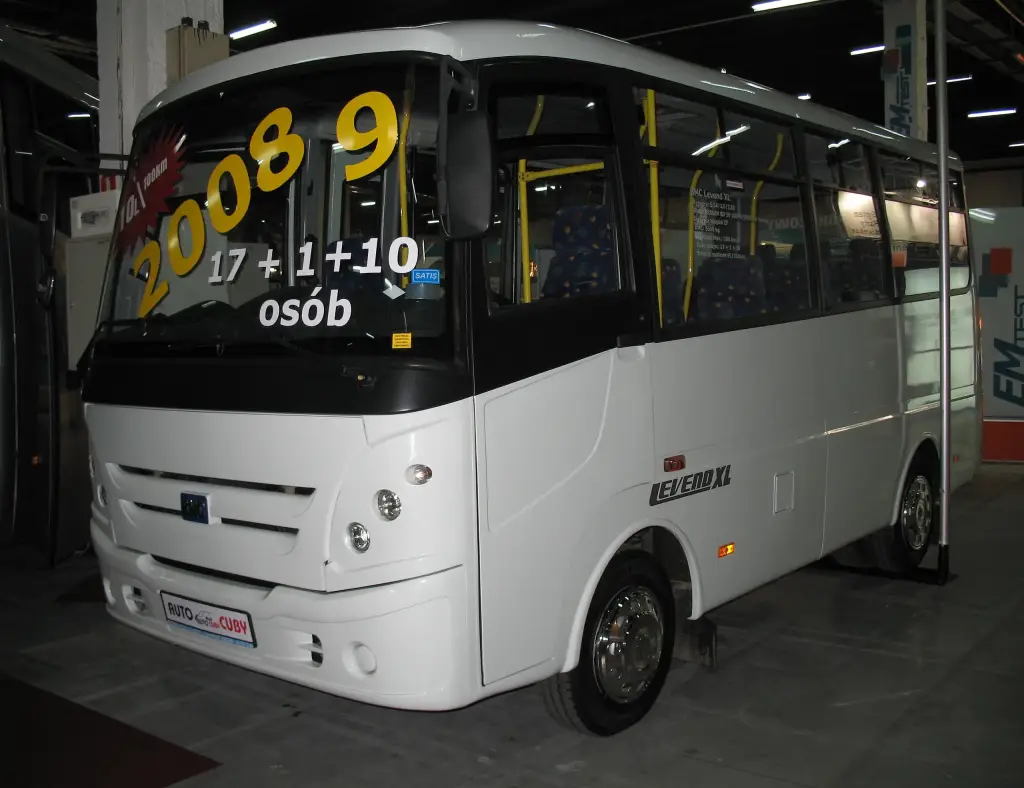
For the second generation, in the early 1990s, BMC took the body of the Mercedes-Benz MB100 and mounted it on the Levend chassis. Production began in 1992 with a 2.5-litre TD25 diesel bought from Nissan Diesel, producing 75 hp and 147 Nm. Besides panel vans and pickups there was a minibus known as the GDM with 14 to 17 seats, which competed in the dolmuş market against the Peugeot J9, Iveco M-series and Otokar M-2000.
A facelift in 1995 brought the 3.0-litre BD30 engine with 100 hp and 216 Nm, and a second facelift in 2002 gave the van a new front end, a new steering wheel and new instrument panels. In 2006 the GDM minibus was extensively renewed as the Levend XL with 17 to 21 seats. Both generations ended in 2009 and were replaced by the BMC Megastar.
The second generation was sold in several body styles: the MDÇ single-row cab without a bed and with twin rear wheels, the MDS single-row cab without a bed, the MDT dropside pickup, the MDV panel van, the MDH high-roof panel van and the MDA basic ambulance, alongside the GDM and Levend XL minibuses.
Design and features
- Sherpa roots: developed from the British Leyland Sherpa van, the Ford Transit rival.
- Two generations at once: the original model continued as a cheap pickup alongside the newer MB100-based range.
- Mercedes-Benz body: the second generation used the MB100 body on a Levend chassis.
- Minibus range: GDM and later Levend XL models with up to 21 seats.
- Long life: nearly thirty years of production before the Megastar replaced it.
BMC Levend versions
- Leyland TM 30 (1980): the original Sherpa-based van.
- Levend first generation pickups: BDC, BDK, BDS and BDT.
- Levend 60 and 80 (2003): facelifted first-generation pickups, the 80 with a turbocharged diesel.
- Levend 100 (2005): first-generation pickup with the 3.0-litre BD30 engine.
- Second-generation pickups and vans: MDÇ, MDS, MDT, MDV, MDH and MDA.
- Minibuses: GDM with 14–17 seats and Levend XL with 17–21 seats.
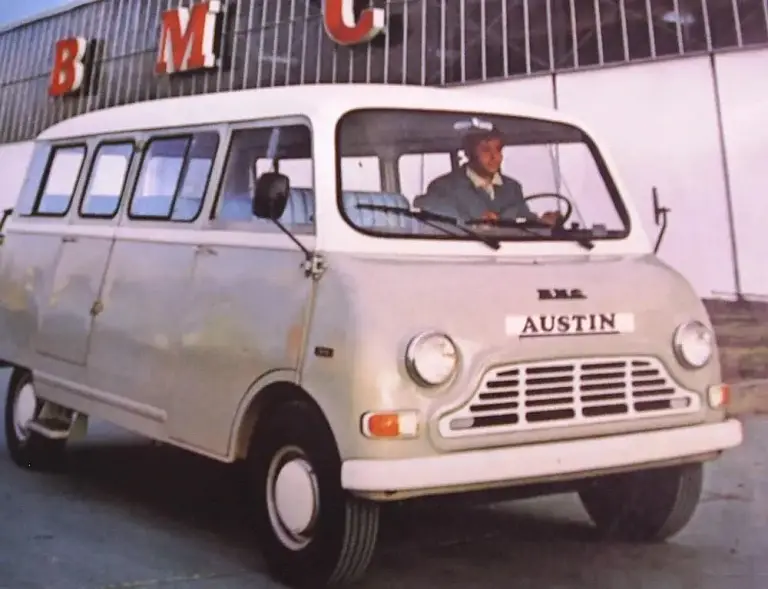
The Levend replaced the BMC TM 25 and carried on the line of the British BMC J4, whose Sherpa successor it was licensed from. More models are in the BMC collection.
Sources
- BMC Levend, Turkish Wikipedia: generations, engines, models, production