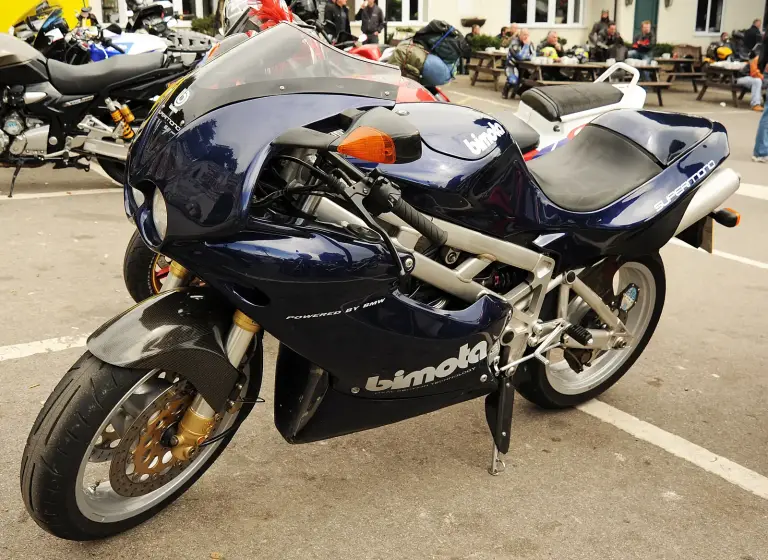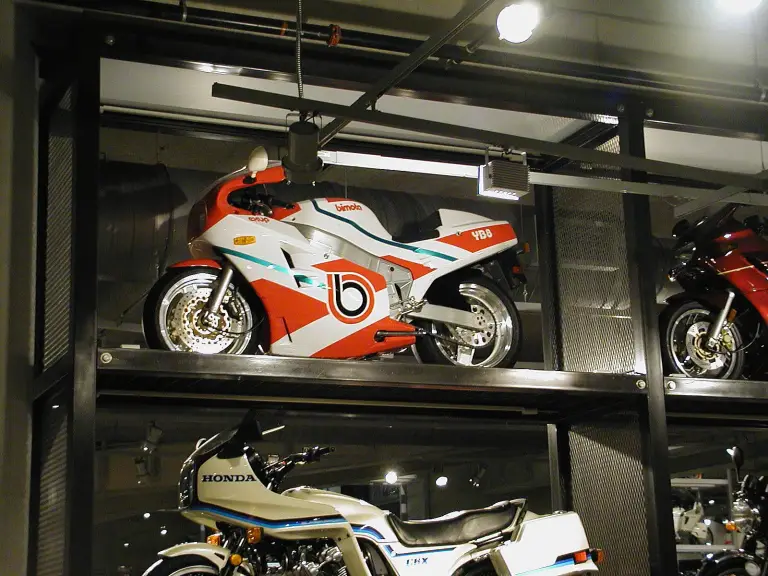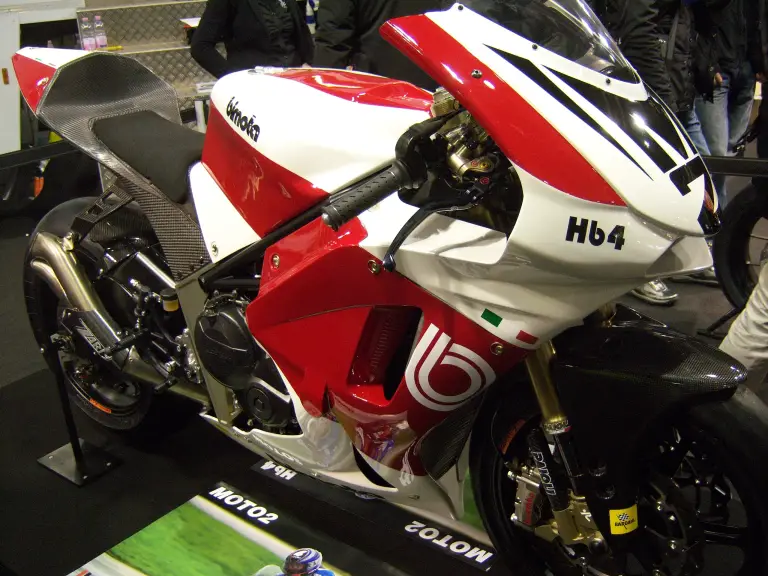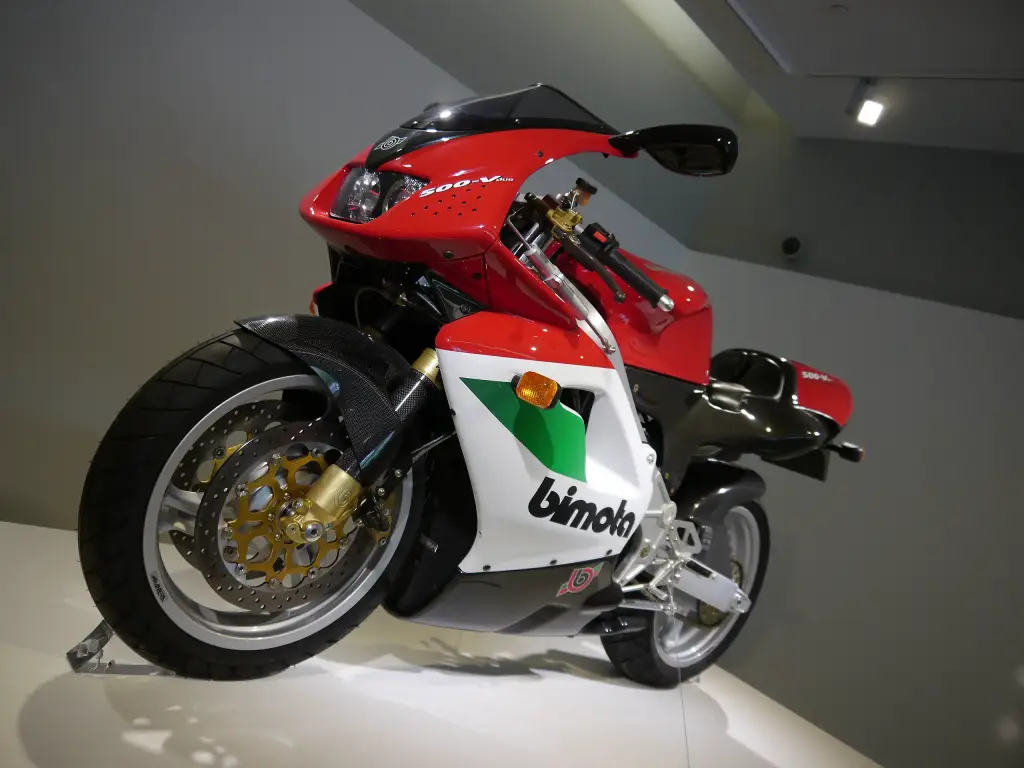
The Bimota 500 Vdue is a 500 cc two-stroke V-twin that Bimota first produced in 1997, notable for the first electronically controlled direct fuel injection on a two-stroke motorcycle.
Bimota 500 Vdue at a glance
| Manufacturer | Bimota, Rimini, Italy |
|---|---|
| Production | 1997–2005 |
| Engine | 500 cc 90° V-twin, two-stroke |
| Injection | Electronic direct injection (first series) |
| Gearbox | Cassette type |
| Clutch | Dry |
| First series | 150 units |
| Total production | 340 (Italian Wikipedia) |
| Later series | Carburettor versions |
The English and Italian Wikipedia articles disagree on the order and road-legal status of the later series: the English article puts the 14-unit Evoluzione Corsa before the 120-unit Evoluzione and calls the latter road legal, while the Italian article lists the 14-unit Evoluzione as road legal and the 120-unit Evoluzione Corsa as not road legal. The table uses only the points on which both agree.
History of the Bimota 500 Vdue
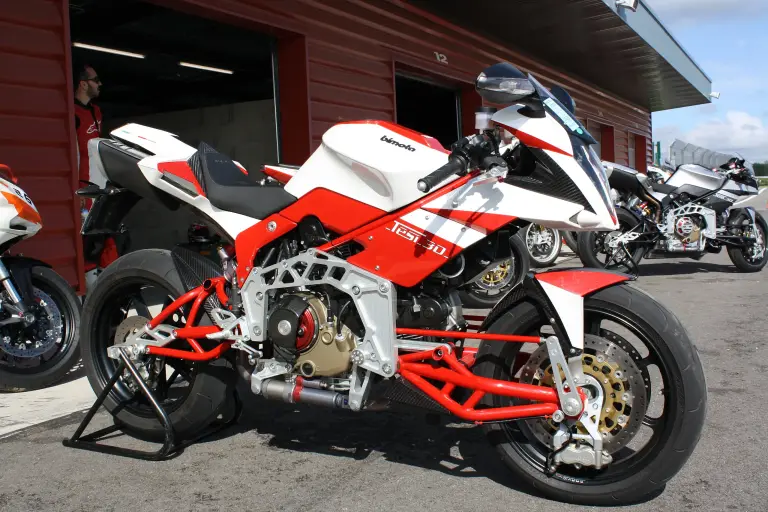
The Vdue began as a racing prototype, the 1993 Tesi V-due, built around a 500 cc two-stroke V-twin for the 1993 Grand Prix season. Lack of funds and the complexity of the design meant the racer never competed, but its engine was placed in a conventional chassis designed by Monica Malaguti to create the production 500 Vdue.
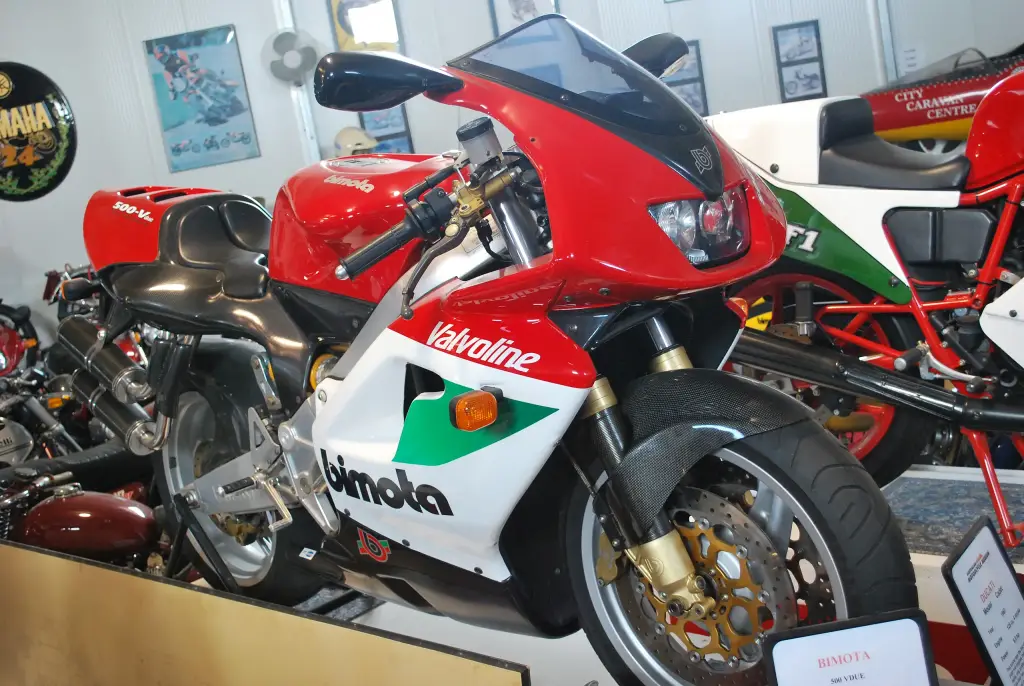
The first series was produced in 1997 and 1998 in 150 examples. Its 500 cc 90° V-twin was the first two-stroke motorcycle engine with electronically controlled direct fuel injection, with two injectors per cylinder, and it used a cassette-type gearbox and a dry clutch. The exhausts ran high and to the right side.
The first series suffered from oil leaks, irregular power delivery and piston failures, and many owners returned their machines. Later versions abandoned the problematic injection for carburettors and used under-seat exhausts. The Italian Wikipedia lists five series in total, including the 2005 Vdue Racing E.F. built in Meda, and gives a total production of 340 motorcycles; the English article gives a different order for the later series (see the note above).
The Vdue remains rare and is sought after by collectors. It was the only Bimota model with an engine designed entirely in-house rather than supplied by another manufacturer.
Design and features
- Engine: a 500 cc 90° V-twin two-stroke designed by Bimota.
- Injection: electronically controlled direct injection, the first on a two-stroke motorcycle.
- Gearbox: cassette type, with a dry clutch.
- Later versions: carburettor fuel systems and under-seat exhausts.
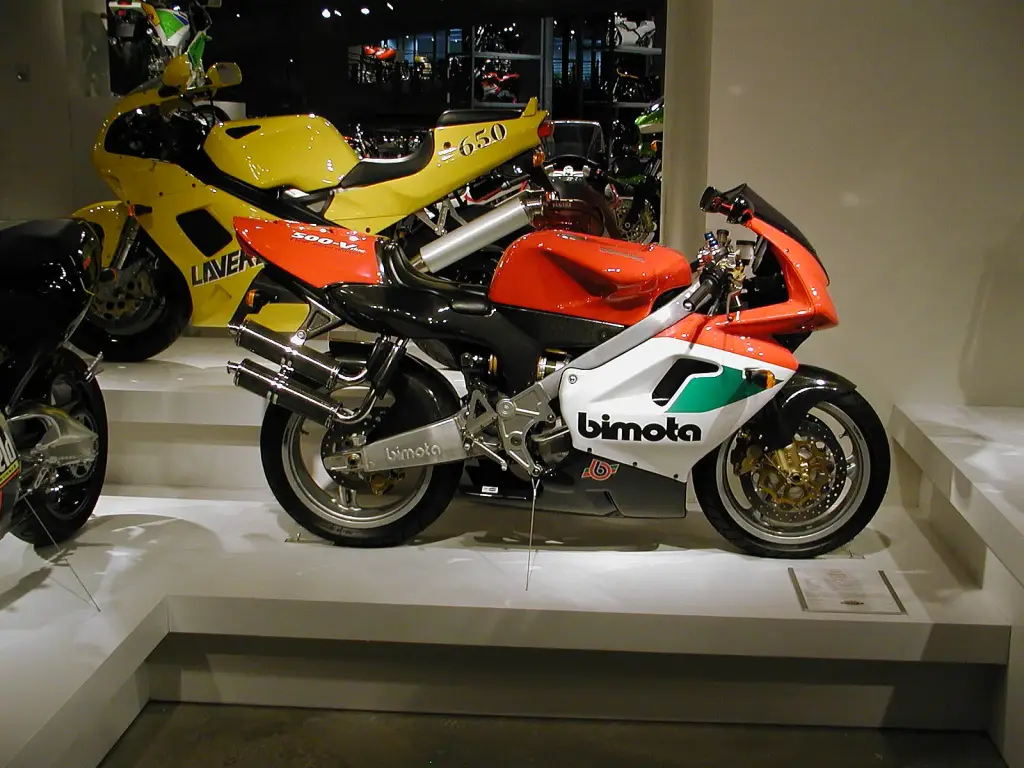
Bimota 500 Vdue versions
- Vdue: the first series of 1997–1998, with direct injection and 150 units.
- Vdue Corsa Trofeo: the 1999–2000 carburettor series of 26 units, used in the Trofeo Bimota 2000.
- Vdue Evoluzione: the 14-unit series listed by the Italian article as road legal.
- Vdue Evoluzione Corsa: the 120-unit series listed by the Italian article as not road legal.
- Vdue Racing E.F.: the 2005 final edition of 30 units, built in Meda.
See also: the Bimota Tesi, the Bimota DB2, the Bimota SB6 and the Bimota collection.
Bimota 500 Vdue questions and answers
What is the Bimota 500 Vdue?
A 500 cc two-stroke V-twin produced by Bimota from 1997, the first two-stroke with electronic direct fuel injection.
Why was the Vdue important?
It was the first two-stroke motorcycle with electronically controlled direct fuel injection and the only Bimota with an in-house engine.
How many Vdues were built?
The Italian Wikipedia gives a total of 340 across five series.
Did the first series have problems?
Yes: oil leaks, irregular power delivery and piston failures affected the 150-unit first series.
What did later versions change?
They replaced the direct injection with carburettors and moved the exhausts under the seat.
Video: Karls Bimota 500 Vdue
Video by Zweitakt Junky on YouTube.
Sources
- Bimota V Due, English Wikipedia: production history, direct injection, gearbox, clutch and later series
- Bimota Vdue, Italian Wikipedia: origins, five series, production total and racing versions