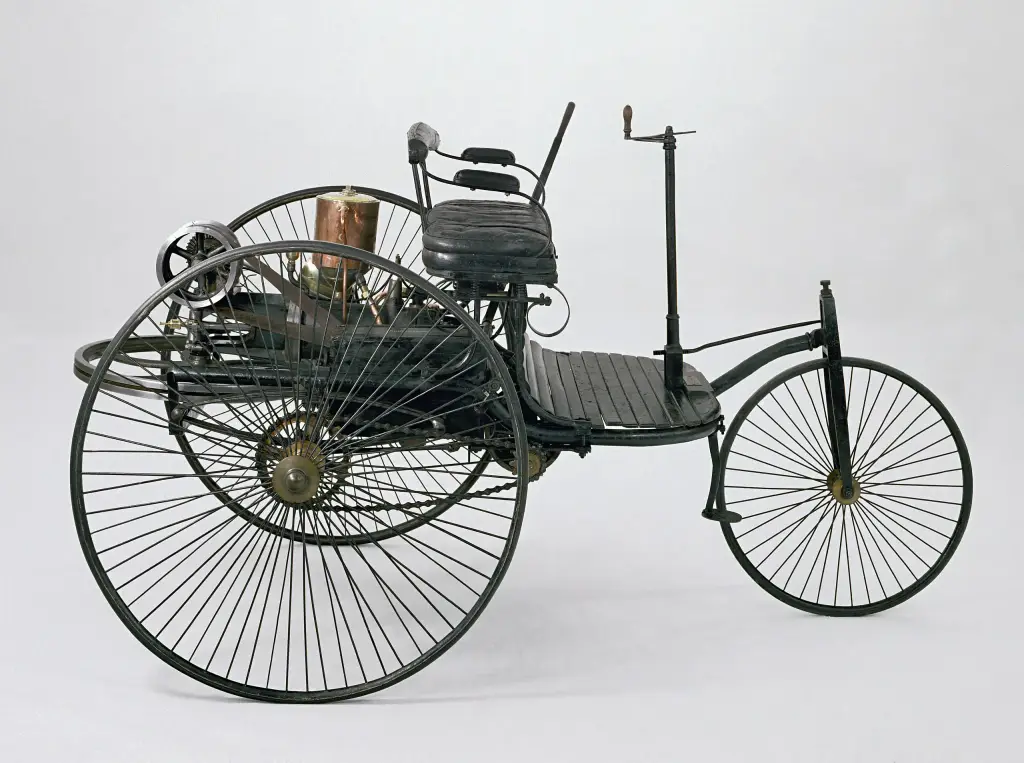
The Benz Patent-Motorwagen was a three-wheeled car with a single-cylinder four-stroke engine and belt drive, built by Benz & Cie between 1885 and 1893. It is widely regarded as the world’s first practical automobile, and the name was kept for Benz’s four-wheeled cars until about 1900.
Benz Patent-Motorwagen at a glance
| Maker | Benz & Cie, Mannheim |
|---|---|
| Production | 1885–1893 |
| Patent | DRP 37435, granted 1886 |
| Layout | three wheels, rear-mounted single-cylinder engine |
| Engine | single-cylinder four-stroke |
| Drive | single belt in early cars, two belts later |
| Transmission | one ratio per belt; reduction gearbox with a second ratio from 1886 on single-belt cars |
| Flywheel | horizontal at first, vertical in later cars |
| Built | produced until four-wheeled models arrived in late 1892 |
| Museum car | rebuilt original given to the Deutsches Museum in 1906 |
| Replicas | made from the mid-twentieth century onwards |
History of the Benz Patent-Motorwagen
Development, 1884–1887
The car was developed by the German engineer Carl Benz over the years 1884–1887. His aim was to apply the internal combustion engine to a horseless carriage, and the result was a light three-wheeler with the engine at the rear and a belt driving the rear wheels. Benz & Cie received patent number DRP 37435 in 1886 for the layout and belt-drive technology used in the car.
The first cars
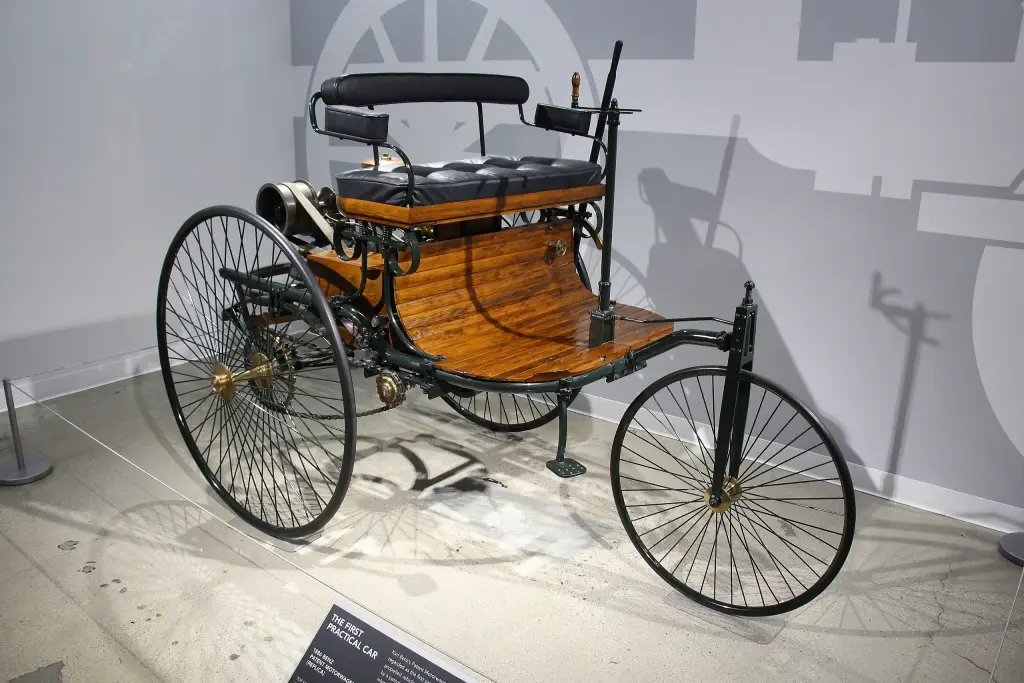
The engine’s output was stabilised by a flywheel. In the first vehicles the flywheel was horizontal and the car had a single belt drive; later vehicles had a vertical flywheel and two belt drives. Each belt gave a single transmission ratio, so from 1886 the single-belt cars also received a reduction gearbox that provided a second ratio. The design was simple and light, and it proved that a petrol-engined vehicle could work in everyday use.
The name and the end of production
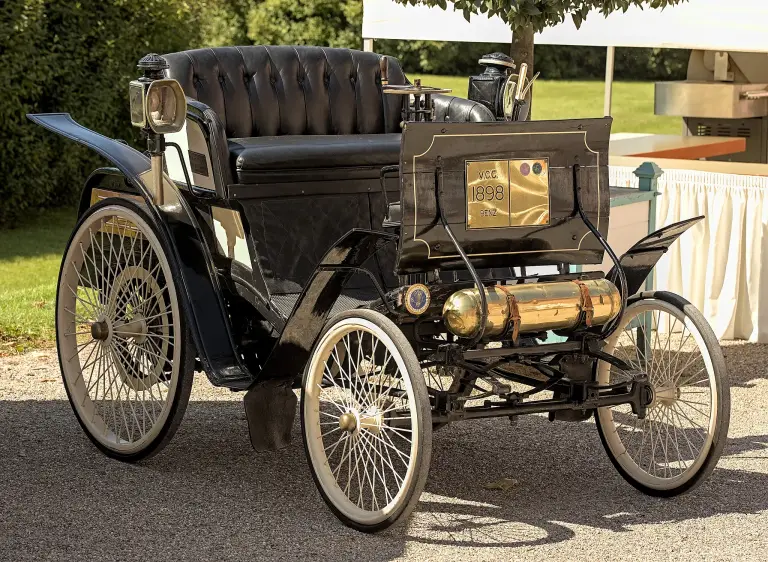
Benz & Cie used the designation “Patent-Motorwagen” for their four-wheeled cars until about 1900, although those cars are known today by other names such as Viktoria and Velo, and they used the same layout and belt-drive technology covered by the patent. Production of the three-wheeled car ceased after Benz had perfected two-wheel steering and began manufacturing four-wheeled models from late 1892.
The museum car
Around 1895 the sales manager at Benz & Cie wanted to recreate the form the original vehicle had taken in early 1886, before it was given a new body. The rebuilt car was handed to the Deutsches Museum in 1906, and replicas of it have been produced since the middle of the twentieth century.
Design and features
- First practical automobile: a light three-wheeler that put the petrol engine to everyday use.
- Simple mechanical layout: rear-mounted single-cylinder four-stroke engine and belt drive.
- Patented technology: patent DRP 37435 of 1886 covered the layout and the belt drive.
- Steady development: the flywheel moved from horizontal to vertical and a second belt was added.
- Direct ancestor: the same layout and belt drive were used for Benz’s four-wheeled cars until about 1900.
Benz Patent-Motorwagen versions
- Early single-belt cars: horizontal flywheel and one belt drive.
- Later two-belt cars: vertical flywheel and two belt drives, each with one ratio.
- Single-belt cars from 1886: a reduction gearbox added a second transmission ratio.
- Reconstructed 1886 car: rebuilt around 1895 and given to the Deutsches Museum in 1906.
- Modern replicas: built from the mid-twentieth century onwards.
The Patent-Motorwagen was followed by the smaller, lighter Benz Velo of 1894. More early cars are in the Benz collection.
Video: Benz Patent Motorwagen
Video on YouTube.
Sources
- Benz Patent-Motorwagen, English Wikipedia: production dates, layout, patent, development, museum car
- Benz Patent-Motorwagen, German Wikipedia: list of the cars that carried the name