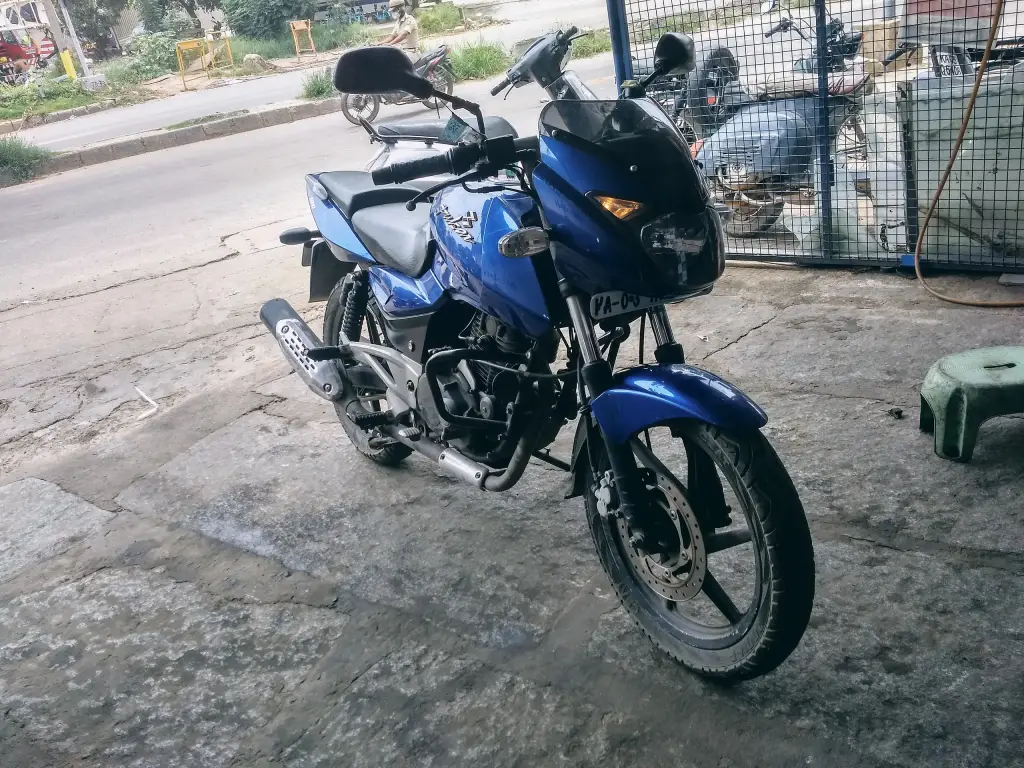
The Bajaj Pulsar is a range of motorcycles manufactured by Bajaj Auto in India. It was developed by the company’s product engineering division with Tokyo R&D and later with the designer Glynn Kerr. The Pulsar twins were launched on 24 November 2001 and the line went on to become the benchmark for affordable performance bikes in the country.
Bajaj Pulsar at a glance
| Maker | Bajaj Auto, India |
|---|---|
| Launched | 24 November 2001 |
| First models | Pulsar 150 and Pulsar 180 |
| First engine | air-cooled, two-valve, single-cylinder, four-stroke |
| Power (2001) | 12 bhp (150) and 15 bhp (180) |
| Wheelbase (2001) | 1,265 mm |
| Fuel tank (2001) | 18 litres |
| DTS-i | introduced in 2003 |
| Fuel injection | Pulsar 220 DTS-Fi in 2007 |
| Sales | over five million by April 2012, over ten million by 2018 |
| Other names | Rouser in South America, Pulse in Iran |
Based on one source: the English Wikipedia article on the Pulsar.
History of the Bajaj Pulsar
Before the Pulsar
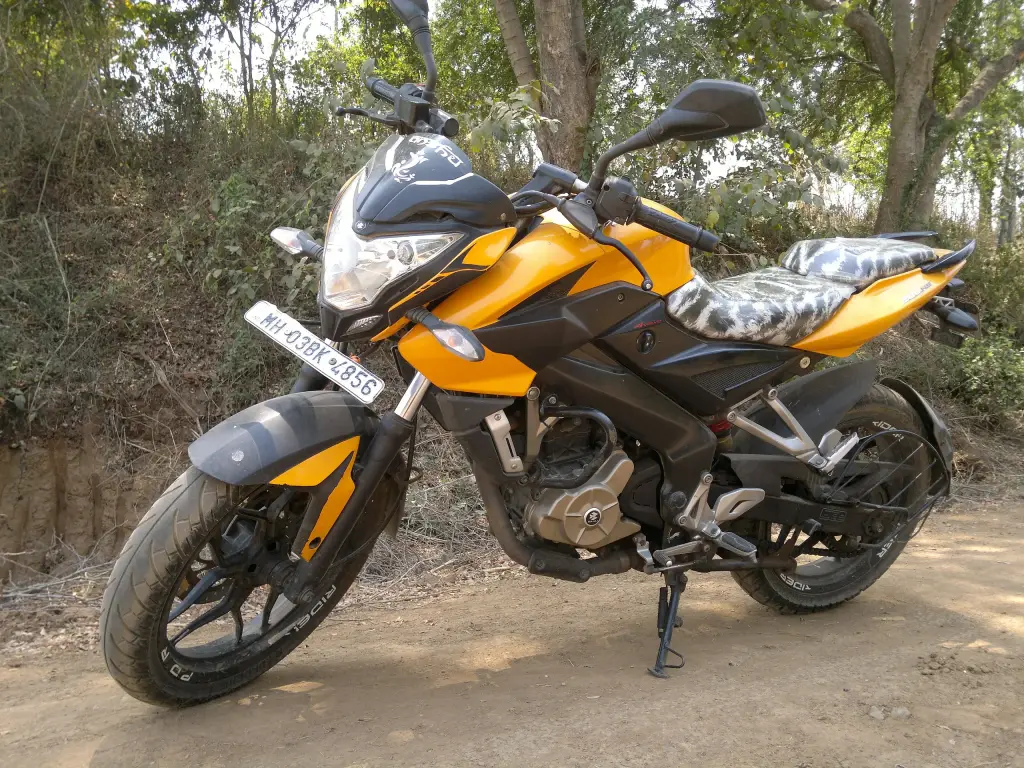
Before 2001 the Indian motorcycle market was dominated by fuel-efficient 80–125 cc machines. Larger-capacity bikes were almost absent apart from the Royal Enfield Bullet. The success of the Hero Honda CBZ in 1999 showed that buyers wanted performance, and Bajaj responded with the Pulsar twins, a 150 and a 180. The project took about 36 months and cost ₹1 billion; it met internal resistance and reservations from McKinsey & Company, and there were doubts about its effect on Bajaj’s relationship with Kawasaki.
2001: the twins
The first Pulsars used a 150 or 180 cc two-valve, air-cooled, single-cylinder four-stroke engine making 12 or 15 bhp. They had a single spark plug and a carburettor, simple spring shock absorbers, a round headlamp dome, an 18-litre fuel tank and a 1,265 mm wheelbase. Disc brakes as standard equipment were a novelty in Indian motorcycles of the time. The 180 came with a twin-tone horn and standard electric start and engine kill switch, both optional on the 150.
2003: DTS-i
The second generation introduced Bajaj’s Digital Twin Spark Ignition, which raised the output of both versions by 1 bhp and improved fuel economy. It also brought a new headlamp assembly, a 1,320 mm wheelbase and a standard twin-tone horn and trip meter.
2005 and 2006
In 2005 the Pulsar gained 17-inch alloy wheels as standard, a stance lowered by about 12 mm and a 15-litre tank. Power rose to 13.5 bhp for the 150 and 16.5 bhp for the 180, and the rear shocks became gas-filled Nitrox units. The 2006 UG III update added pilot lamps separate from the main headlamp, clear-lens indicators, a self-cancelling indicator switch, an LCD panel and a twin-stripe LED tail light.
2007 and 2008
In July 2007 Bajaj launched the Pulsar 220 DTS-Fi and the Pulsar 180 DTS-i. The 220 had fuel injection, an oil-cooled engine, a digital dash, a rear disc brake and clip-on handlebars, all new to the Indian market. In 2008 the Pulsar gained an oil cooler and a more advanced digital console with air-filter, engine-temperature, battery-voltage and oil-level indicators. The 200 cc version was dropped and the 220’s fuel injection was replaced by a carburettor, cutting its Delhi price to ₹73,000.
2009 and after
The UG IV versions of the 150 and 180 arrived in April 2009. The 150 gained an all-black theme, tank scoops, a 3D logo and a full DC electrical system, and its power rose from 13.5 to 14.09 bhp. Both bikes received wider tyres, split seats and revised suspension. The Pulsar 200NS followed in 2012; it was suspended for a time and reintroduced in early 2017 as the NS200 with BS IV compliance. By 2011 the Pulsar held 47 per cent of its segment with average monthly sales of about 86,000 units, and by 2018 more than ten million had been sold.
Design and features
- Disc brakes as standard: unusual on an Indian bike of 2001.
- DTS-i: twin-spark ignition introduced in 2003 for more power and economy.
- Digital instruments: LCD panels from 2006 and full digital consoles later.
- Fuel injection: the 220 DTS-Fi of 2007 was a first for the Indian market.
- Global reach: sold as the Rouser in South America and the Pulse in Iran.
Bajaj Pulsar versions
- Pulsar 150 and 180 (2001): the original twins, 12 and 15 bhp.
- DTS-i generation (2003): twin-spark ignition and a longer wheelbase.
- 2005 update: 17-inch alloys, Nitrox shocks, 13.5 and 16.5 bhp.
- UG III (2006): LCD panel, LED tail light, self-cancelling indicators.
- Pulsar 220 DTS-Fi (2007): fuel injection, oil cooling, rear disc, clip-ons.
- UG IV (2009): 14.09 bhp for the 150, wider tyres and split seats.
- Pulsar 200NS (2012): later reintroduced as the NS200 in 2017.
The Pulsar’s engines were later adapted for the Bajaj Avenger cruiser, and the Bajaj Discover used its DTS-i technology. More models are in the Bajaj collection.
Sources
- Bajaj Pulsar, English Wikipedia: history, engines, sales