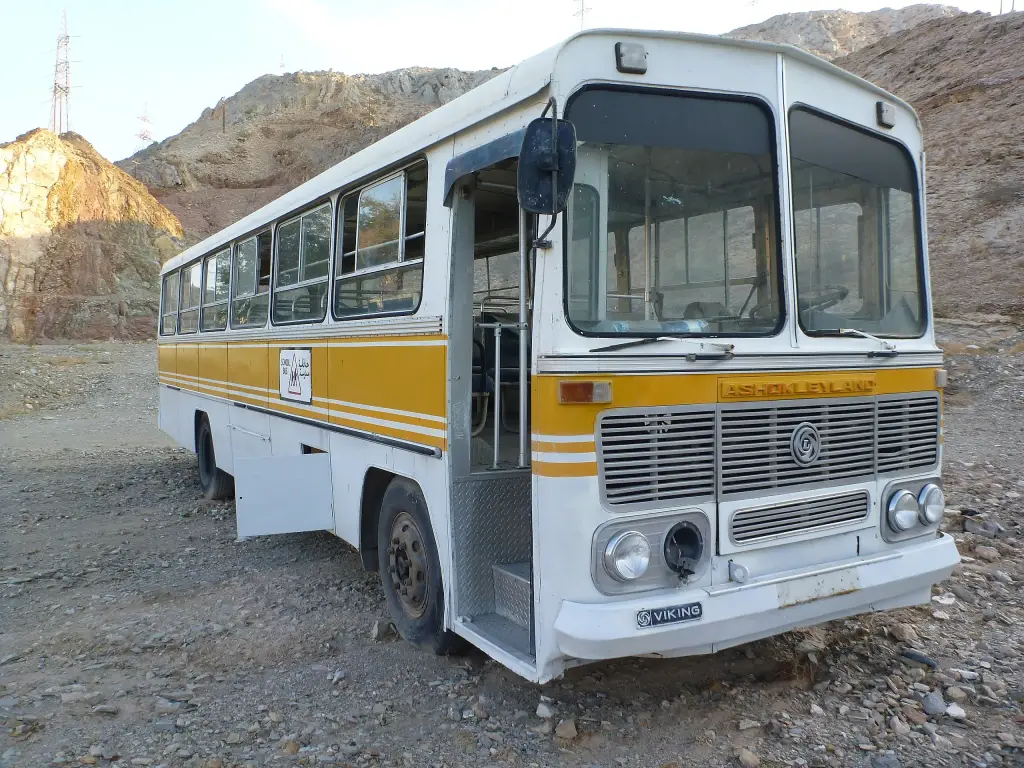
The Ashok Leyland Viking is a front-engined bus chassis that the Indian company introduced in 1976, based on the English Albion Viking. It has been bought in large numbers by private operators and state transport corporations, and it remains in production with diesel and CNG engines.
Ashok Leyland Viking at a glance
| Type | front-engined bus chassis |
|---|---|
| Introduced | 1976 |
| Based on | Albion Viking (United Kingdom) |
| Duties | intercity, urban and rural services |
| India first | first bus in India with an alternator |
| Front overhang | longer than usual, so the entrance door can sit ahead of the front axle |
| CNG | naturally aspirated CNG engine designed for BEST, 1997 |
| Low-floor step | two-step entry chassis from 2003, floor height 860 mm |
| Engines today | diesel and CNG, BS VI |
| Wheelbases | four options |
| Emissions system | intelligent exhaust gas recirculation (iEGR) |
Based on one source, the English Wikipedia article on the Viking, which is short; the article is therefore shorter than usual.
History of the Ashok Leyland Viking
Ashok Leyland introduced the Viking in 1976 as a front-engined bus chassis for intercity work and for services that run from towns out into the countryside. It was based on the Albion Viking, a British bus chassis, and it went on to attract a large following among both private bus operators and government transport corporations in India. The Viking was the first bus in the country to be fitted with an alternator.
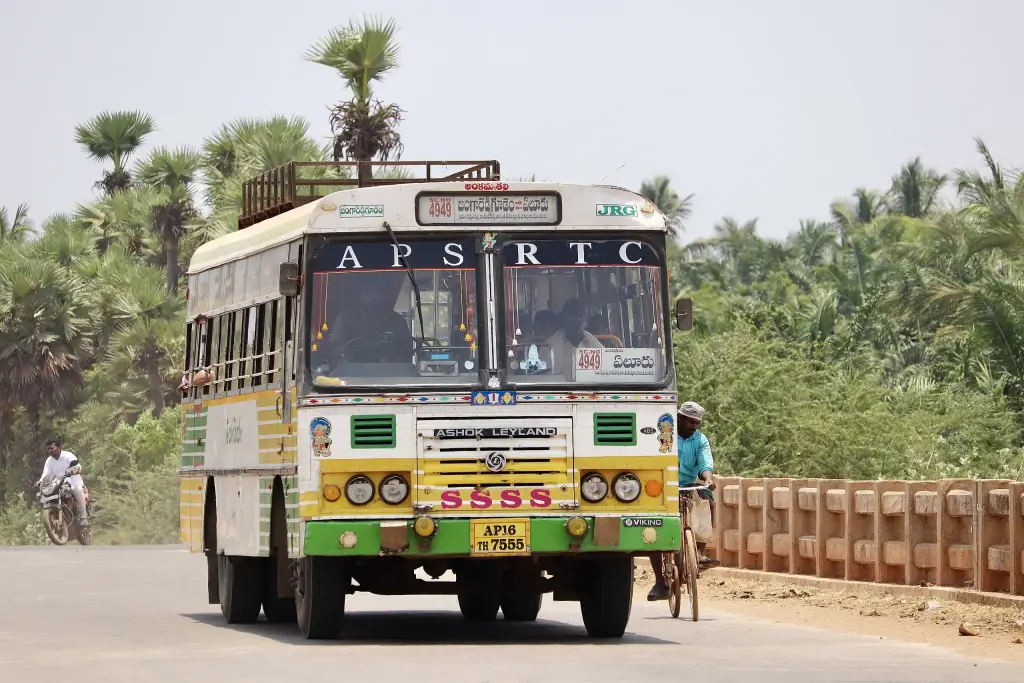
The chassis was laid out with a longer front overhang than usual, which made it possible to place the entrance door ahead of the front axle — a detail that matters for one-man operation and for crowded city stops. In 1997 Ashok Leyland added a naturally aspirated CNG engine developed specifically for BEST, the municipal bus operator in Mumbai. In 2003 the company launched a two-step entry version as an alternative to the three-step buses then common; that chassis had a floor height of 860 mm. Today the line-up still consists of diesel and CNG engines, now conforming to BS VI norms, with four wheelbase options and an intelligent exhaust gas recirculation system.
Design and features
- Front-engined layout: the engine sits in front of the driver, the classic arrangement for Indian bus chassis.
- Alternator: the Viking was the first bus in India to use one instead of a dynamo.
- Door ahead of the axle: the long front overhang allows the entrance to be placed before the front wheel.
- CNG option: a gas engine has been available since 1997, when one was designed for BEST.
- Low entry: the two-step chassis of 2003 brought the floor down to 860 mm.
Ashok Leyland Viking versions
- Diesel Viking: the standard chassis, now with a BS VI engine.
- CNG Viking: a naturally aspirated gas engine, introduced for BEST in 1997 and still offered.
- Two-step entry chassis (2003): a lower-floor alternative to the three-step buses of the time.
- Four wheelbases: the current range is built on a choice of four wheelbase lengths.
The other military vehicle from Ashok Leyland in this collection is the Stallion truck. More vehicles are in the Ashok Leyland collection.
Video: Ashok Leyland Viking 160bhp Drive
Video on YouTube.
Sources
- Ashok Leyland Viking, English Wikipedia: history, layout, CNG and low-entry versions