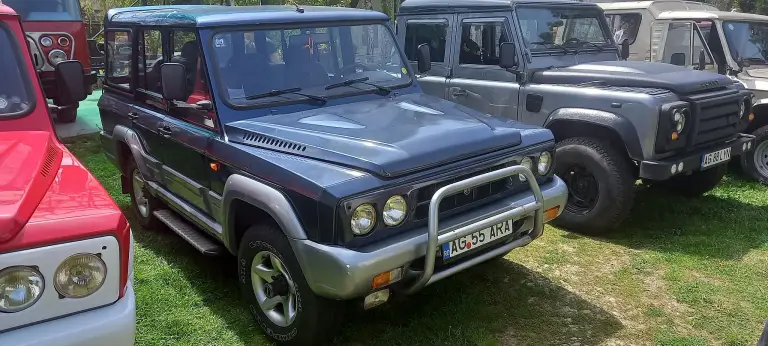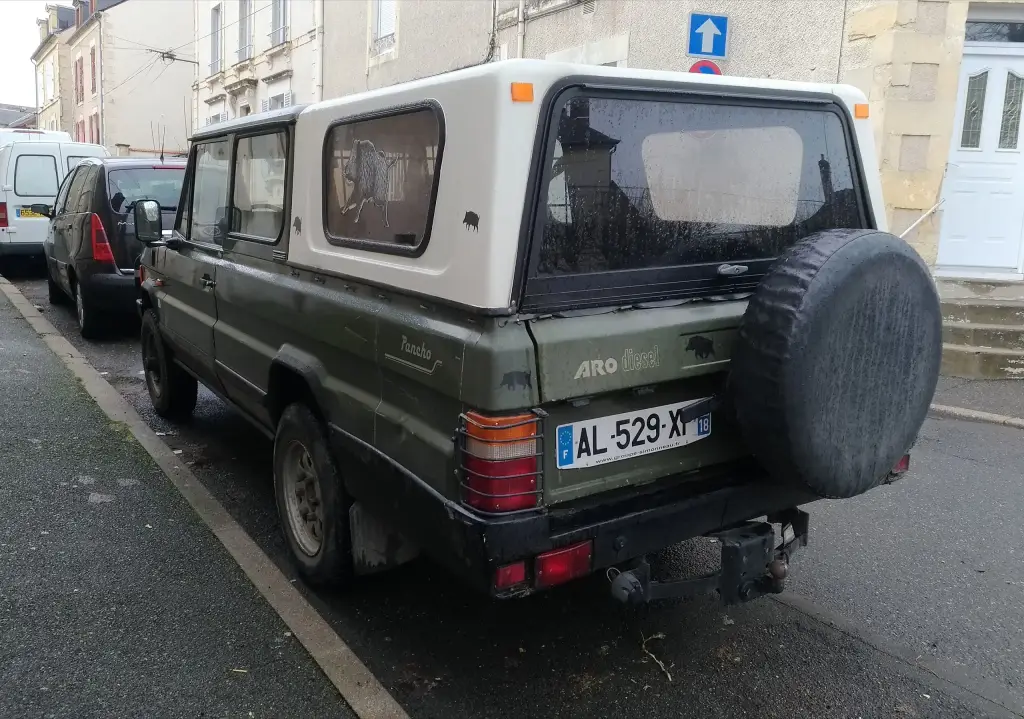
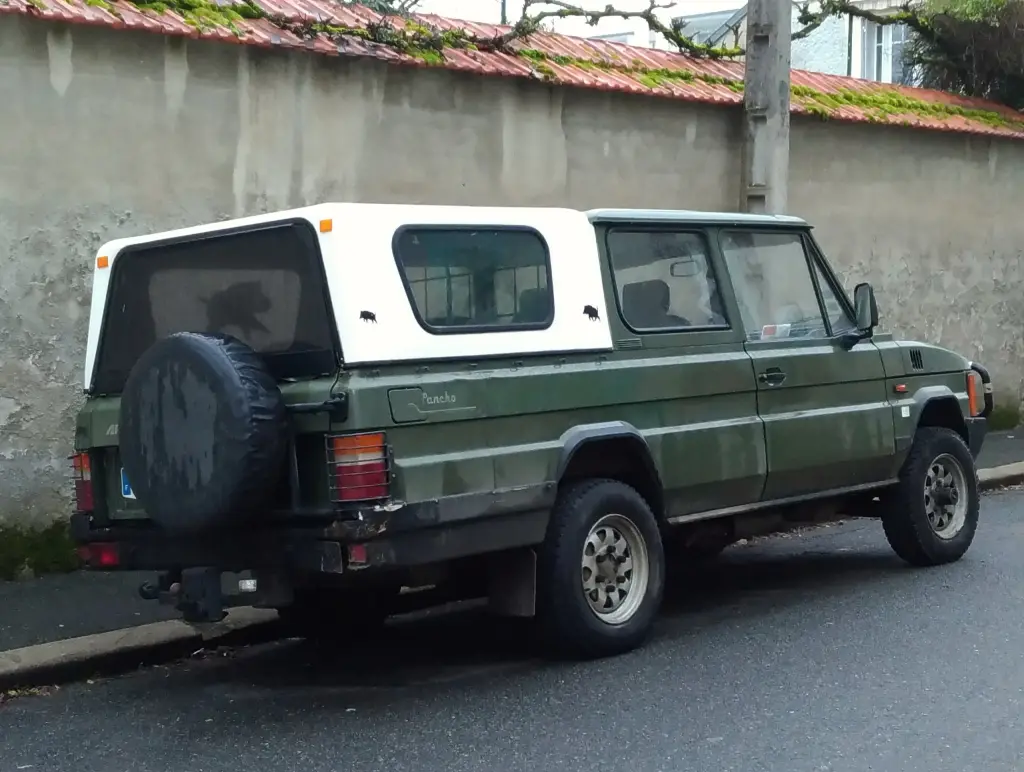
The ARO 10 was ARO’s compact off-road vehicle, launched in 1980 as a smaller companion to the ARO 24 Series. It used engines and front-axle parts from the Dacia 1300, came as a convertible, three-door, five-door and pick-up, and was marketed abroad under several names, including Dacia Duster in the United Kingdom.
ARO 10 at a glance
| Maker | ARO, Câmpulung, Romania |
|---|---|
| Production | 1980–2006; to 2005 according to Romanian sources |
| Related | Dacia 1300 and 1310 (engine, front axle and interior parts) |
| Class | compact off-roader, about the size of a Jeep Wrangler |
| Drive | front engine, rear- or four-wheel drive |
| Engines | seven in total, petrol and diesel, from 1.2 to 1.9 litres |
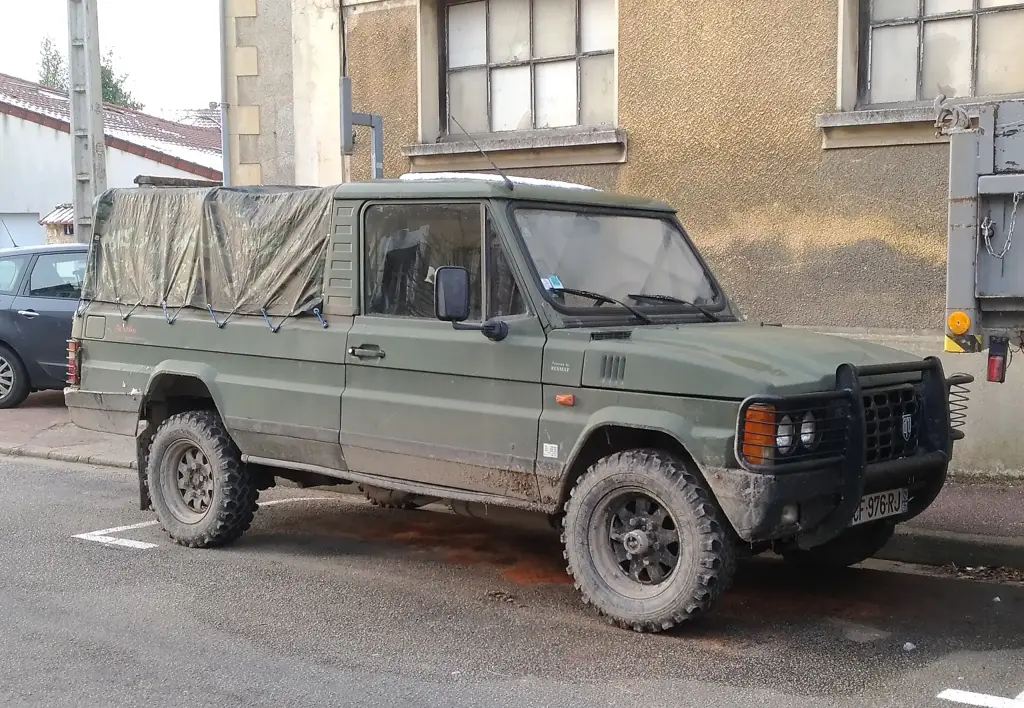
| Bodies | two-door convertible, three-door, five-door, single- and double-cab pick-ups |
| Sold as | Dacia Duster (UK), Dacia 10, Aro Super Ischia, Aro Enduro x4 |
| Last version | ARO 10 Super of 1999, on an ARO 24 chassis |
History of the ARO 10
First generation, 1980
The ARO 10 arrived in 1980 as the “little brother” of the ARO 24 Series. It shared parts with the Dacia 1300, from the engine to the front axle, and was inspired by the Renault Rodeo and Citroën Méhari; its size was close to that of a Jeep Wrangler. The first series stood out for an independent rear axle and rear disc brakes. Because that layout was costly and troublesome in service, ARO switched to a rigid axle with leaf springs shared with the Dacia Papuc and to rear drum brakes. At first only the 1,289 cc, 54 hp engine of the Dacia 1300 and 1310 was available; from 1985 came the 1,397 cc, 64 hp unit of the Dacia 1410, and top speed rose from 110 to 120 km/h. The 1,289 cc engine was gradually dropped around 1986. Standard wheels were 175-SR-14, with 175-SR-15 and 185-R-15C optional; after 1988 cars with the 1,397 cc engine received 15-inch, six-bolt wheels.
Names at home and abroad
In the United Kingdom the ARO 10 was sold as the Dacia Duster, and in some markets as the Dacia 10. In Italy the local company Ali Ciemme assembled it as the Aro Super Ischia with the 1.4-litre Renault petrol engine licence-built by Dacia. With Volkswagen’s 1.6-litre petrol or diesel engine it was sold as the Aro Enduro x4 from 1987 to 1989, and a turbodiesel was presented at the end of 1988. Italian-assembled sales were modest, reaching 2,500 cars in 1987 and 1,800 in 1988. Volkswagen-engined cars had 28 per cent Romanian parts content, the rest being Italian and German; they also received a stronger differential for the extra torque.
Second generation, 1992
The second generation brought a substantial restyle with a new front, available with two or four headlights depending on the version, and 15-inch wheels throughout. The standard model was now called 10.4 and the pick-up 10.9. Engines were the 1.4-litre, 64 hp unit and the new 1.6-litre, 72 hp engine from the Dacia Nova, and a five-speed gearbox became an option, with reversed rotation and differentials mounted the other way round. Rear-wheel drive only also became available as an option.
Spartana
In 1996 ARO presented the 10 Spartana, a convertible with a folding windscreen; production is usually dated from 1997. It initially used the 1,200 cc, 54 hp Renault Twingo engine with a four-speed gearbox and rear-wheel drive only. In 1997 a four-wheel-drive version followed with the Dacia 1.4- and 1.6-litre engines.
Modern engines and the ARO 10 Super
From 1997 ARO fitted more modern power units: Renault petrol and diesel engines known from the Mégane, a 1.6-litre 16-valve unit from Daewoo (Nubira) and a Peugeot diesel. The classic Dacia engines continued in modernised, fuel-injected form, first the 1,557 cc, 72 hp engine and later a 1,397 cc, 62 hp unit; carburettor versions remained for the home market. The third generation of 1999, the ARO 10 Super, had a redesigned body and was built on an ARO 24 chassis, with engines largely taken from the ARO 24, including Peugeot diesels and Toyota units. It was produced in relatively small numbers, and the model ended with the closure of ARO around 2005–2006.
Versions
The range comprised the 10.1 two-door convertible, the 10.4 three-door, the 10 Spartana and the 11.4 five-door, with the 10.6 regular-cab and 11.9 double-cab pick-ups. Other versions listed by ARO were the 10.0, 10.2, 10.3, 10.5 and 10.9.
Design and features
- Dacia 1300 underpinnings: engines, front axle and much of the interior were shared with Romania’s family car, keeping the ARO 10 simple to build and service.
- Compact size: about the size of a Jeep Wrangler, well below the mid-size ARO 24.
- Choice of drive: rear-wheel drive or four-wheel drive, with a five-speed gearbox available from 1992.
- Convertible and pick-up bodies: the range ran from the open Spartana to single- and double-cab commercials.
ARO 10 versions
- ARO 10.1: two-door convertible.
- ARO 10.4: three-door, the standard model of the second generation.
- ARO 10 Spartana: convertible with a folding windscreen, made from 1996–97.
- ARO 10.6 and 11.9: regular-cab and double-cab pick-ups, the latter also called 10.9.
- ARO 11.4: five-door estate.
- ARO 10 Super: 1999 generation on the ARO 24 chassis.
The ARO 10 was the smaller stablemate of the ARO 24 Series, and it was preceded by the ARO M461. More vehicles are in the ARO collection.
Video: ARO 10
Video on YouTube.
Sources
- ARO 10, English Wikipedia: production dates, versions, Italian assembly, Spartana, 10 Super
- ARO 10, Romanian Wikipedia: development, engines, generations, Spartana