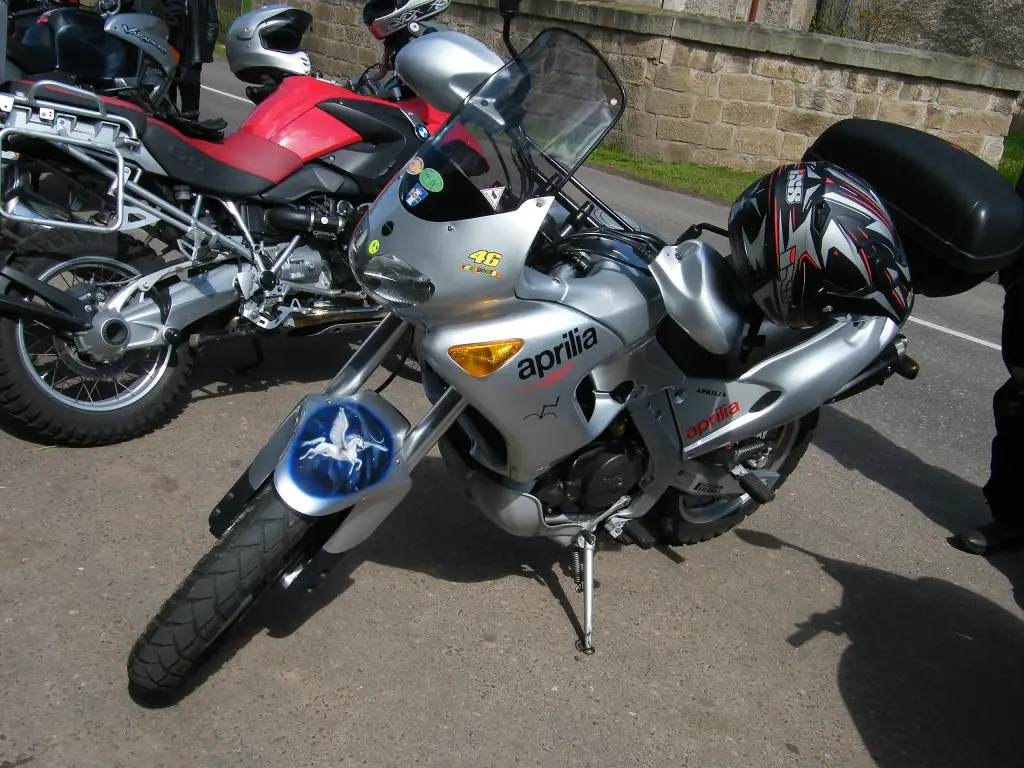
The Aprilia Pegaso is an enduro motorcycle made by Aprilia, one of the first alternatives to the classic desert-and-road enduro, with a chassis aimed more at asphalt. It was shown to the public in 1989 as a 125 cc, was also built as a 50, 600 and 650, and left production for good in 2011.
Aprilia Pegaso at a glance
| Shown | 1989 (Pegaso 125); out of production in 2011 |
|---|---|
| Displacements | 50 cc (1992–1995), 125 cc (1989–1995), 600 cc (1990), 650 cc (from 1992) |
| Pegaso 125 engine | Rotax 123, 124.8 cc two-stroke, liquid-cooled, six-speed gearbox |
| Pegaso 125 weight | 110 kg dry (declared), wheelbase 1,380 mm, seat height 900 mm |
| Pegaso 650 engine (to 2004) | Rotax single-cylinder four-stroke, liquid-cooled, five valves, balance shaft, up to 50 hp |
| Pegaso 650, 1992–1996 | 48 hp (35 kW) at 6,250 rpm; nominally 39 hp from 1996 |
| Pegaso 650 Strada, Trail, Factory (2005–2009) | 660 cc Minarelli engine, as in the Yamaha XT 660 R |
The Italian page covers the 125 and 50, and the German page covers the 650 in detail, so the figures for each size rest on one source.
History of the Aprilia Pegaso
The Pegaso was presented in 1989 in the 125 cc size. It was one of the first alternatives to the classic all-round desert-and-road enduro, with a chassis aimed at asphalt, and so anticipated the later road-enduro. A 600 followed in 1990, then the first Pegaso 650 and a Pegaso 50 moped in 1992; a 500 was sold in Austria and Switzerland.
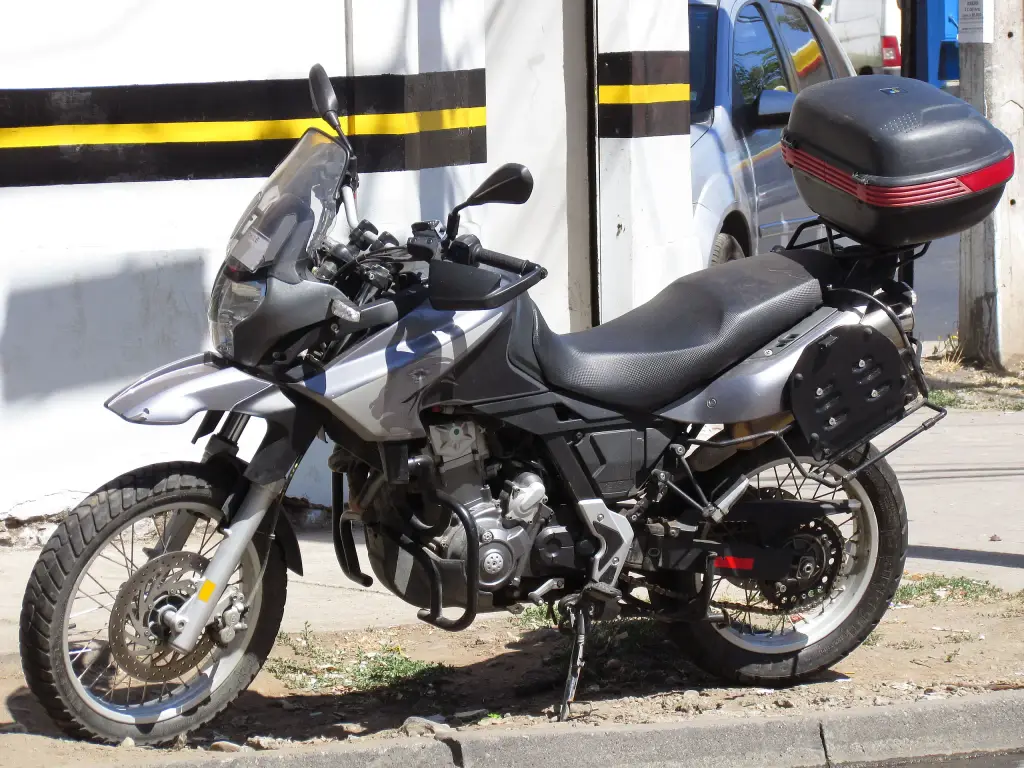
Pegaso 125, 1989–1995
The 125 was derived from the Tuareg Wind and inherited its frame and engine, the Rotax 123 two-stroke of 124.8 cc. It had an electronic RAVE exhaust valve opening at 7,100 rpm, a Dell’Orto PHBH 28 carburettor, a square-tube steel frame, a 38 mm inverted fork with 220 mm of travel and a rear suspension with 220 mm of travel. The tank held 13 litres, 5 of them reserve, and the declared dry weight was 110 kg. The second series of 1990 changed mainly the colours and graphics; a restyling in 1991 replaced the twin headlights with a single one.
Pegaso 650
German Wikipedia describes the Pegaso 650 as developing from a rather rough road enduro (to 1996) into a touring fun bike (1997–2003) and then into a supermoto and trail bike (2004–2009). The first generation (1992–1996) offered 48 hp and, although about 1,500 DM cheaper than the BMW F 650, was no great success in Germany; a 14 litre tank and an upside-down fork were fitted. From 1993 to 2000 Aprilia also built the BMW F 650 on the same production line.
The 1997–2000 bike (type ML, also called Cube) had a completely new frame, a lower seat, a 22-litre tank and a ready-to-ride weight of 200 kg, which turned it into a touring enduro; a Garda special came with cases, top case and centre stand. The Pegaso 650 ie of 2001–2004 added fuel injection and an uncontrolled catalytic converter. From 2005 to 2009 the bike was completely redeveloped as the Strada, Trail and Factory, with a 660 cc Minarelli engine, an electrically opening tank flap with a small storage compartment and an on-board computer.
Design and features
- Pegaso 125 engine: Rotax 123 two-stroke with a six-speed gearbox, a short first gear and a very long sixth, and a speedometer top speed of 150 km/h.
- Brakes (125): a 300 mm front disc and a 220 mm rear disc.
- Pegaso 650 engine: a liquid-cooled Rotax single with five valves and a balance shaft, with up to 50 hp.
- Strada, Trail, Factory: the Trail has longer suspension travel, a higher mudguard and spoked wheels, 19 inches at the front and 17 at the rear.
- Seat: available in two heights on the 2005–2009 bikes; the Factory comes with the higher one.
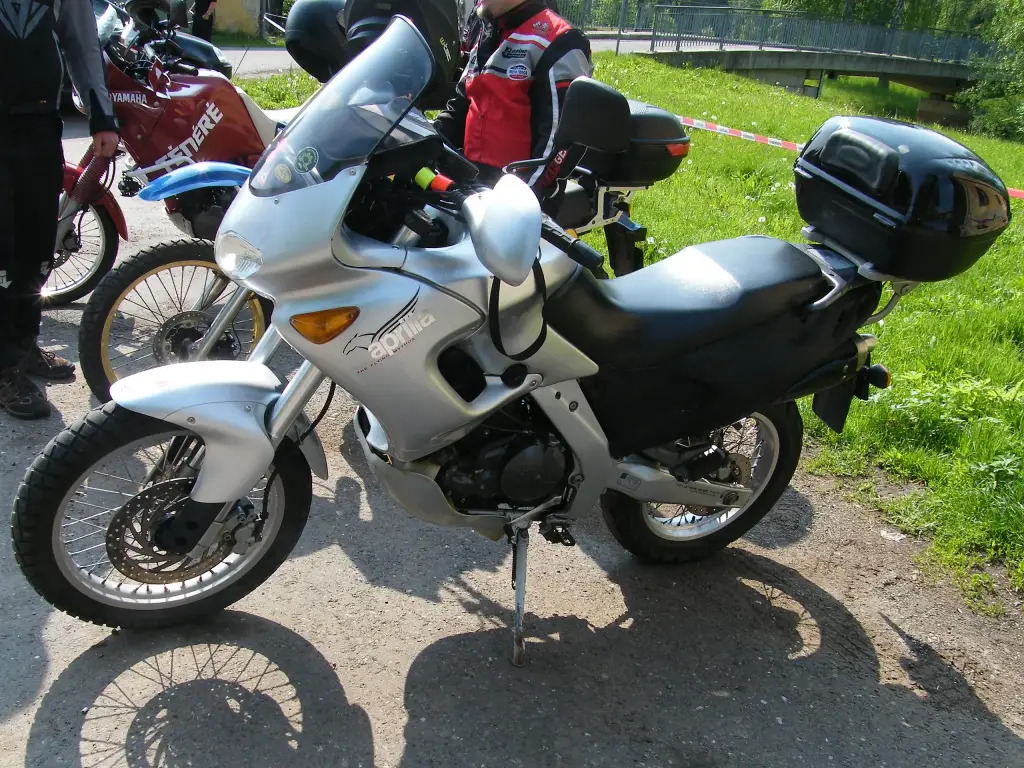
Aprilia Pegaso versions
- Pegaso 50 (1992–1995): the moped, close to the Aprilia RX.
- Pegaso 125 (1989–1995): the first Pegaso, from the Tuareg Wind.
- Pegaso 600 (1990): recognisable by its round double headlight.
- Pegaso 650 (1992–2004): the Rotax single, in series GA/MX, ML (Cube) and RW (650 ie).
- Pegaso 650 Strada, Trail and Factory (2005–2009): the 660 cc Minarelli generation.
More Aprilia motorcycles are in our Aprilia collection, for example the Tuareg, the RX and the Caponord.
Aprilia Pegaso questions and answers
When was the Aprilia Pegaso introduced?
In 1989, as the Pegaso 125; it left production in 2011.
What engine does the Pegaso 650 have?
Until 2004 a liquid-cooled Rotax single-cylinder four-stroke with five valves, with up to 50 hp; from 2005 a 660 cc Minarelli engine.
Is the Pegaso related to the Tuareg?
Yes, the Pegaso 125 was derived from the Tuareg Wind and used its frame and engine.
How much power did the first Pegaso 650 have?
48 hp (35 kW) at 6,250 rpm; from 1996 the nominal figure was 39 hp.
What are the Strada, Trail and Factory?
The three versions of the 650 built from 2005 to 2009.
Video: aprilia pegaso 650
Video by Bruno Trancoso on YouTube.
Sources
- Aprilia Pegaso, Italian Wikipedia: Pegaso 50 and 125, dates, technical details
- Aprilia Pegaso 650, German Wikipedia: Pegaso 650 generations and figures