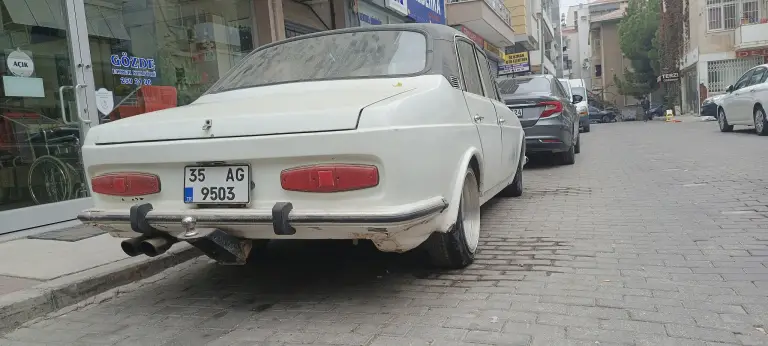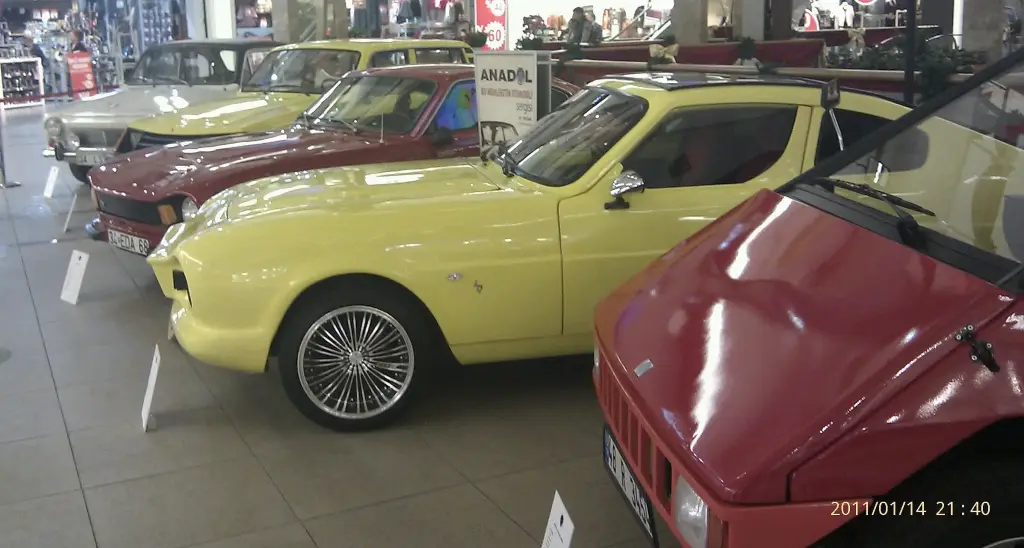
The Anadol STC-16 was the sports coupé of Turkey’s first car maker. Its first prototype was developed in 1972 and it was produced only between 1973 and 1975. Designed by Eralp Noyan, it holds the title of the first car designed and series-produced in Turkey as a sports car, after the Devrim of 1961.
Anadol STC-16 at a glance
| Maker | Otosan Otomobil Sanayii, Istanbul |
|---|---|
| Production | 1973–1975 |
| Built | 176 |
| Designer | Eralp Noyan |
| Body | fibreglass monocoque coupé, three doors |
| Engine | 1,599 cc Ford Kent four-cylinder |
| Power | 68 PS at 5,200 rpm |
| Drive | rear-wheel drive, four-speed manual |
| Dimensions | 3,980 mm long, 1,640 mm wide, 1,280 mm high |
| Wheelbase | 2,280 mm |
| Weight | 920 kg |
| Top speed | 174 km/h; 0–100 km/h in 15–17 seconds |
based on one source: the Turkish Wikipedia article, with the English article on Anadol used only for the model’s place in the range.
History of the Anadol STC-16
Design
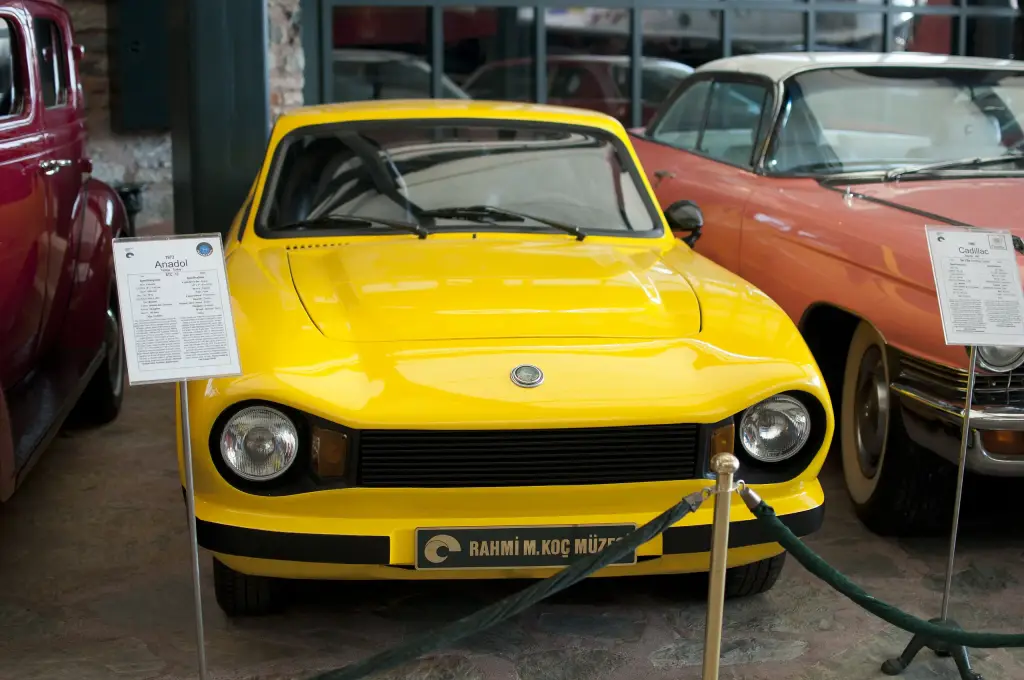
In 1971 Erdoğan Gönül, then general manager of Otosan and a son-in-law of Vehbi Koç, persuaded the company’s management to approve series production of a sports car. The STC-16 was intended for wealthy buyers and for prestige in international rallies. It was drawn by a team led by Eralp Noyan, a graduate of the Royal Academy of Fine Arts in Belgium; the design carried echoes of the fashionable sports cars of the day such as the Datsun 240Z, Saab Sonett, Aston Martin, Ginetta and Marcos, but had a character of its own. Noyan is said to have drawn the car’s interior and exterior character after the Supermarine Spitfire, the most advanced fighter aircraft of the Second World War.
The car went onto the production line under the code A4, using a shortened and modified Anadol chassis and suspension and a 1,599 cc Ford Mexico engine. The gearbox came from the high-performance British Ford Cortina and Capri models. The dashboard would not have looked out of place in an Italian or British sports car of the period: besides the speedometer and rev counter it had a resettable trip meter, a Lucas ammeter and Smiths gauges for oil, fuel and temperature. After eleven months of development three prototypes were built, tested at Cengiz Topel airport and on the İstanbul–Adapazarï section of the E-5 highway, and crash-tested. The production manager, Nihat Atasagun, then took a car to the MIRA test track in Britain, where it drew so much attention that it was taken for a new British sports model; its “320-E” test plate prompted many enquiries. British drivers tried it and their suggestions on performance, handling and safety were built in. The first production STC-16 left the line in April 1973.
Name
STC-16 stands for “Sport Turkish Car 1600”, and the abbreviation has also been explained as “Sport Touring Coupé 1600”. Young enthusiasts adopted it as “Süper Türk Canavarı 1600” — the Super Turkish Monster 1600.
Sales and rallying
Production did not last long. The oil crisis of 1973 raised fuel prices and the cost of fibreglass, a petroleum product, so the STC-16 became very expensive to build. Other Anadol models cost 50,000–55,000 Turkish lira at the time, while the STC-16 was priced above 70,000, which limited its customers to rally drivers and sports-car enthusiasts; its fuel consumption was high as well. Between 1973 and 1975 a total of 176 cars were built, most of them in 1973. They were normally finished in “Alanya Yellow” (Ford Signal Yellow), a colour the model became identified with, though a few were painted red with white stripes or white with blue stripes, as was fashionable on sports cars of the day.
The car nevertheless earned a reputation among the young. Modified versions competed in and won many rallies in Turkey and abroad; the rally cars used a lighter chassis instead of the heavy standard one and engines tuned to 140 hp. Among the best-known STC-16 drivers were Renç Koçibey, Demir Bükey, Romolo Marcopoli, İskender Aruoba, Cihat Gürkan, Ali Furgaç, Şevki Gökerman, Serdar Bostancı, Murat Okçuoğlu, Cüneyd Işıngör, Mehmet Becce, Hızır Gürel, Derya Karaköse and Osman Arabacı.
Design and features
- Fibreglass coupé body: a monocoque shell over a shortened and modified Anadol chassis.
- Ford Kent engine: 1,599 cc, 68 PS at 5,200 rpm, with 116 Nm of torque at 2,600 rpm.
- Proper sports-car cabin: Lucas ammeter, Smiths oil, fuel and temperature gauges and a resettable trip meter.
- Aircraft-inspired line: the designer drew the car’s character after the Supermarine Spitfire.
- Rally development: works cars ran lighter chassis and 140 hp engines.
Anadol STC-16 versions
- Series car (1973–1975): 68 PS, four-speed gearbox, disc front brakes and drum rear brakes.
- Rally cars: lighter chassis and modified engines of about 140 hp.
- Alanya Yellow: the standard colour, Ford Signal Yellow.
- Striped cars: a few red cars with white stripes and white cars with blue stripes.
The STC-16 was a cousin of the Anadol A1, whose chassis and running gear it used in shortened form. More models are in the Anadol collection.
Video: Anadol STC on the 2011 İstanbul Rally Cup
Video on YouTube.
Sources
- Anadol STC-16, Turkish Wikipedia: design, development, technical data, production, rallying
- Anadol, English Wikipedia: place of the STC-16 in the Anadol range