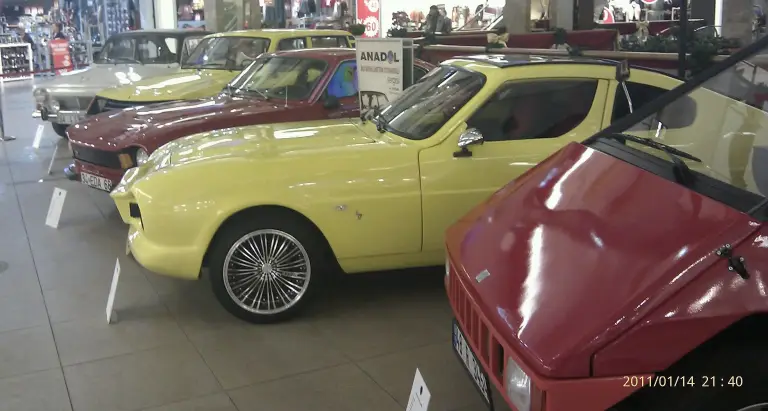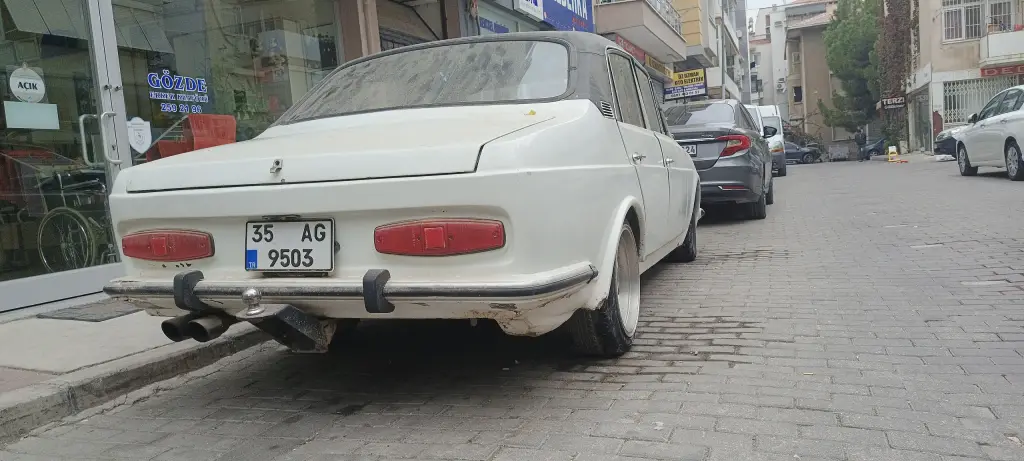
The Anadol A1 was the first model of Turkey’s first domestic mass-production car company. It went into production on 19 December 1966 at Otosan’s new plant in Istanbul, with a fibreglass body styled by Tom Karen of Ogle Design and a chassis developed by the British firm Reliant under the code FW5.
Anadol A1 at a glance
| Maker | Otosan Otomobil Sanayii, Istanbul |
|---|---|
| Production | 1966–1975 |
| Prototype code | FW5 (developed by Reliant) |
| Styling | Tom Karen, Ogle Design |
| Body | fibreglass coupé; saloon and estate from late 1973 |
| Chassis | steel H-frame |
| Engine | 1,198 cc Ford Kent (1966–68); 1,298 cc Kent from 1968 |
| Power | 49 hp, then 54 hp |
| Drive | rear-wheel drive, four-speed manual |
| Suspension | independent front on coil springs; live rear axle on leaf springs |
| Brakes | disc front, drum rear |
| Built | 15,231 Mk I and 4,493 Mk II |
History of the Anadol A1
The A1 was the first product of Anadol, a company whose name came from the Turkish name for Anatolia, Anadolu. The car was developed for Otosan by Reliant, which built the prototype under the code FW5, and the styling was by Tom Karen of Ogle Design. The five-seat body was made of fibreglass and bolted to a steel H-frame chassis; the front suspension used coil springs, the rear a live axle on leaf springs, and the steering a recirculating ball mechanism. In 1967 a New Zealand entrepreneur, Alan Gibbs, announced that he would build the car in his own country as the Anziel Nova, but the project never went beyond an announcement and a prototype.
The Mk I, 1966–1972
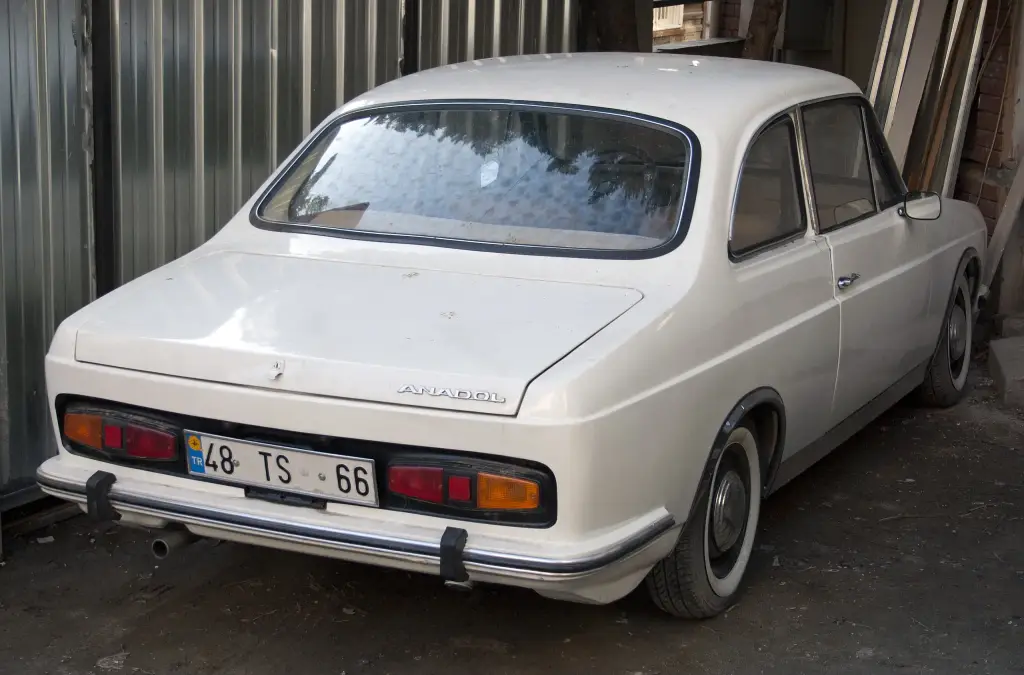
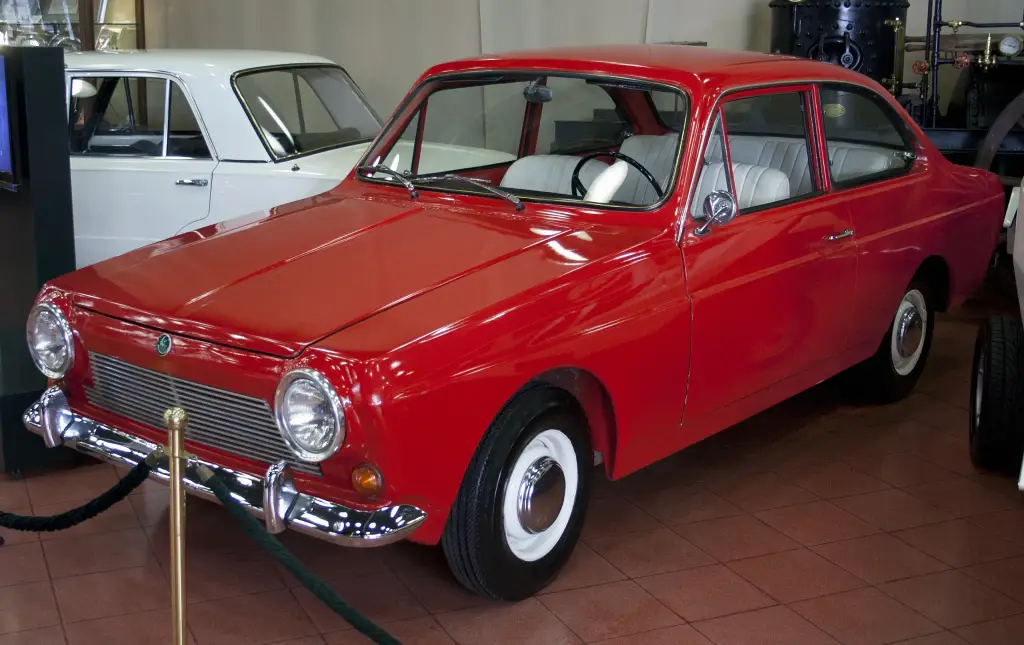
Production began at Otosan’s new plant on the east side of Istanbul on 19 December 1966, with the 1,198 cc Ford Kent engine of 49 hp. In 1968 the engine was replaced by the larger 1,298 cc Kent unit of 54 hp. In 1969 the dashboard gauges were given a new design and their positions were changed, while the steering wheel was made more ergonomic. In 1970 the two round headlamps at the front gave way to oval lamps, a new transmission was introduced and the bumpers were changed. In 1971 the roof lining was covered with vinyl, following the fashion of the period, and the design then remained essentially unchanged until April 1972. A total of 15,231 cars of this first series, later called the Mk I, were built.
Akdeniz and the Mk II, 1972–1975
In 1971 a special version was developed for the Mediterranean Games in Ízmir and named the Akdeniz. It acted as a preview of the new model that arrived in 1972: the bumpers were integrated into the shape of the bodywork, the grille was different, the headlamps were rectangular and accompanied by white signal lamps, and the rear lights were new. The interior was completely changed as well, with a new dashboard, new seats and new finishing materials. From 1972 this design became the standard Anadol coupé and stayed in production until 1975; 4,493 cars of the Mk II series were made in about five years. The body was originally offered only as a coupé, but in late 1973 a saloon and an estate version joined the range.
Rallying
The A1 was the first Turkish rally car, and the Anadol Ralli Takımı (ART) became the first Turkish rally team. The first official rally in Turkey, the 1968 Trakya Rally, was won by two A1 drivers, Renç Koçibey and Demir Bükey. Other well-known A1 rally drivers included Romolo Marcopoli, İskender Atakan, Claude Nahum, Mete Oktar, Şükrü Okçu and Serdar Bostancı. In the same year İskender Aruoba took an A1 on the 30,000 km Africa–Asia–Europe Tour, which lasted eight months.
Design and features
- Fibreglass body: light and cheap to shape, mounted on a steel H-frame chassis.
- Ford Kent power: a 1,198 cc engine of 49 hp at launch, replaced in 1968 by a 1,298 cc unit of 54 hp.
- Ogle styling: a clean coupé shape by Tom Karen, the designer behind several British specialist cars.
- Gradual development: new gauges in 1969, oval headlamps and a new transmission in 1970, a vinyl roof lining in 1971.
- Rally pedigree: the car that started Turkish rallying and won the first official rally in the country.
Anadol A1 versions
- A1 Mk I (1966–1972): round headlamps, 1,198 cc then 1,298 cc engine; 15,231 built.
- Anadol Akdeniz (1971): special edition for the Mediterranean Games in Ízmir, previewing the facelift.
- A1 Mk II (1972–1975): rectangular headlamps, integrated bumpers, new interior and vinyl roof lining; 4,493 built.
- Saloon and estate (from late 1973): additional body styles alongside the coupé.
- Super De Luxe prototype: an automatic-transmission show car that was never series-produced.
The A1 was joined in 1973 by the Anadol STC-16 sports coupé, and it was replaced in the range by the A2. More models are in the Anadol collection.
Video: Anadol A1 1967 Model İlk Üretim
Video on YouTube.
Sources
- Anadol, English Wikipedia: company history, design, engines, rallying
- Anadol A1/A2, Turkish Wikipedia: production figures, model years, facelift details