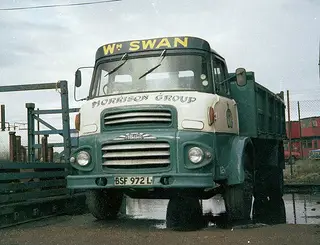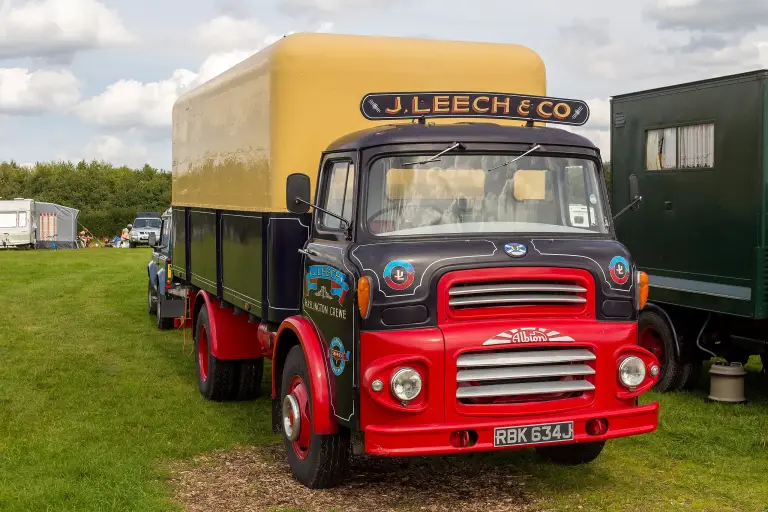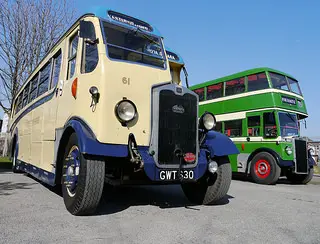
The Albion Valkyrie was one of the buses built by Albion Motors at Scotstoun, Glasgow. Almost all of the company’s bus models were given names beginning with V — the Victor, Valiant, Viking, Valkyrie and Venturer — a naming habit that lasted across the range. Buses were produced at the works alongside the lorries and continued to be sold under the Leyland name after 1972.
Albion Valkyrie at a glance
| Maker | Albion Motors Ltd, Scotstoun, Glasgow |
|---|---|
| Type | Bus |
| Naming | one of Albion’s V-named bus models |
| Sister models | Victor, Valiant, Viking, Venturer |
| Factory | Scotstoun works, Glasgow |
| Albion name dropped | 1972 |
| Bus production at Scotstoun | until 1980 |
| Build | single- and double-deck bodies on Albion chassis |
There is no dedicated Wikipedia article for the Valkyrie; this page is based on the Albion Motors company article only (based on one source).
History of the Albion Valkyrie
Albion and the bus business
Albion Motors was founded in Glasgow in 1899 and settled at its Scotstoun works in 1903. The first buses were built on an Albion truck chassis: the earliest were A10 lorry chassis, two of which were delivered to West Bromwich in 1914. A purpose-built double-deck chassis did not follow until 1931, and in 1923 the company announced its first dedicated bus chassis, derived from a 25 long cwt truck but with better springing and bodies seating between 12 and 23 passengers. The Model 26 of 1925 offered a lower frame, wheelbases from 135 to 192 inches and a 30 to 60 hp engine.
The V-named range
Almost all Albion buses were given names beginning with V. The Viking of 1927 was the first forward-control model, with the engine alongside the driver, which allowed 32 seats to be fitted; the Venturer of 1932 was the first double-deck design, with up to 51 seats. The Valkyrie belonged to the same naming family, which also included the Victor and the Valiant. Diesel engines, initially supplied by Gardner, became available from 1933, and Albion later offered its own diesels as well. The CX chassis of 1937 was a further step, with the engine and gearbox mounted together instead of being joined by a separate drive shaft.
After the war
Albion was bought by Leyland Motors in 1951 and joined the British Leyland Motor Corporation in 1968; production of the lorry range and of the Viking bus models continued through the merger. British Leyland eliminated the Albion name in 1972, and the vehicles were sold under the Leyland brand from the same factory. Trucks and buses, single- and double-deckers alike, were manufactured at the Scotstoun works until 1980, and Albion buses were exported to Asia, East Africa, Australia, India and South Africa.
Design and features
- V-naming: part of a bus family named Victor, Valiant, Viking, Valkyrie and Venturer.
- Albion chassis: built on the company’s own bus chassis, developed from truck practice at Scotstoun.
- Export work: Albion buses of the period were sold as far as Asia, East Africa, Australia, India and South Africa.
- Long-lived name: bus sales continued under Leyland after the Albion badge was retired in 1972.
Albion Valkyrie versions
- Valkyrie bus: one of Albion’s V-named bus models, with bodies by outside coachbuilders.
- Albion-badged buses: sold under the sunrise badge until 1972.
- Leyland-badged buses: the same Scotstoun production sold under the Leyland name after 1972.
The Valkyrie came from the same Glasgow works as the Chieftain and Clydesdale lorries. More vehicles are in the Albion collection.
Video: Preserved South Yorkshire Motors Albion Valkyrie 61 (GWT 630)
Video on YouTube.
Sources
- Albion Motors, English Wikipedia: bus chassis history, V-naming, exports, end of the Albion name