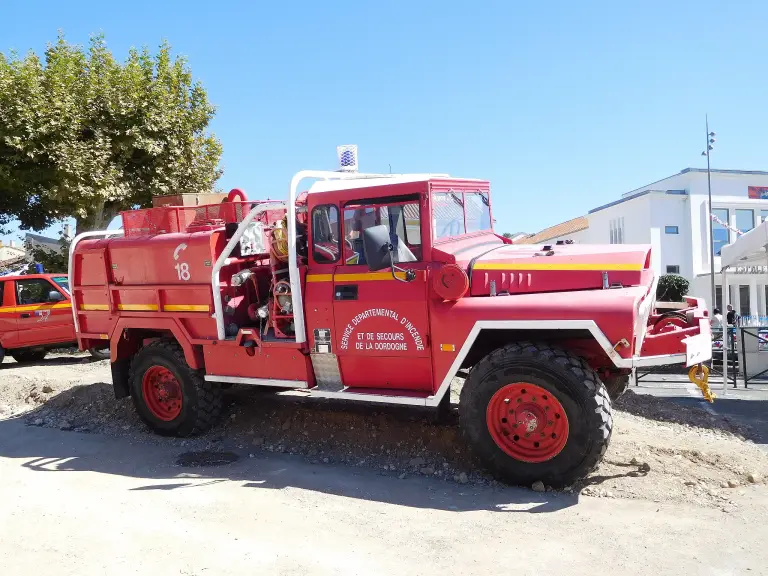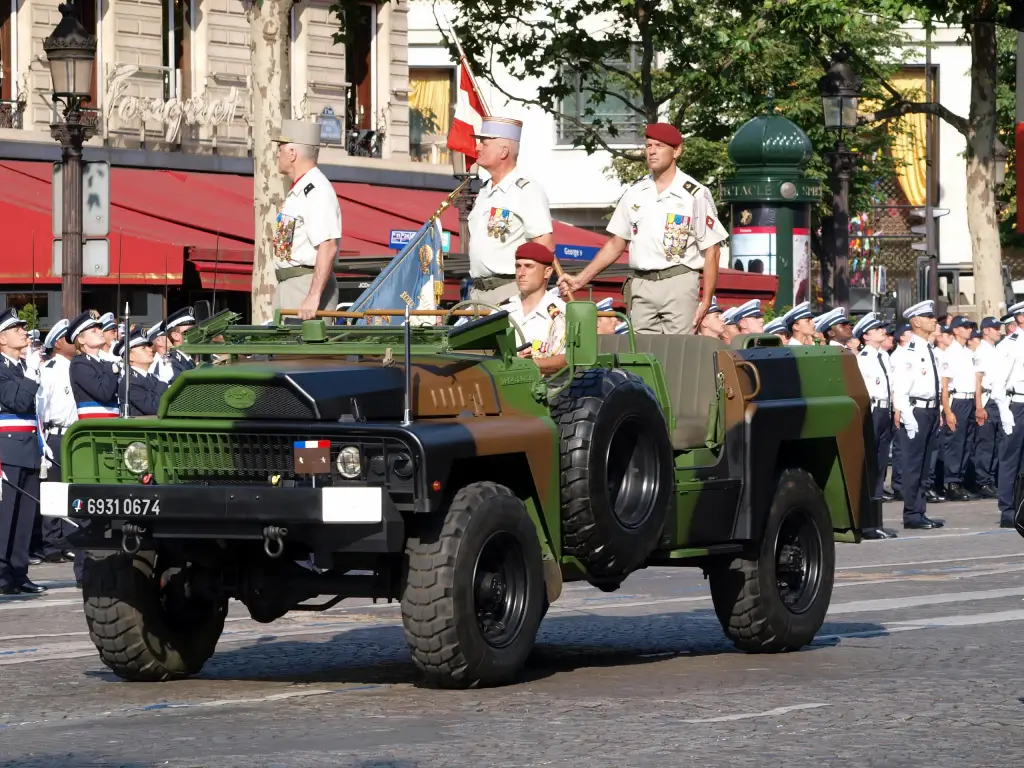
The ACMAT VLRA (Véhicule de Liaison de Reconnaissance et d’Appui, or liaison, reconnaissance and support vehicle) was launched in 1967. Built by the French firm ACMAT, it was prized above all for its robustness: it could carry 2.5 tonnes of payload over 1,600 km and was offered in more than 70 variants.
ACMAT VLRA at a glance
| Maker | ACMAT, France |
|---|---|
| Launched | 1967 |
| Layout | 4×4 and 6×6, armoured and unarmoured |
| Payload | 2.5 tonnes |
| Maximum range | 1,600 km |
| Water tank | 200 litres |
| Parts commonality | about 80%, over 3,500 parts, across the range |
| Variants | over 70 |
| Users | 42 countries, including France, Ireland and the United Kingdom |
| Notable order | 20 VLRA 4×4 TPK 420 STL2 for the British SAS, 1996 |
History of the ACMAT VLRA
The company behind it
ACMAT (Ateliers de Construction Mécanique de l’Atlantique, also known as ALM-ACMAT) had been building cross-country and military vehicles since 1958. Its machines were based on standardisation and the interchangeability of parts, and the same cabs, structural components, engines and drivetrains were used across the whole line. Parts were interchangeable with those of vehicles built 30 years earlier.
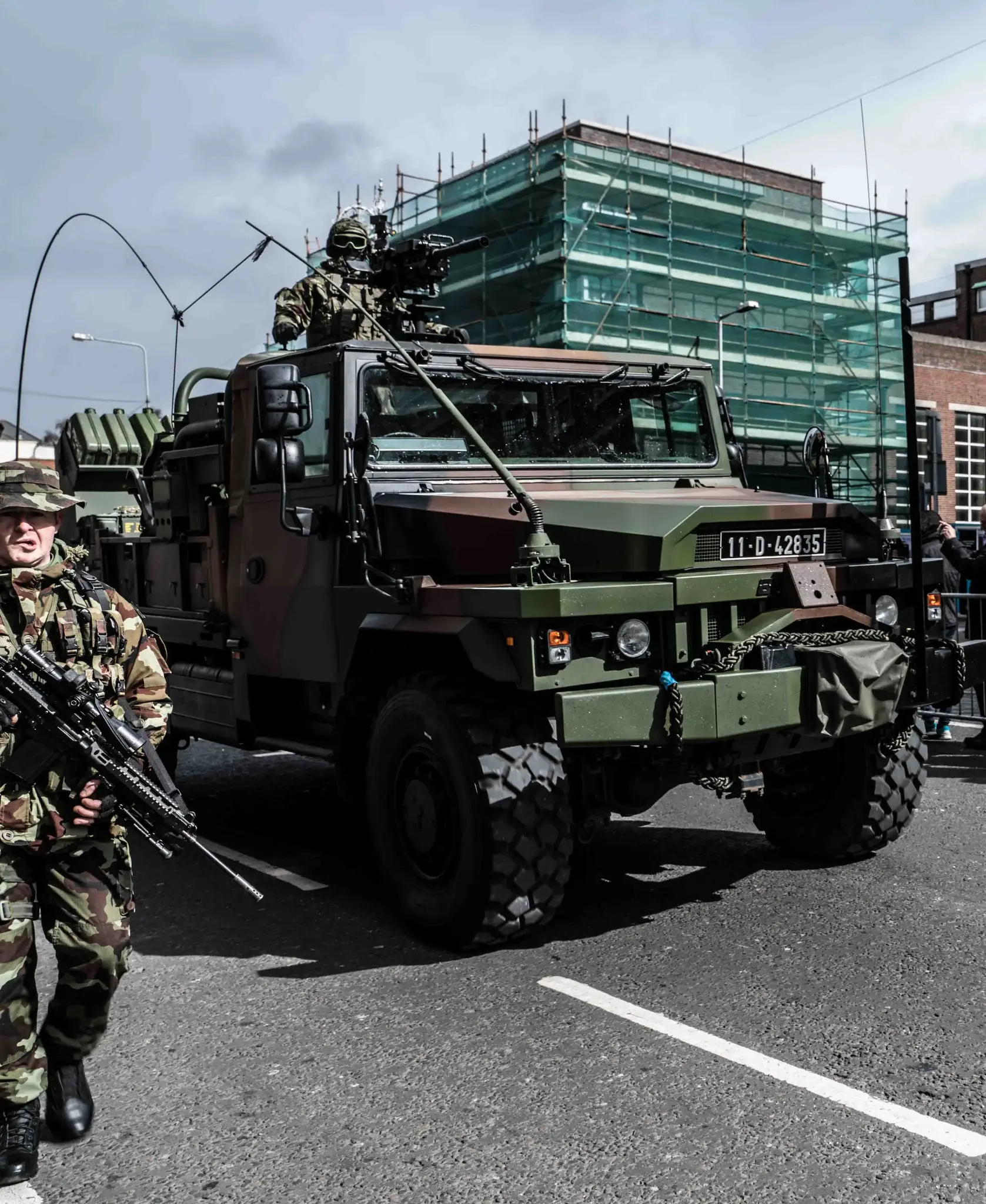
The VLRA of 1967
The VLRA arrived in 1967 and was characterised by its robustness. It could transport 2.5 tonnes of payload, had a maximum range of 1,600 km and carried a water tank of 200 litres. Reliability, simplicity and ruggedness were its selling points, together with the roughly 80 per cent commonality of parts — over 3,500 items — across the entire product line.
Built for export
Because of that simplicity and low cost, the VLRA was originally aimed at African and Asian countries that could not afford more expensive vehicles. The concept worked: ACMAT exported more than 85 per cent of the 12,000-plus vehicles it produced to 50 countries, and VLRA-series vehicles served with armed forces from Botswana and Chad to Chile, Cyprus, France, Ireland, Kenya, Mali, Morocco and Zimbabwe.
In British service
In 1996 the British Army ordered twenty VLRA 4×4 TPK 420 STL2 vehicles as logistics transport for motorised patrols of the Special Air Service. They were used during an operation in Afghanistan in November 2001; the only known photographs of the VLRA in SAS service were published in Raids magazine in October 2007.
Design and features
- Standardisation: about 80 per cent of parts, over 3,500 items, shared across the product line, so old and new vehicles remain interchangeable.
- Long legs: a 1,600 km maximum range suited it to desert and bush operations far from supply depots.
- Armoured options: both the 4×4 and 6×6 versions could be supplied with armour, and an NBC defence system was available.
- Two body families: the range covered utilities and soft-tops, hard-top vans, buses, ambulances and workshop bodies on the same chassis.
ACMAT VLRA versions
- 4×4 logistics range: TPK 420 VCT command vehicle, TPK 436 SCM with a hydraulic crane, TPK 420 SL7 recovery vehicle, TPK 425 SAM ambulance, TPK 430 F workshop and TPK 432 SB bus carrying 28 or 34 people.
- 6×6 range: TPK 635 SL7 recovery vehicle, TPK 640 WRT wrecker with a 30 t/m crane and TPK 641 GBS tipper.
- Light reconnaissance and support: TPK 415 SM3/FSP patrol vehicle, TPK 420 SM3 with a folding flat platform, TPK PMB mortar carrier firing from on board and TPK 425 STL/SH.
- Personnel and equipment: TPK 640 SM3, TPK 640 CTL for 18 troops with a 12.7 mm mount or Milan missile, TPK 641 VPC with a twin 20 mm cannon and TPK 650 SH/STL shelter carrier.
- Semi-trailer tractors: TPK 635 TSR and TPK 635 TSR 3 EC, and the armoured TCM 420 BL6 reconnaissance and command vehicle.
- Special bodies: ambulances, fire fighting vehicles, fluid carriers for water and petroleum, wireless and communications vehicles, cranes, dump trucks and multiple rocket launcher carriers.
The various TPK model designations used across the range are summarised in the ACMAT TPK article. More French military vehicles are collected under ACMAT.
Video: ALM ACMAT VLRA TPK 420 SM
Video on YouTube.
Sources
- ACMAT VLRA, English Wikipedia: launch date, payload, range, variants, users
- ACMAT, English Wikipedia: company history, export figures, VLRA 2