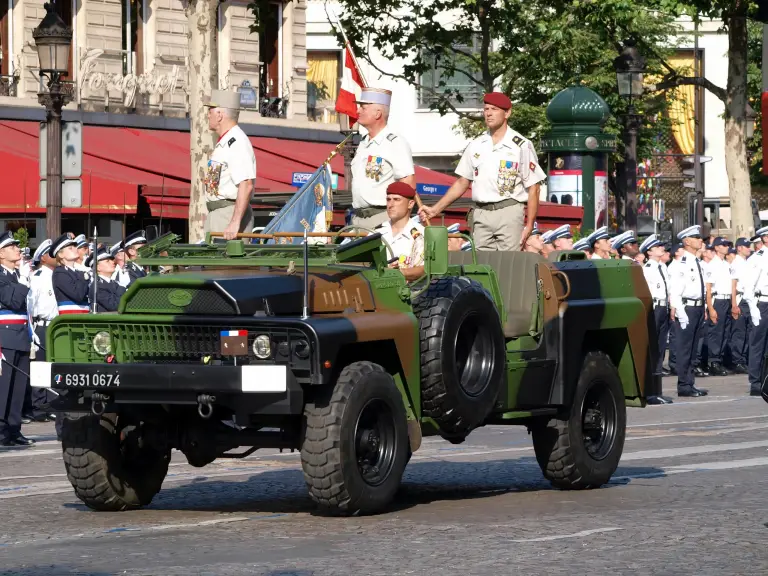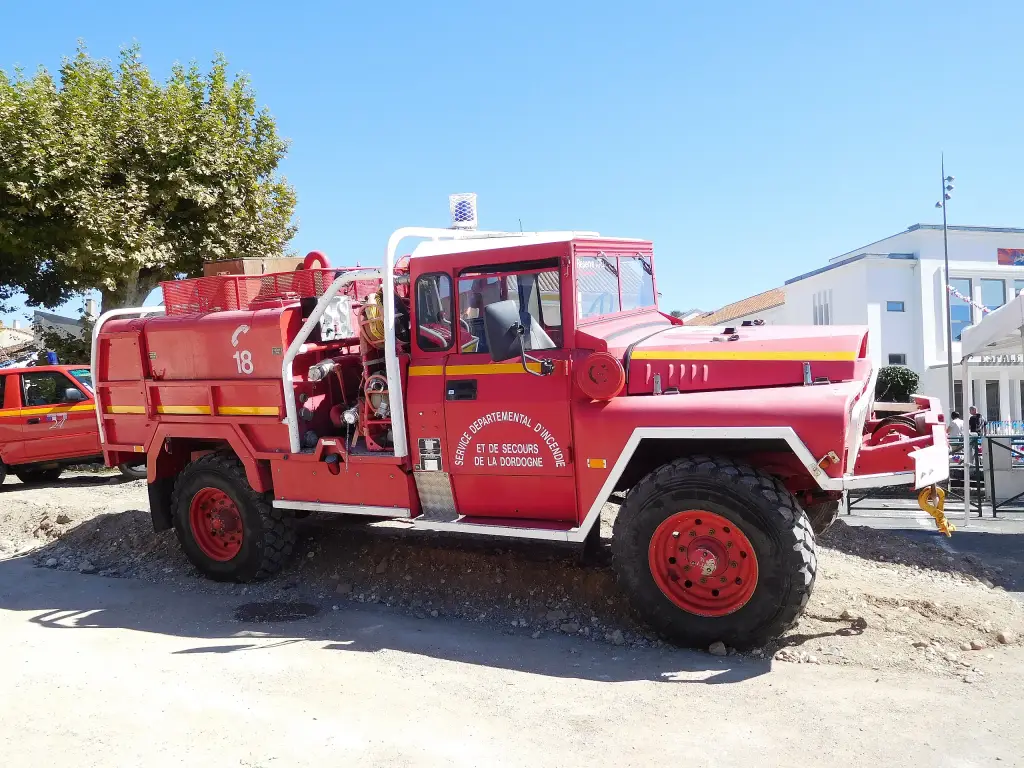
ACMAT TPK is the family of model designations used for the company’s VLRA tactical vehicles. The letters appear on the 4×4 TPK 420 patrol and command cars, the 6×6 TPK 635 recovery vehicle and the TPK 640 and 641 trucks, as well as on dozens of special bodies built on the same chassis.
ACMAT TPK at a glance
| Maker | ACMAT, France |
|---|---|
| Family | VLRA tactical vehicle |
| Launched | 1967 |
| Layouts | 4×4 and 6×6, armoured and unarmoured |
| Payload | 2.5 tonnes |
| Maximum range | 1,600 km |
| Variants | over 70 in the VLRA range |
| Common designs | TPK 420, TPK 425, TPK 430, TPK 436, TPK 635, TPK 640, TPK 641 |
| Users | 42 countries, including France and Ireland |
ACMAT has no separate English Wikipedia article on the TPK: the designation is described in the VLRA article and the company history in the ACMAT article.
History of the ACMAT TPK
Where the TPK name comes from
The TPK designation belongs to the ACMAT VLRA (Véhicule de Liaison de Reconnaissance et d’Appui) launched in 1967. The company, founded in 1954 as ALM SA by René Legueu in Meaux and renamed ACMAT after its move to Saint-Nazaire in 1964, built cross-country and military vehicles on a principle of standardisation: cabs, structural components, engines and drivetrains were shared between models, with parts interchangeable with vehicles built 30 years earlier.
One chassis, many jobs
ACMAT offered more than 70 VLRA variants, and the TPK numbers identify the body and role rather than a separate chassis. The TPK 420 appeared as a command and transmission station (VCT), as a recovery vehicle with a hydraulic excavator (SL7), as a flat-platform multifunction vehicle and as a patrol car. The TPK 425 was an ambulance carrying four injured, the TPK 430 F a maintenance workshop, and the TPK 432 SB an all-road bus for 28 or 34 people.
Six-wheelers and specialists
On the 6×6 chassis ACMAT built the TPK 635 SL7 recovery vehicle, the TPK 640 WRT wrecker with a 5 t boom and a 30 t/m hydraulic crane, the TPK 641 GBS tipper with a 7.2 t/m loading crane and the TPK 640 CTL troop transport for 18 soldiers with a 12.7 mm weapon mount. The TPK 641 VPC carried a twin 20 mm cannon firing from on board, and the TPK PMB was a mortar carrier. Semi-trailer tractors were built as the TPK 635 TSR and TPK 635 TSR 3 EC.
Who uses them
TPK vehicles served with the armed forces of 42 countries, including France, Ireland, Botswana, Chad, Chile, Cyprus, Kenya, Mali, Morocco and Zimbabwe. In 1996 the British Army bought twenty VLRA 4×4 TPK 420 STL2 as logistics vehicles for motorised SAS patrols, and they were used in Afghanistan in November 2001. French fire brigades also bought ACMAT vehicles, attracted by their low cost and four-wheel drive.
Design and features
- Role-based numbering: the TPK number identifies body and equipment, not a different chassis.
- Parts commonality: about 80 per cent of components shared across the range, so a TPK 420 and a TPK 640 have much in common.
- Options list: two or four doors, soft or hard top, manual or power steering, manual or automatic transmission, left or right hand drive, heater, air conditioning, armour and NBC defence.
- Long service life: parts remained interchangeable with vehicles built three decades earlier, which kept old TPKs in service.
ACMAT TPK versions
- TPK 420: command and transmission (VCT), recovery (SL7), flat-platform multifunction (SM3) and patrol (SM3/FSP) versions.
- TPK 425: ambulance with a 3.307 × 2.20 × 1.675 m box for four injured.
- TPK 430 F and 432 SB: maintenance workshop and command post, and an all-road bus for 28 or 34 passengers.
- TPK 635: 6×6 recovery vehicle and semi-trailer tractor (TSR, TSR 3 EC).
- TPK 640 and 641: wrecker, tipper, 18-seat troop carrier and the VPC with a twin 20 mm cannon.
- Armoured TCM 420 BL6: reconnaissance and command vehicle on the same family.
The TPK designations are versions of the ACMAT VLRA, which is described in its own article. More vehicles from the French maker are collected under ACMAT.
Sources
- ACMAT, English Wikipedia: company history, exports, users
- ACMAT VLRA, English Wikipedia: TPK designations, bodies, options