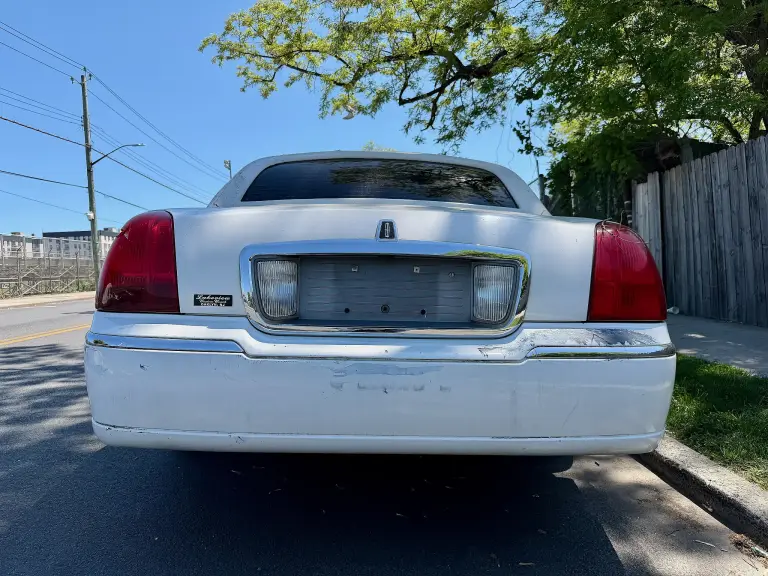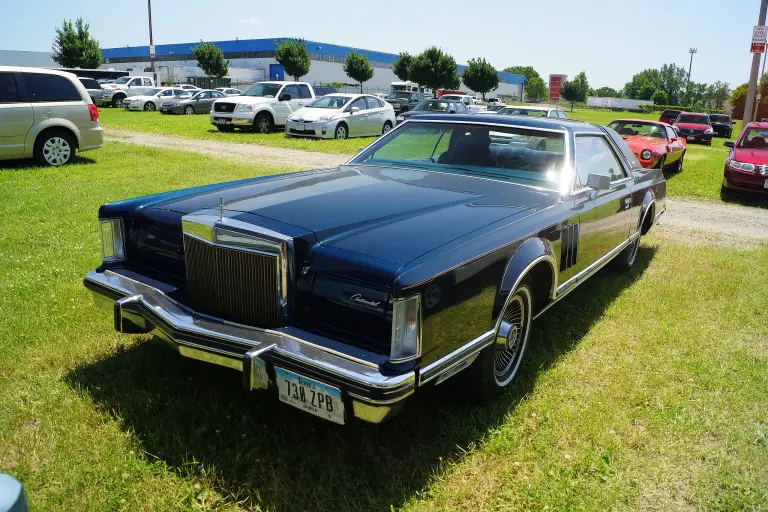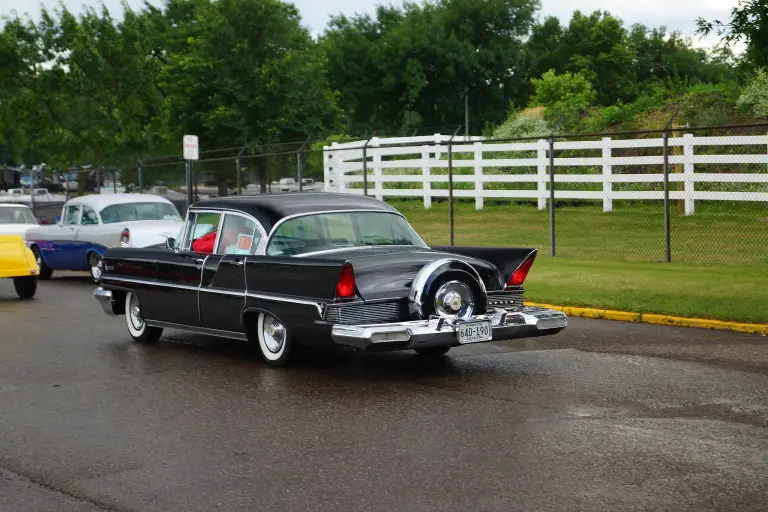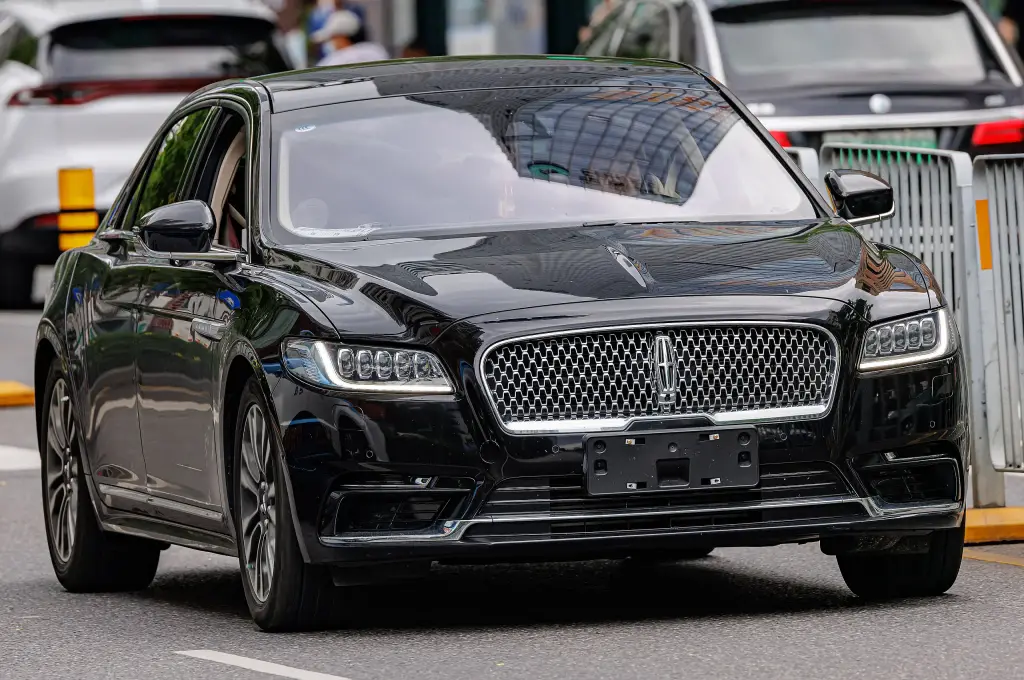
The Lincoln Continental is a series of mid-sized and full-sized luxury cars built by Lincoln between 1939 and 2020. Introduced as a personal car for Edsel Ford, it was produced for over 55 years in ten generations and served at different times as Lincoln’s flagship and as its base sedan.
Lincoln Continental at a glance
| Maker | Lincoln (Ford Motor Company) |
|---|---|
| Production | 1939–1948, 1956–1960, 1961–1980, 1982–2002, 2017–2020 |
| Generations | ten |
| First car | 1939 convertible built for Edsel Ford |
| First-generation engine | 267 cu in V12 |
| Last American V12 | the Continental of 1948 |
| Last four-door convertible | the Continental of 1967 |
| 1961 design | Elwood Engel team, built at Wixom |
| Became the Town Car | 1981 |
| Replaced by the MKS | after 2002 |
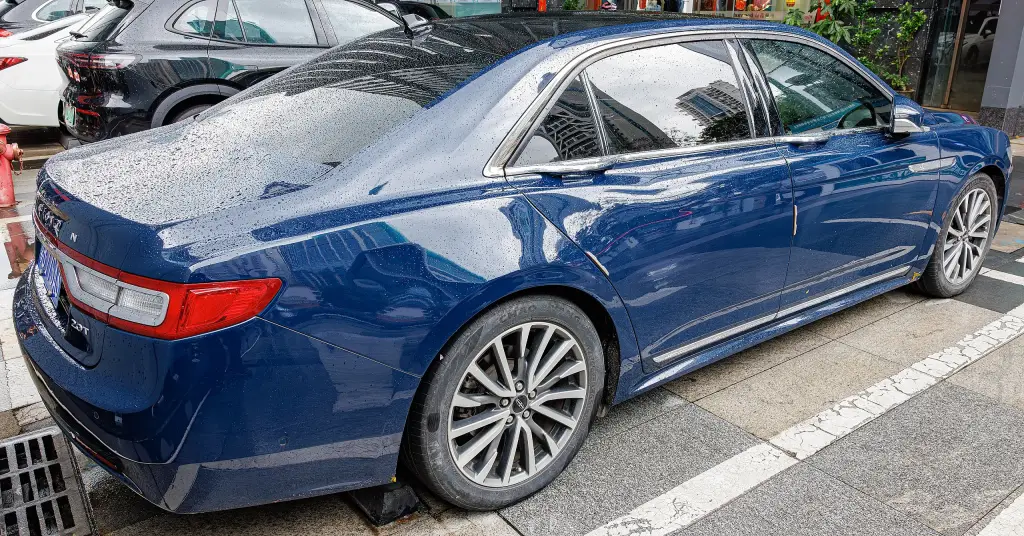
| Tenth generation | 2017–2020, replacing the MKS |
| End of production | 2020 |
History of the Lincoln Continental
The Continental began in 1938, when Ford president Edsel Ford asked chief stylist Eugene T. “Bob” Gregorie for a one-off convertible ready for his March 1939 holiday. Working from the blueprints of the Lincoln-Zephyr, Gregorie sketched a lower, sectioned body with no running boards, a hood almost level with the wings and a spare wheel mounted behind the boot; the first sketch is said to have taken an hour. Edsel drove the car to Florida, found that wealthy friends wanted one, and telegraphed Michigan that he could sell a thousand. The name Continental referred to the European styling.
Production started at once, mostly as Cabriolet convertibles with a few coupés, all largely hand-built: the two dozen 1939 cars and about 400 built in 1940 had hand-hammered panels, and press dies only arrived in 1941. The car used the Zephyr’s 267 cu in V12, transverse leaf springs and hydraulic drum brakes. Production stopped for the war in the winter of 1941–42, resumed at the end of 1945 with a revised grille, and ended in 1948 – the last year in which an American car line was offered with a factory V12. From 1949 to 1955 the name was not used.
Between 1956 and 1960 the Continental name belonged to Ford’s separate Continental Division, positioned above Lincoln. Its first product, the hand-built Continental Mark II of 1956–1957, cost about $10,000 and was the most expensive American car of its day; only 1,800 were made. The 1958–1960 Mark III, Mark IV and Mark V were no longer separate designs but richly equipped versions of the standard Lincolns. From 1961 the name returned to Lincoln’s standard cars, and the new Continental drawn by Elwood Engel’s team swept away the fins of the 1950s: the ninth Continental won the Industrial Designers Institute award, was the first production car with curved side glass and was built at Wixom alongside the Thunderbird, with which it shared much of its chassis.
The 1961–1980 cars were among the longest and heaviest American production cars, with two-door and four-door models including the four-door convertible that ended in 1967. For 1981 the full-sized car was renamed Town Car to make room for a smaller 1982 Continental, and for 2009 the Continental gave way to the Lincoln MKS. Lincoln brought the name back in 2017 with the tenth-generation Continental, a premium sedan replacing the MKS. Production of the Continental and MKZ, Lincoln’s last two sedans, ended in 2020 and left the brand with crossovers and SUVs only.
Design and features
- European-inspired design: long bonnet, short boot and a rear-mounted spare wheel, a style that helped create the personal luxury car.
- Factory V12: the Continental was the last American car line offered with a V12, in 1948.
- Four-door convertible: the 1961–1967 convertibles were the last of their kind built in the United States.
- Award-winning 1961 shape: clean lines without tailfins, the first car to win the Industrial Designers Institute award.
- Repeated revivals: the name returned in 1956, 1961, 1982 and 2017 after gaps of several years.
Lincoln Continental versions
- Edsel Ford prototype and first generation (1939–1948): hand-built Cabriolet convertibles and a few coupés with the Zephyr V12.
- Continental Division cars (1956–1960): the Mark II, then the Mark III, IV and V based on Lincoln bodies.
- Fourth and fifth generations (1961–1980): full-sized saloons, hardtops and four-door convertibles.
- 1982–2002 cars: smaller, more expensive Continentals after the Town Car took over the full-size role.
- Tenth generation (2017–2020): the premium sedan that replaced the MKS.
The Continental shared its early engineering with the Lincoln-Zephyr, gave its name to the Lincoln Mark series, and was replaced in the range by the Lincoln MKS and later the Lincoln Town Car. More Lincolns are in the Lincoln collection.
Video: 1973 Lincoln Continental MK IV Test Drive
Video by the uploader on YouTube.
Sources
- Lincoln Continental, English Wikipedia: origins, generations, dates
- Lincoln Continental, German Wikipedia: Continental Division, Mark II, 1961 design