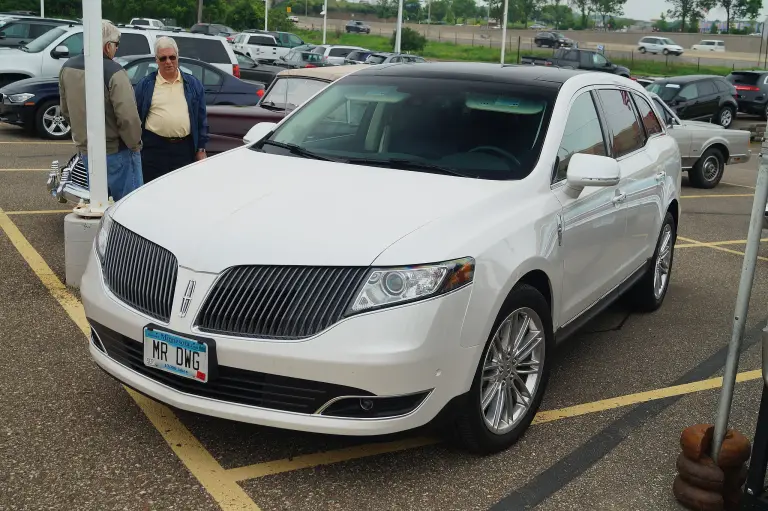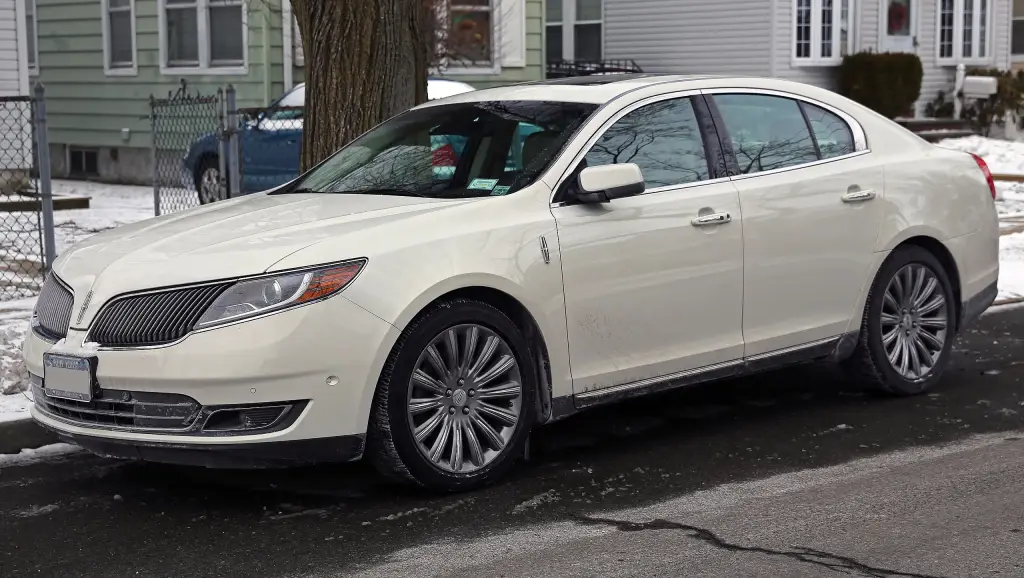
The Lincoln MKS is a full-size luxury sedan built for the 2009–2016 model years, with production starting in May 2008. It was Lincoln’s largest sedan of its time and shared the Ford D3 platform with the Ford Taurus, Ford Flex and Lincoln MKT.
Lincoln MKS at a glance
| Maker | Lincoln (Ford Motor Company) |
|---|---|
| Production | May 2008 – 2016 |
| Model years | 2009–2016 |
| Assembly | Chicago Assembly, Illinois |
| Platform | Ford D3, derived from the Volvo P2 |
| Layout | front-wheel drive, all-wheel drive optional |
| Engines | 3.7 L Cyclone V6; 3.5 L twin-turbo EcoBoost V6 from 2010 |
| Gearbox | six-speed automatic |
| Brakes | four-wheel discs, 311 mm front and 324 mm rear |
| Revealed | Los Angeles Auto Show, November 2007 |
| Facelift | 2013 model year |
| Built | 100,248 (model years 2009–2016) |
Based on one source, the English Wikipedia article on the MKS.
History of the Lincoln MKS
The MKS followed the Lincoln MKR concept car and was shown at the Los Angeles Auto Show in November 2007, with sales starting in June 2008. It sat on Ford’s D3 platform, a revised version of the Volvo P2, and was one of the so-called Chicago D3 cars built at Chicago Assembly alongside the Ford Flex, the Lincoln MKT and the fifth-generation Ford Taurus. Front-wheel drive was standard and all-wheel drive optional.
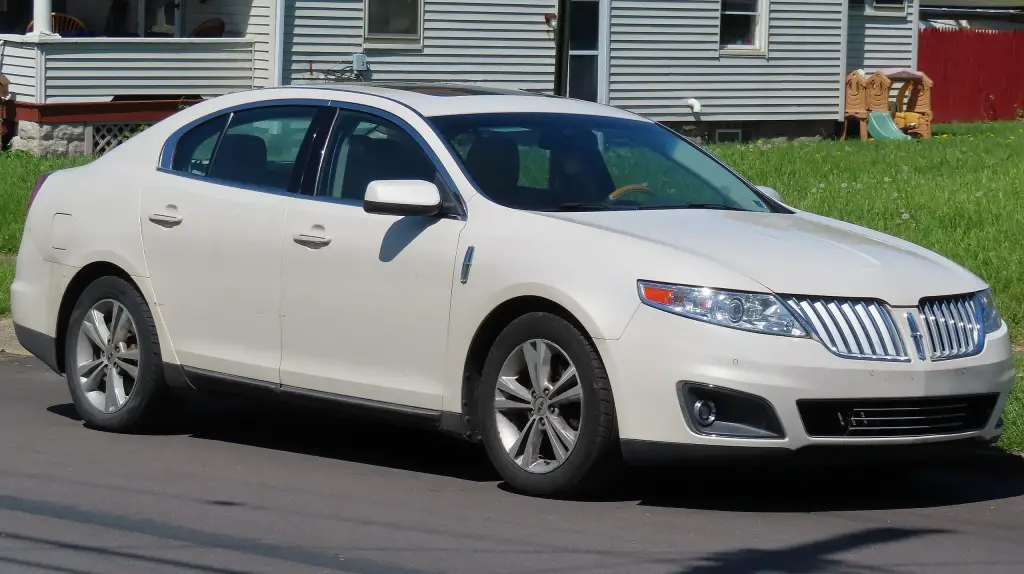
The launch engine was the 3.7-litre Ford Cyclone V6, and for 2010 a twin-turbocharged 3.5-litre EcoBoost V6 shared with the Taurus SHO was added. The base Cyclone was revised to a Ti-VCT specification for 2013. Suspension was by MacPherson struts in front and a multilink layout at the rear, with optional Lincoln Drive Control continuously controlled damping, four-wheel anti-lock brakes and standard AdvanceTrac and Roll Stability Control.
Standard equipment was generous for an American sedan: radar cruise control, automatic HID headlamps, 18-inch machined alloy wheels, dual-zone climate control, 12-way heated and cooled front seats, heated rear seats, a power tilt and telescoping steering wheel and Lincoln SYNC. The interior used two real wood trims, ebony reclaimed from furniture makers and olive ash, plus leather from the Scottish company Bridge of Weir tanned without chromium. Option packages ran from Navigation and Technology to the Ultimate package with a dual-panel moonroof and 19-inch wheels, and a THX audio system with a dash-mounted slot speaker was available.
Like other D3 cars the MKS used SPACE architecture, with a hydroformed high-strength steel tube in the floor from B-pillar to B-pillar, an adaptation of Volvo’s side impact protection system. Active Park Assist, which steered the car into parallel spaces using ultrasonic sensors and the electric power steering, arrived in mid-2009 for 2010. The MKS was facelifted for 2013 and discontinued after 2016, when domestic production had reached 100,248 cars; it was replaced by the tenth-generation Lincoln Continental.
Design and features
- Two V6 engines: the 3.7-litre Cyclone and, from 2010, the twin-turbo 3.5-litre EcoBoost from the Taurus SHO.
- Comfort equipment: heated and cooled front seats, heated rear seats and a power adjustable steering wheel as standard.
- SPACE safety structure: a hydroformed steel tube across the floor for side impact protection.
- Active Park Assist: hands-off parallel parking from 2010.
- Premium trim materials: reclaimed ebony and olive ash wood with chromium-free Scottish leather.
Lincoln MKS versions
- MKS (2009–2012): the original car with the 3.7-litre V6 and optional EcoBoost from 2010.
- MKS EcoBoost: the twin-turbo version with standard all-wheel drive.
- MKS (2013–2016): facelifted car with the Ti-VCT 3.7-litre engine.
- Ultimate package: navigation, technology features, a dual-panel moonroof and 19-inch wheels.
The MKS replaced the Lincoln LS as Lincoln’s largest sedan and was itself replaced by the Lincoln Continental. It shared its platform with the Lincoln MKT. More Lincolns are in the Lincoln collection.
Video: 2014 Lincoln MKS Test Drive and Review
Video by the uploader on YouTube.
Sources
- Lincoln MKS, English Wikipedia: history, platform, engines, equipment