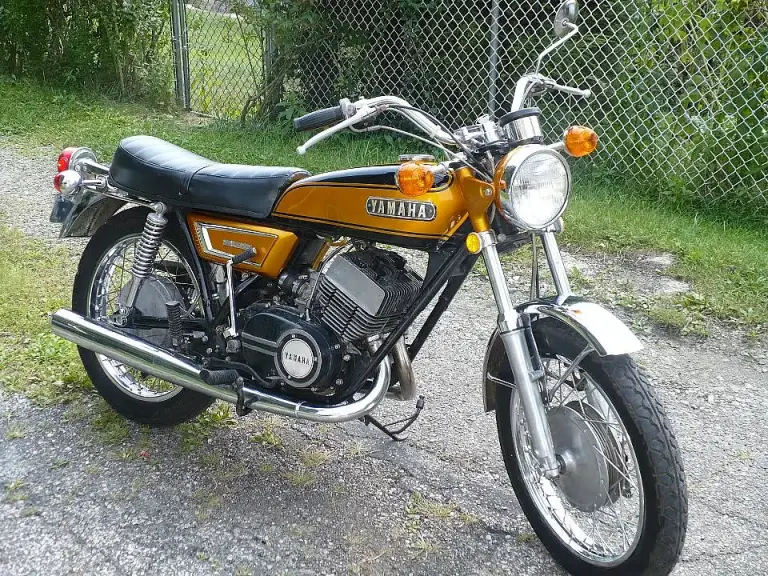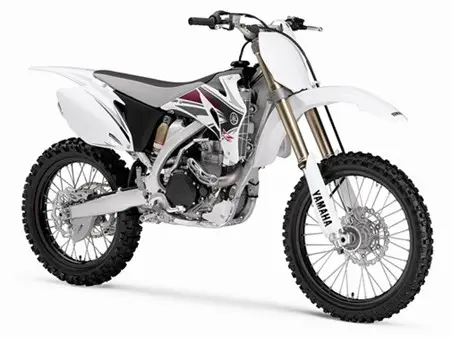
The Yamaha YZ250 is a two-stroke motocross motorcycle that Yamaha launched in 1974. It has been updated regularly and is still in production, making it one of the longest-running competition bikes in the class.
Yamaha YZ250 at a glance
| Maker | Yamaha Motor Company |
|---|---|
| Class | Motocross motorcycle |
| Launched | 1974 |
| Original engine | air-cooled 250 cc two-stroke, 70 × 64 mm |
| 1982 engine | liquid-cooled 249 cc reed-valve two-stroke |
| Exhaust valve | mechanical YPVS |
| 1999 bore and stroke | 66.4 × 72 mm, 249 cc |
| Peak power | 47 hp at 8,800 rpm |
| Peak torque | 30.6 lb·ft at 7,500 rpm |
| Redline | 9,000 rpm |
| Frame | aluminium from 2005 |
| Dry weight | about 212 lb from 2005 |
Based on one source (English Wikipedia).
History of the Yamaha YZ250
The original YZ250 of 1974 used an air-cooled 250 cc two-stroke engine with a 70 mm bore and 64 mm stroke, improved semi-annually. In 1982 the air-cooled motor was replaced by a 249 cc liquid-cooled two-stroke with reed-valve induction and a mechanical, rather than servo-driven, YPVS exhaust valve for a wider spread of power. The reed block remained integral to the cylinder, even though other motocross engines of the time used crankcase reed valves.
The water-cooled engine initially had a 68 mm bore and 68 mm stroke for 247 cc. In 1999 the bore was reduced to 66.4 mm and the stroke lengthened to 72 mm, giving 249 cc. The longer stroke lowered the redline slightly and reduced top-end power a little, but improved low-rpm torque considerably. The engine produces 47 hp at 8,800 rpm and 30.6 lb·ft at 7,500 rpm with a 9,000 rpm redline. A large aftermarket tuning industry exists because the design has been fundamentally unchanged since 1999.
The chassis has developed in step with the engine. The 1974 bike used a single backbone steel frame with a twin-shock swingarm; the following year, reflecting the factory racer of Hakan Andersson, the swingarm became a monoshock unit, steel at first and aluminium from 1978, with more than 12 inches of rear travel and 11.8 inches at the front. In 2005 the YZ250 gained an aluminium frame that cut dry weight to about 212 lb. All versions have hydraulic disc brakes front and rear, and the 2014 US model weighed 227 lb wet. The YZ250 has won five AMA National Motocross titles and nine AMA National Supercross titles, including the 2004 Supercross championship with Chad Reed, and US Dirt Bike magazine called it the last 250 two-stroke from Japan.
Design and features
- Long production: launched in 1974 and still built today.
- Mechanical YPVS: an exhaust power valve that broadens the two-stroke powerband.
- Aluminium frame: introduced in 2005, bringing dry weight down to about 212 lb.
- Racing record: multiple AMA motocross and supercross titles.
Yamaha YZ250 versions
- YZ250 (1974–1981): air-cooled models with twin-shock then monoshock rear suspension.
- YZ250 (1982–1998): liquid-cooled reed-valve engine with mechanical YPVS.
- YZ250 (1999–2004): longer-stroke engine with more low-end torque.
- YZ250 (2005–): aluminium frame and reduced weight.
Other Yamaha motocross and enduro bikes include the IT175 and the WR250F. More models are in the Yamaha collection.
Sources
- Yamaha YZ250, English Wikipedia: history, engine, chassis, specifications, racing results