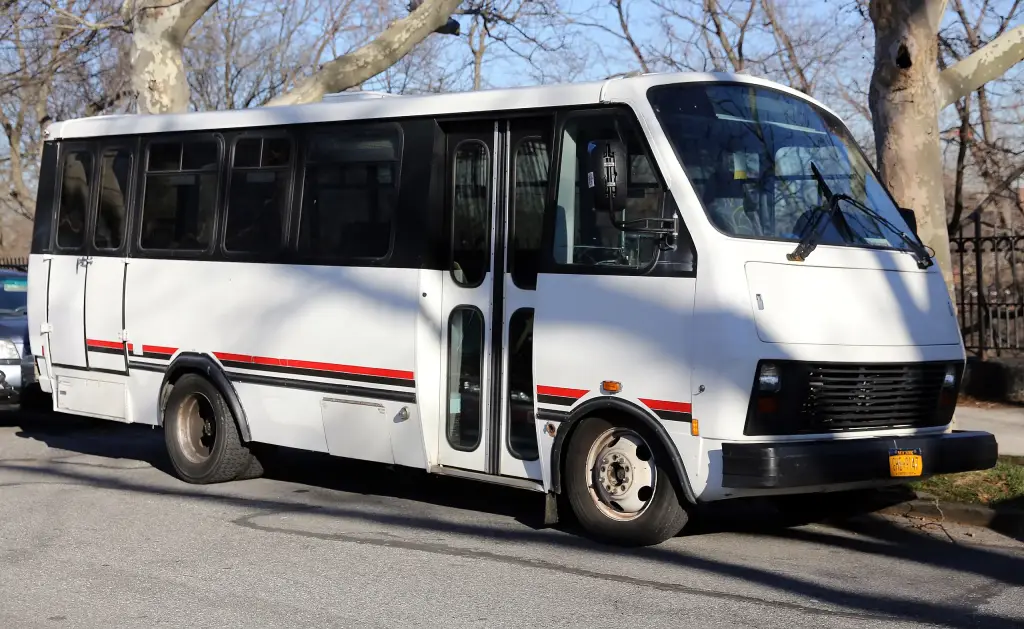

The Workhorse P42 is a commercial chassis of the P-series built by Workhorse Custom Chassis, the manufacturer that grew out of General Motors’ P-chassis division. Chassis of this line were supplied to body builders for walk-in delivery vans, school buses and motorhomes.
Workhorse P42 at a glance
| Maker | Workhorse Custom Chassis, LLC |
|---|---|
| Factory | Union City, Indiana, United States |
| Origin | General Motors’ P-chassis division, spun off in 1998 |
| First owner | GVW Group, LLC, Highland Park, Illinois |
| Owner from 2005 | Navistar |
| Owner from 2013 | AMP Holding Inc. (AMP Electric Vehicles) |
| Chassis family | P-series; the P30 and P32 were the first products |
| Typical bodies | walk-in delivery vans, school buses, motorhomes |
| Later lines | W-series, LF72 low-floor and UFO chassis |
| Company renamed | Workhorse Group Incorporated, 16 April 2015 |
| Listed | Nasdaq, symbol WKHS, from January 2016 |
No separate Wikipedia page exists for the P42, so this article describes it through the Workhorse Group brand pages, which cover the company and its chassis lines. Based on one source family.
History of the Workhorse P42
From a General Motors division to an independent maker
Workhorse Custom Chassis was founded in 1998 in Union City, Indiana, when General Motors’ P-chassis division was spun off to the GVW Group, LLC of Highland Park, Illinois. The first products of the new company were the P30 and P32 chassis of the P-series, intended for package delivery vans, school buses and motorhomes. The P42 belongs to this same P-series line, which gave independent body builders a ready-made rolling chassis with steering, suspension, brakes and drivetrain already in place.
The Navistar years
In 2005 Navistar bought Workhorse Custom Chassis from the GVW Group; Navistar had already been supplying diesel engines to the company. Under Navistar the range was widened with chassis developed in-house, including the W-series for motorhomes, the low-floor LF72 for buses and motorhomes, and the UFO chassis with the engine mounted at the rear.
Electric vehicles and the Workhorse Group
In 2012 Navistar decided to sell its Workhorse subsidiary, described as a step van chassis manufacturer, together with the factory in Indiana. In March 2013 AMP Electric Vehicles took over the assets of Workhorse Custom Chassis, LLC and began offering a range of electric vehicles. On 16 April 2015 AMP Electric Vehicles changed its name to Workhorse Group Incorporated, and in January 2016 the company’s stock began trading on Nasdaq under the symbol WKHS.
Design and features
- Chassis-only supply: the P42 and the rest of the range left the factory as a complete chassis for a body builder to finish as a van, bus or motorhome.
- P-series foundation: the line began with the P30 and P32, the products on which Workhorse Custom Chassis was built.
- W-series for motorhomes: later chassis W16, W18, W20, W22, W24, W42, W62 and W88 were fitted with petrol engines.
- Low-floor LF72: a chassis for buses and motorhomes with a lowered floor.
- UFO layout: the Universal Fuel Option chassis carried its engine at the rear and could be ordered with a diesel or a petrol engine.
Workhorse P42 versions
- P30 and P32: the first P-series chassis, for package vans, school buses and motorhomes.
- P42: a chassis of the same P-series line for commercial bodies.
- W-series: W16, W18, W20, W22, W24, W42, W62 and W88 motorhome chassis with petrol engines.
- LF72: low-floor chassis for buses and motorhomes.
- UFO: rear-engined chassis available with diesel or petrol power.
More commercial vehicles and chassis are in the Workhorse collection.
Sources
- Workhorse Group, English Wikipedia: company history, Navistar sale, electric vehicles, Nasdaq listing
- Workhorse Group, German Wikipedia: P-series chassis, W-series, LF72 and UFO
- Workhorse Group, French Wikipedia: company profile