
The Ward LaFrance Truck Corporation was an American builder of trucks and fire apparatus, founded by Addison Ward LaFrance in Elmira Heights, New York, in 1916 and closed in 1979. Over six decades it turned out bus chassis, military wreckers and heavy trucks, but it was fire engines that became its main product — including the P-80 Ambassador and the lime-yellow pumpers that split opinion across American fire stations.
Ward LaFrance at a glance
| Founded | 1916, Elmira Heights, New York |
|---|---|
| Founder | Addison Ward LaFrance |
| Name | “LaFrance” until 1920, then Ward LaFrance |
| Early engines | Waukesha petrol |
| Early driveline | Timken axles, Brown-Lipe-Chapin gearboxes |
| Bus work | Bustruk chassis from 1930; Westram trolley bus |
| Military | M1 and M1A1 tank wreckers with Kenworth; M746 from 1975 |
| First fire engine | 1931 |
| Forward-cab trucks | from 1959 |
| Lime yellow | from 1971; over 140 departments by 1975 |
| Best-known model | P-80 Ambassador pumper |
| Closed | 1979; Ward ’79 Limited until 1990 |
Based on one source, the English Wikipedia article on the Ward LaFrance Truck Corporation.
History of the Ward LaFrance
From LaFrance to Ward LaFrance, 1916–1930
Addison Ward LaFrance was a relative of Truckson LaFrance, the founder of the similarly named fire apparatus builder American LaFrance, and had worked at that company before starting to build trucks and apparatus of his own. The first vehicles used Waukesha engines, Timken axles and Brown-Lipe-Chapin transmissions, and carried a bulky, complex self-lubricating system. Production was modest at first: 15 trucks in 1918, 108 in 1919 and 233 in 1920, the year the maker’s name changed from “LaFrance” to “Ward LaFrance”. In 1929 the range grew by two bus chassis, and in 1930 came the Bustruk chassis, which could take either a bus or a van body.

Special vehicles for New York
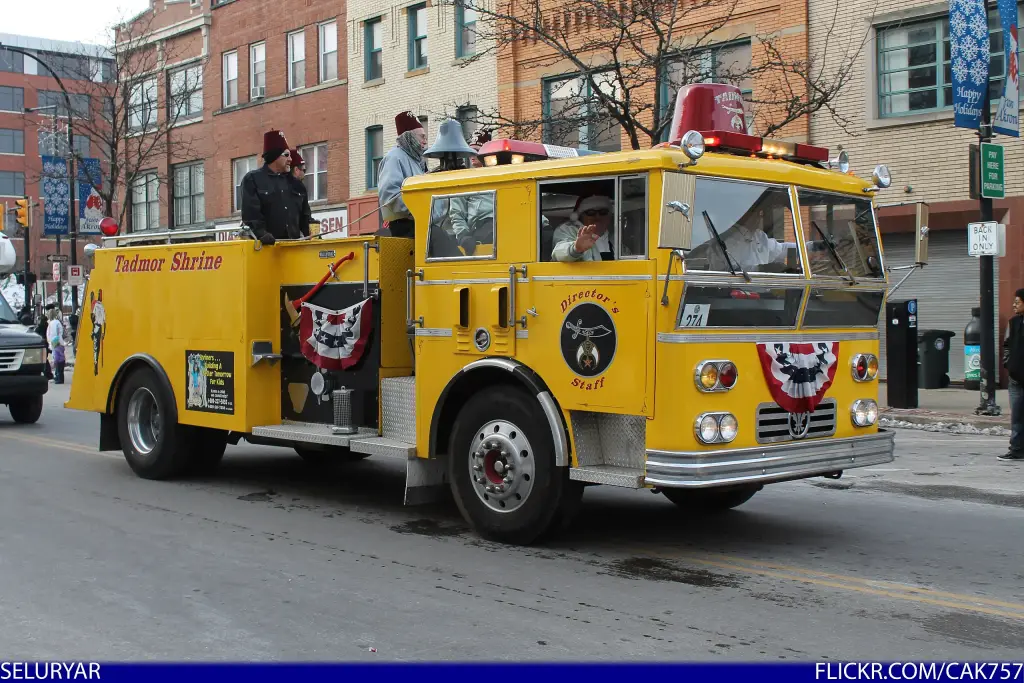
With New York City as its major market, Ward LaFrance often built specialised vehicles for the city, including a 4×4 crane truck for towing cars. From 1934 the company used more and more diesel engines, such as the one in a cab-over-engine six-wheeled truck of 1935. One chassis type was offered with either a steel frame or a Duralumin one, but the light-alloy version proved costly and gave way to a conventional heat-treated channel frame.
Buses, wars and heavy trucks
In 1945 Ward LaFrance tried to sell buses overseas powered by Buda engines; instead Westinghouse proposed a trolley-bus version called the Westram, which found a few sales in Argentina and Mexico. The domestic market carried the company through the post-war boom with the D-series trucks of 40,000 to 60,000 lb, powered by petrol Continental or diesel Cummins engines, and trucks were also marketed in Canada. When the boom ended, sales of load-bearing trucks fell away quickly. Ward LaFrance, together with Kenworth, built M1 and M1A1 tank wreckers for the US military and 6×4 and 6×6 load-bearing trucks, as well as vans for United Parcel Service, over-the-road tractors, cement and dump trucks, bus and trolley chassis and armoured cars. From 1975 to 1977 it produced the M746 Heavy Equipment Transport System.
Fire apparatus
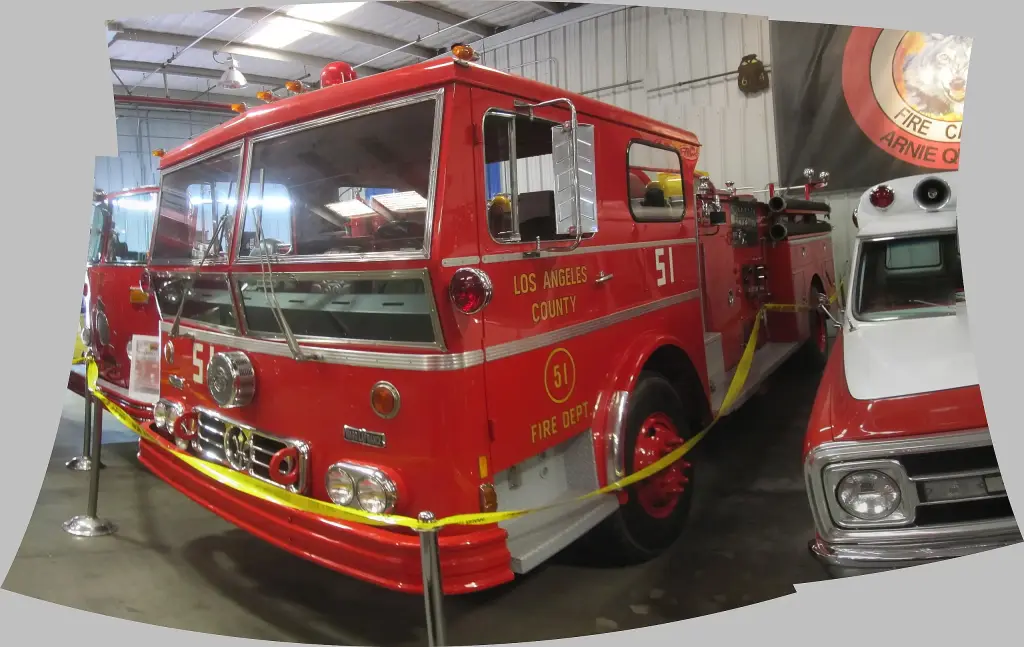
The first Ward LaFrance fire engine was built in 1931, and fire apparatus remained the company’s primary product. Open-cab ladder trucks were made until 1960, and forward-cab trucks arrived in 1959. In 1971 the company led the move away from the traditional red finish after experiments by an optometrist showed that lime yellow was more readily seen; by 1975 it had delivered lime-yellow fire engines to more than 140 fire departments in the United States, El Salvador, Saudi Arabia, Colombia and Venezuela. Perhaps the best-known Ward LaFrance product was the P-80 “Ambassador” pumper, one of which the company donated as product placement to appear as the fictional Los Angeles County Fire Department Engine 51 in the 1970s television series Emergency!.
Closure
A. Ward LaFrance died in 1972. In 1976 the ailing company was bought by a group of private investors, but it closed for good in 1979. The works were reopened by a new, unaffiliated company under the name Ward ’79 Limited, which operated until 14 December 1990.
Design and features
- Waukesha power: the early trucks used Waukesha petrol engines, Timken axles and Brown-Lipe-Chapin gearboxes.
- Bustruk chassis: introduced in 1930, it could carry either a bus body or a van body.
- Military work: M1 and M1A1 tank wreckers built with Kenworth, and the M746 transporter of 1975–1977.
- Lime yellow: from 1971 Ward LaFrance painted fire engines in a highly visible yellow-green instead of red.
- P-80 Ambassador: the firm’s best-known pumper, famous on screen as Engine 51.
Ward LaFrance versions
- 2A and 3A (1918–1919): two- and three-ton trucks with Continental engines.
- 2B, 3B, 4A and 5A (1920s): the main range of 2.5- to 7-ton trucks.
- Bustruk (1930): a chassis adaptable for bus and van bodies.
- D-series (post-war): 40,000–60,000 lb trucks with Continental or Cummins engines.
- M746 (1975–1977): Heavy Equipment Transport System for the US military.
- P-80 Ambassador: the pumper that became the best-known Ward LaFrance product.
Other American fire apparatus and truck makers are collected in the Ward LaFrance collection.
Sources
- Ward LaFrance Truck Corporation, English Wikipedia: history, products, fire apparatus