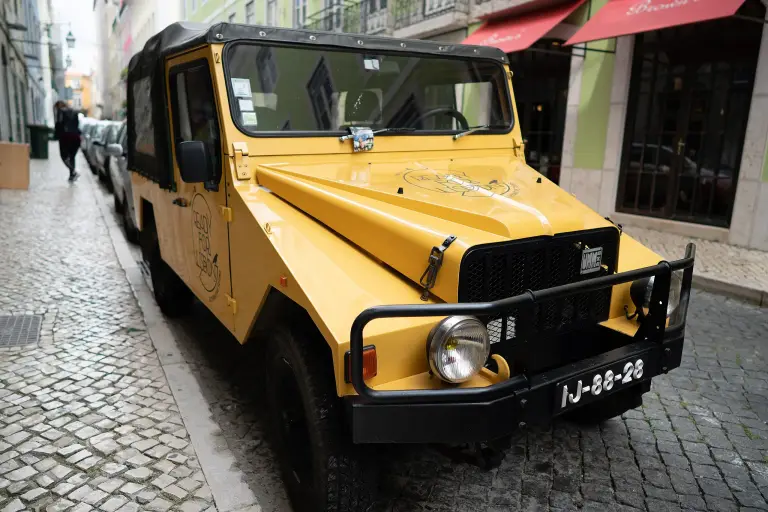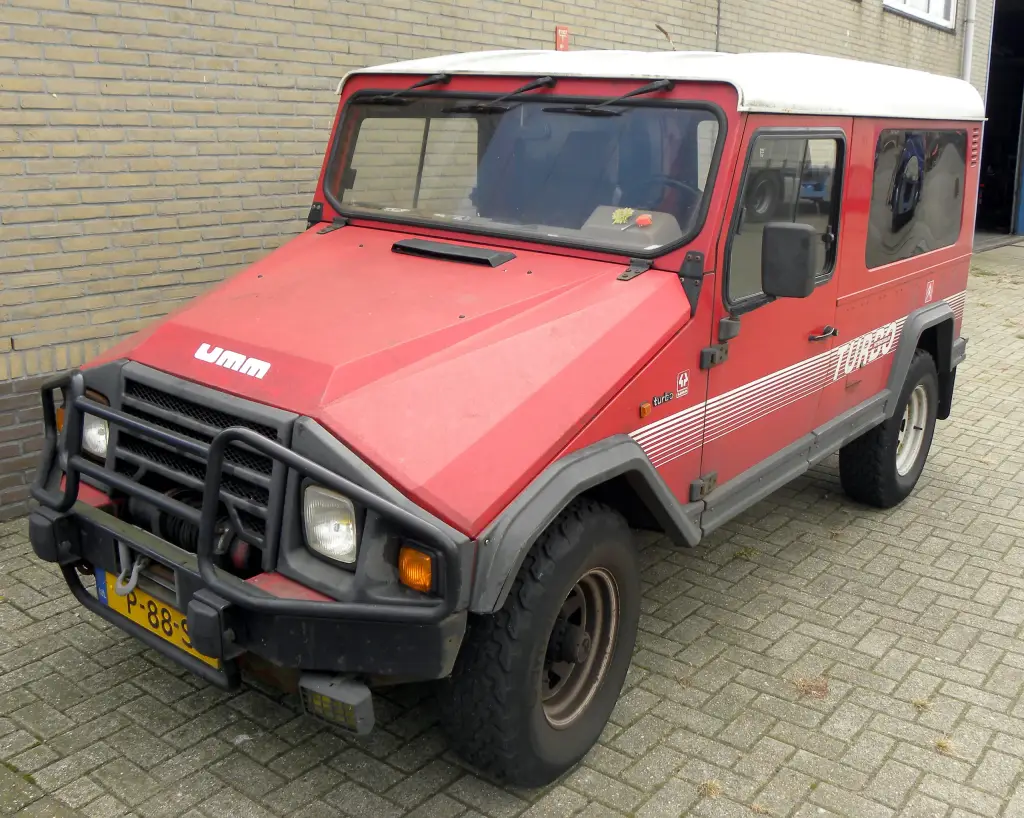
The UMM Alter was the second generation of Portugal’s home-grown off-roader. Introduced in 1985 as a development of the Cournil-based UMM 4×4, it stayed in production for military and utility customers until 1996, and an updated Alter 2000 was announced in 2000.
UMM Alter at a glance
| Maker | UMM (União Metalo-Mecânica), Lisbon, Portugal |
|---|---|
| Production | Alter 1985–1986; Alter II Turbo Diesel 2500 1986–1994 |
| Military and utility orders | until 1996 |
| Engine | 2.5 l turbodiesel, 110 bhp in the Alter II Turbo Diesel 2500 |
| Later model | Alter 2000 CRDI 2500 4WD, 2000–2004, with a 2.1 l turbodiesel |
| Name | from the Alter Real strain of the Lusitano horse |
| Layout | four-wheel drive, separate chassis, utility bodywork |
| Total UMM production | suspected to be more than 10,000 vehicles |
Based on one source: the English Wikipedia article on the manufacturer, which lists the Alter models and describes them; the Alter has no article of its own.
History of the UMM Alter
UMM had built the Cournil under licence in Lisbon since 1977, and its own 4×4 had established the marque with utilities and private buyers. The Alter, launched in 1985, was the next step: the same rugged separate-chassis four-wheel-drive layout, brought up to date and given a name taken from the Alter Real strain of the Pure Blood Lusitano horse.
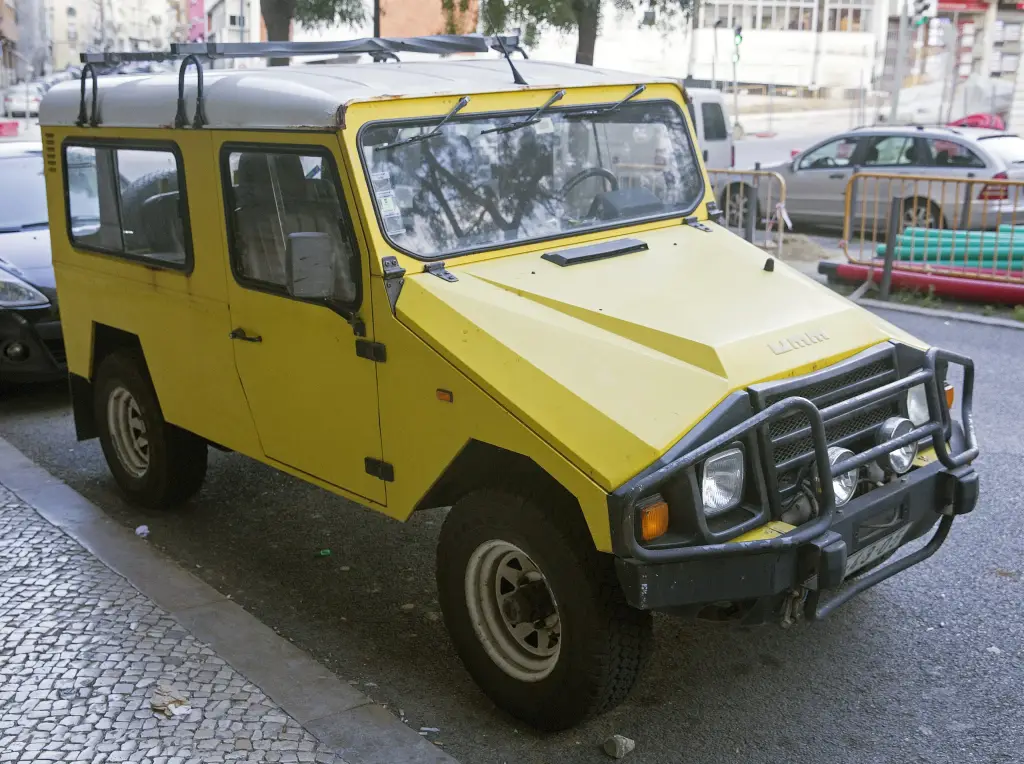
The Alter quickly gave way to the Alter II Turbo Diesel 2500, built from 1986 to 1994 with a 2.5 litre turbodiesel engine of 110 bhp. UMM’s reputation rested on durability, and it was reinforced in the Paris-Dakar rally, where the team finished with every car that started. The vehicles found steady customers among utilities, fire services and the military in Portugal, Spain, France and Cape Verde, whose national army used them; around 700 were still in service in the Democratic Republic of the Congo.
The best-known UMM is probably the one that carried Pope John Paul II on a visit to Portugal. It was built on a 1992 five-door, long-wheelbase Alter II chassis with a 40 mm armoured glass box on the rear, a chair for the Pope, air conditioning and outside loudspeakers fed from a microphone inside. It began with the 2.5 litre turbocharged engine, but safety requirements led to the naturally aspirated 2.5 litre diesel of 76 PS (56 kW).
Production for private customers ended in 1994, though large orders from military and utility services continued until 1996. In 2000 UMM announced an updated version, the Alter 2000 CRDI 2500 4WD, with a quieter 2.1 litre turbodiesel that gave more torque at low speed; air conditioning and GPS were on the options list and the price was meant to undercut a similarly finished Land Rover Defender. The company lacked the capital to develop it, and the model ran only until 2004.
Design and features
- Separate chassis and four-wheel drive: the same utility layout that made the Cournil-based 4×4 popular.
- Turbodiesel power: the Alter II Turbo Diesel 2500 used a 2.5 litre engine rated at 110 bhp.
- Proven in the desert: UMM finished the Paris-Dakar with every car it started.
- Long service life: many Alters remained with utilities and armies long after civilian sales ended.
UMM Alter versions
- Alter (1985–1986): the first generation, introduced a year after the Cournil-based 4×4.
- Alter II Turbo Diesel 2500 (1986–1994): the main production model, with a 110 bhp 2.5 litre turbodiesel.
- Papal car (1992): a long-wheelbase five-door Alter II with an armoured glass box on the rear.
- Alter 2000 CRDI 2500 4WD (2000–2004): the final update, with a 2.1 litre turbodiesel and optional air conditioning and GPS.
The Alter followed the Cournil-based UMM 4×4, and more of the marque is in the UMM collection.
Sources
- União Metalo-Mecânica, English Wikipedia: models, dates, engines, rally record, papal car, Alter 2000