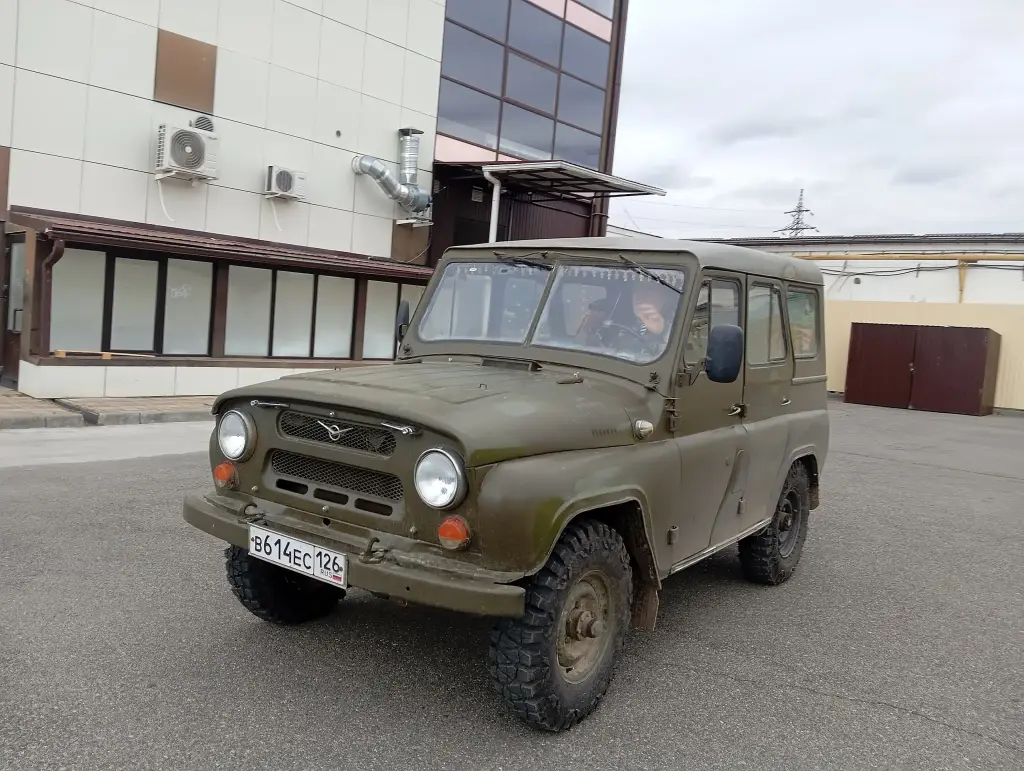
The UAZ-469 is the off-roader that took over from the GAZ-69 as the Soviet army’s light utility vehicle. It was designed for rough terrain and for repair with simple tools, and it was built at Ulyanovsk from 1971. In 1985 it was renamed UAZ-3151, and in that form the same car was still being made in 2011.
UAZ-469 at a glance
| Maker | Ulyanovsk Automobile Plant (UAZ) |
|---|---|
| Production | 1971–1985 as UAZ-469, 1985–2011 as UAZ-3151 |
| Predecessor | GAZ-69 |
| Engine | 2,445 cc UMZ-452MI inline four, 75 hp |
| Fuel | petrol from 72 octane |
| Ground clearance | 300 mm (469 and 3151), 220 mm (469B and 31512) |
| Gearbox | four-speed manual, two-speed transfer case |
| Axles | portal type, ratio 5.38; 469B used GAZ-69 type axles, 5.125 |
| Capacity | 7 passengers and 100 kg, or 2 passengers and 600 kg |
| Towing | 850 kg |
| Exported to | 80 countries |
| Built | 1.65 to 2 million including variants |
The article uses the English and Russian Wikipedia pages on the UAZ-469: the Russian page gives the December 1972 start of serial production, the English one 1971.
History of the UAZ-469
Development, 1956–1972
In 1956 the Soviet army ordered UAZ to design a successor to the GAZ-69. The first idea was an amphibious car with a rear engine, but the order was simplified and the new vehicle took the chassis of the UAZ-450. The first prototypes, called UAZ-460, had 400 mm of ground clearance and proved prone to rollovers; a later V4-powered unibody design, the UAZ-471, would have required rebuilding the plant and was cancelled. In 1961 the first UAZ-469 was built with the clearance reduced to 300 mm and the 75 hp 2,445 cc engine of the UAZ-452, which could run on petrol as low as 72 octane. Because the country was building the VAZ and KamAZ factories at the same time, serial production was delayed for years: the first cars left the line on 15 December 1972, replacing the GAZ-69.
The army years
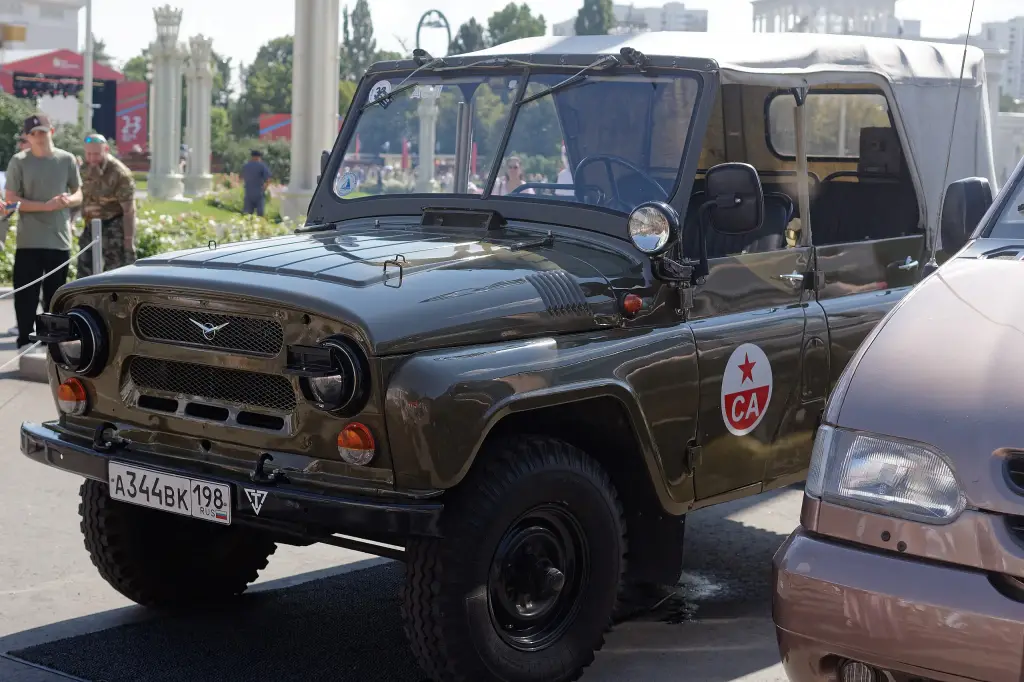
Only the military version with 300 mm of clearance was built at first; the civilian UAZ-469B, with 220 mm, followed in 1973. In August 1974 three completely standard UAZ-469B cars reached the glacier on Mount Elbrus at 4,200 m in 38 minutes — an altitude at which, according to their drivers, the engines lost about 40 per cent of their power, yet none of the cars broke down. In 1980 a hardtop version for the Soviet Border Troops appeared as the UAZ-31515 Burevestnik. The cars were bought mainly by the army and state organisations, but many later reached private owners as surplus.
Renumbering and civilian models
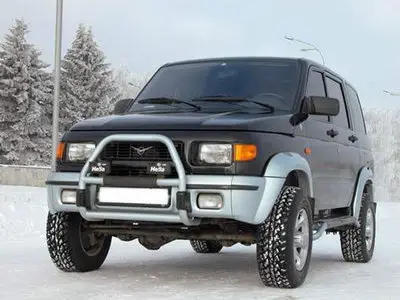
In 1985 a new industry standard changed the names: the UAZ-469 became the UAZ-3151 and the UAZ-469B became the UAZ-31512. The cars received a one-piece windscreen with automatic wipers, new lights, a dual-circuit brake system, better heating and a modernised drivetrain. A civilian hardtop, the UAZ-31514, arrived in 1993 and its more powerful UAZ-31519 in 1997. The 1990s also brought the stretched-wheelbase Gusar in 1996 and the wider Bars in 1999, a UAZ-2315 pickup on 31514 mechanics in 1996 and the short-wheelbase Shalun in 1999. In 2003 the updated Hunter replaced the base models for the home market, though the 31512 was still built for the Russian Army until 2011 and for civilians until 2005, when new emission rules ended it. The family was exported to 80 countries and between 1.65 and 2 million were built.
The 2010 anniversary series
In February 2010 UAZ announced a limited series under the old UAZ-469 name, factory index 315196, timed for the 65th anniversary of the Victory and planned at 5,000 cars. It had coil front springs, front disc brakes and, with the metal roof, power steering, plus the 112 hp ZMZ-4091 engine. The run sold out and in January 2011 the UAZ-469 disappeared from the catalogue again. In October 2011 the Russian Ministry of Defence announced that it intended to stop buying the UAZ-3151.
Design and features
- Portal axles: double final drives and hub reducers lifted the clearance to 300 mm; the civilian 469B used simpler GAZ-69 type axles and sat at 220 mm.
- Easy to repair: a ladder frame, a four-speed gearbox and mechanicals that could be fixed in the field.
- Low-grade fuel: the engine ran on petrol from 72 octane, which mattered far from cities.
- Air-transportable body: the open five-seat body had a folding windscreen and a removable canvas, so the car could be loaded into a helicopter.
- Two load options: seven passengers and 100 kg of luggage, or two passengers and 600 kg of cargo, plus a trailer of 850 kg.
UAZ-469 versions
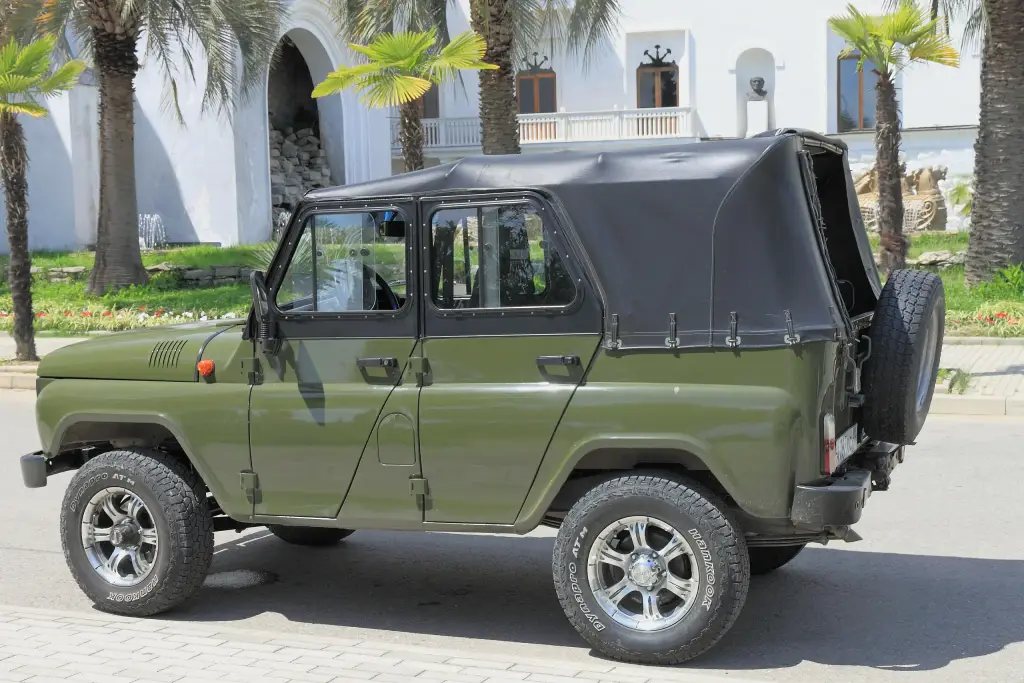
- UAZ-469: military version with 300 mm ground clearance.
- UAZ-469B: civilian version with 220 mm, from 1973.
- UAZ-3151 and UAZ-31512: the 1985 renaming of the 469 and 469B.
- UAZ-31515 Burevestnik: hardtop for the Border Troops, from 1980.
- UAZ-31514 and UAZ-31519: civilian hardtops of 1993 and 1997.
- Gusar, Bars, 2315 and Shalun: stretched, widened, pickup and short-wheelbase derivatives of the 1990s.
- UAZ-315196: the 2010 anniversary series sold under the UAZ-469 name.
The 469 line ended with the UAZ Hunter, which replaced the base models in 2003. Its predecessor was the GAZ-69, and it shared its engine with the UAZ-452 van. More vehicles are in the UAZ collection.
Video: UAZ 469
Video by rockhell70 on YouTube.
Sources
- UAZ-469, English Wikipedia: development, production, Hunter and editions
- УАЗ-469, Russian Wikipedia: serial production date, construction, capacities