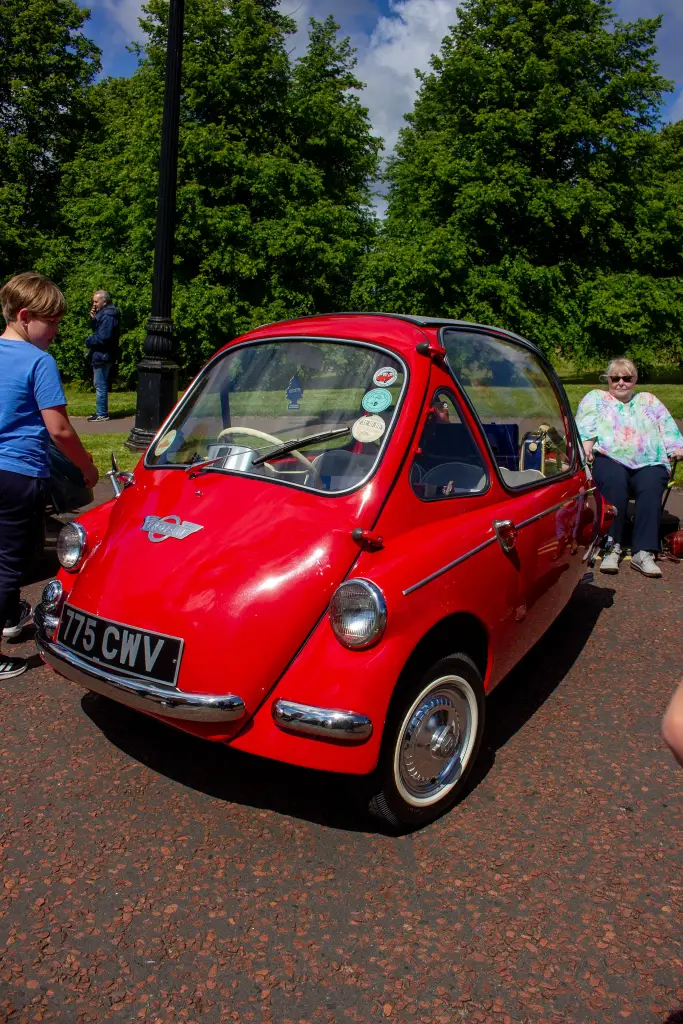

The Trojan 200 was the British version of the Heinkel bubble car, built under licence by Trojan Ltd from 1960 to 1965. It was the last vehicle to bear the Trojan name, a marque that had been making unconventional light cars and vans since 1914.
Trojan 200 at a glance
| Maker | Trojan Ltd, Croydon |
|---|---|
| Production | 1960–1965 |
| Basis | Heinkel bubble car, built under licence |
| Sold as | Trojan 200 |
| Owner from 1959 | Peter Agg, through the Trojan Lambretta group |
| Body type | Bubble car (microcar) |
| Place in history | the last vehicle to carry the Trojan name |
| Company founded | 1914, by Leslie Hayward Hounsfield |
| Company dissolved | 2013 |
based on one source: the English Wikipedia article on Trojan, which covers the Trojan 200 in its section on the company’s bubble and sports cars.
History of the Trojan 200
Trojan was one of the oldest names in the British motor industry. Leslie Hayward Hounsfield, a general engineer, began design work on a simple, economical car in 1910 and had a prototype running by 1913; Trojan Ltd was formed in 1914. The first cars were made in Croydon in 1920 and then built under an agreement at Leyland’s Kingston upon Thames factory until 1928, by which time some 11,000 cars and 6,700 vans had been produced. The vans went on selling long after the cars had lost favour, and after the Second World War they continued with the original engine until a Perkins diesel replaced it in 1952.

Peter Agg and the Heinkel licence
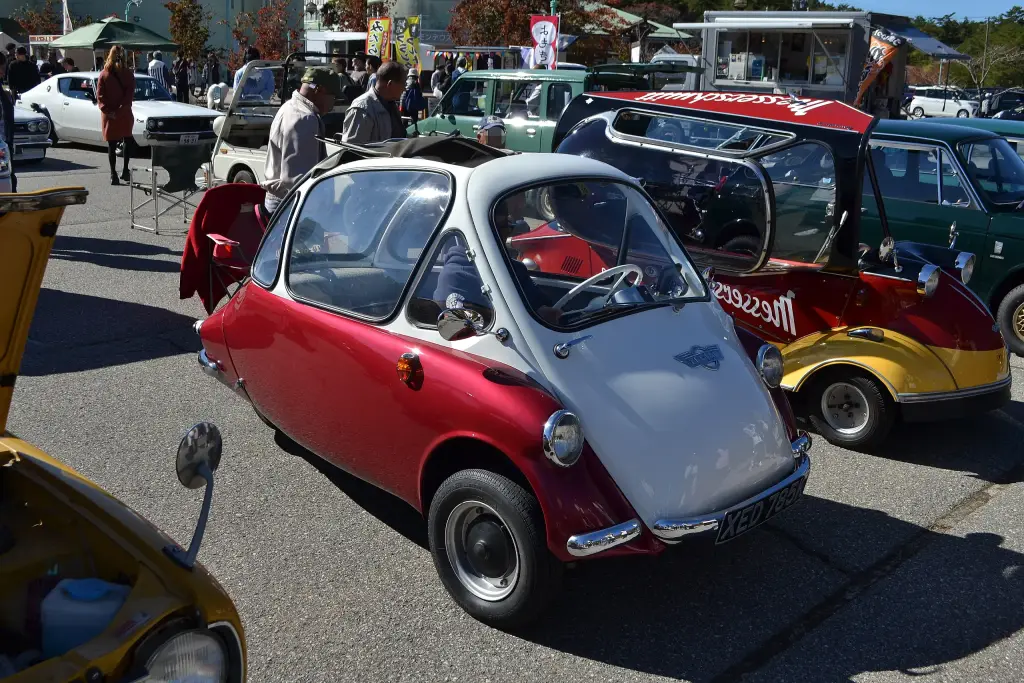
In 1959 the company was bought by Peter Agg, who had built up the Trojan Lambretta group when Lambretta Concessionaires Ltd took over Trojan Ltd. Under Agg the Croydon firm moved away from its own designs entirely. From 1960 to 1965 it built Heinkel bubble cars under licence and sold them as the Trojan 200 — a small, rounded microcar of the kind that was briefly popular in post-war Europe, when fuel was dear and cheap transport was in demand.
The last Trojan
The Trojan 200 was the final vehicle to carry the Trojan name. The company was meanwhile looking for other work: in 1962 it acquired the rights to build the Elva Courier sports car and produced 210 of them between 1962 and 1965, when production switched from road cars to the McLaren-Elva racing car. The bubble car and the Courier together mark the end of Trojan as a manufacturer of its own vehicles. Trojan Limited, incorporated on 27 February 1914, remained on the register until 19 March 2013, when it was dissolved by voluntary strike-off; the Croydon factory had by then long been sold.
Design and features
- Licence-built: the Trojan 200 was a Heinkel bubble car assembled in Britain under licence, not a Trojan design.
- Bubble-car layout: a tiny closed microcar aimed at cheap, economical motoring.
- Short life: built only from 1960 to 1965, as the bubble-car boom faded.
- End of a marque: the last vehicle to be sold under the Trojan name.

Trojan 200 versions
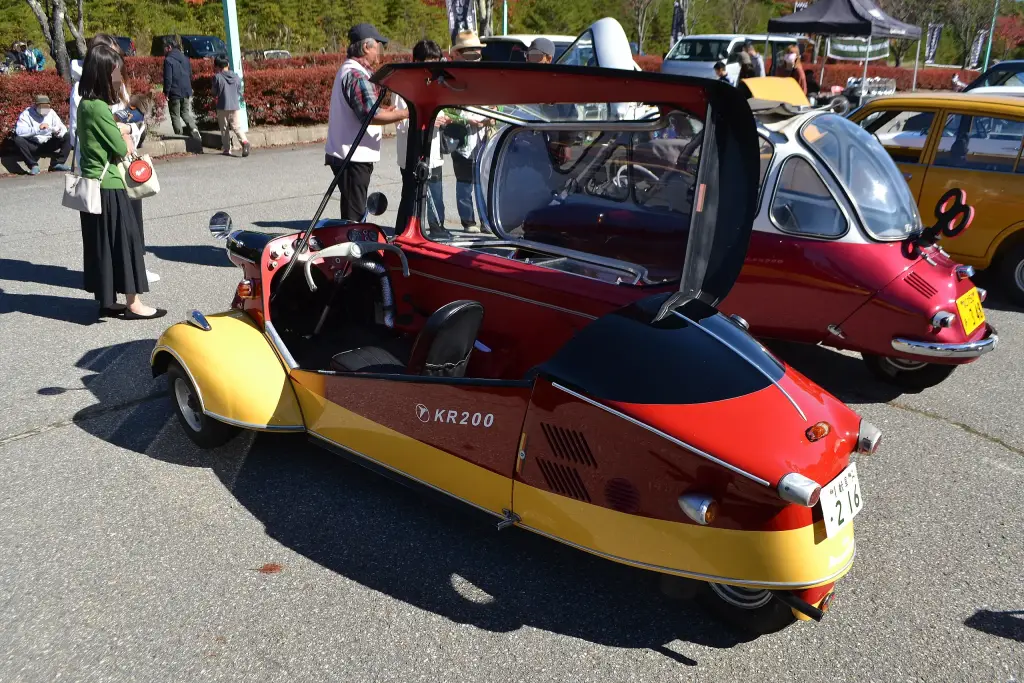
- Trojan 200 (1960–1965): the licence-built Heinkel bubble car, the only model of the Agg era.
- Elva Courier: the sports car whose rights Trojan bought in 1962; 210 were built up to 1965.
- Trojan Trobike: a mini-bike sold in kit form by the same Trojan Lambretta group.
The Trojan 200 is the last chapter of a long history that began with the Trojan light car and van; more British microcars and bubble cars are in the Trojan collection.
Video: 1962 Heinkel Trojan 200 Microcar at Anglia Car Auctions
Video on YouTube.
Sources
- Trojan (automobile), English Wikipedia: company history, Heinkel licence, production dates