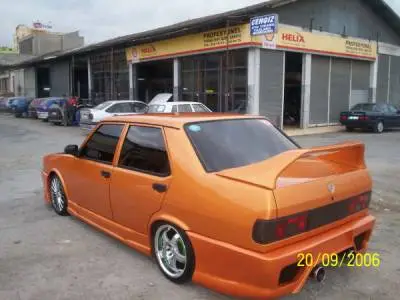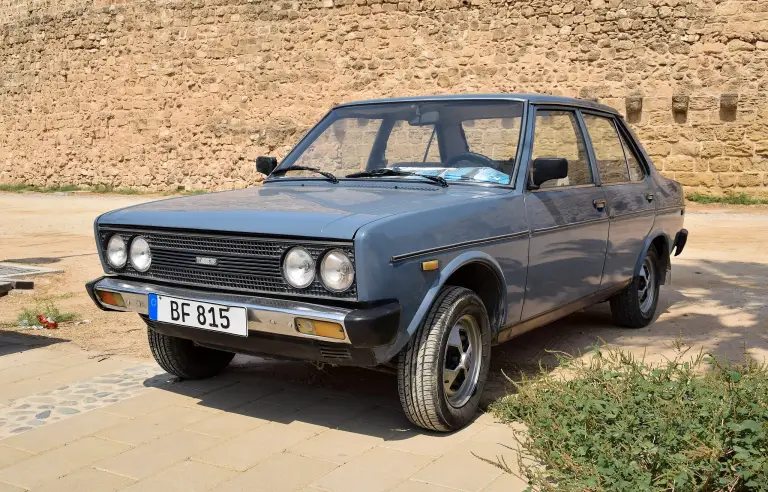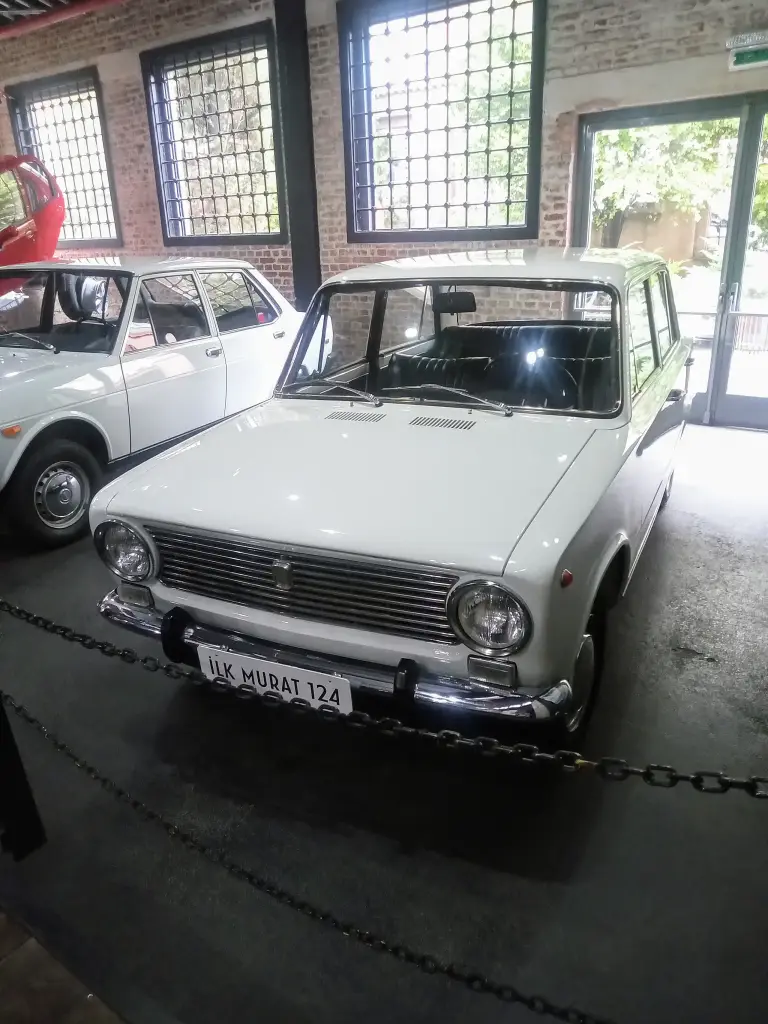
The Tofaş Serçe is the Turkish version of the Fiat 124. Tofaş began assembling the Italian saloon under licence in 1971 and sold it as the Murat 124; in 1983 the updated car was renamed Serçe, Turkish for sparrow. It was the first model the Bursa factory ever built.
Tofaş Serçe at a glance
| Maker | Tofaş, Bursa, Turkey |
|---|---|
| Based on | Fiat 124 |
| Names | Murat 124 (from 1971), Serçe (from 1983) |
| Body | four-door saloon |
| Layout | rear-wheel drive, longitudinal engine |
| Suspension | independent front, coil-sprung live axle at the rear |
| Brakes | disc brakes on all four wheels |
| Gearbox | all-synchromesh manual, as on the Fiat 124 |
| Award of the original | 1967 European Car of the Year (Fiat 124) |
| Production of the Fiat 124 | 1966–1974 in Italy |
There is no English Wikipedia article on the Serçe, and the Turkish page on the Murat 124/Serçe redirects to the Tofaş company article; this page therefore uses the Tofaş material together with the English article on the Fiat 124 it was based on.
History of the Tofaş Serçe
The Fiat 124
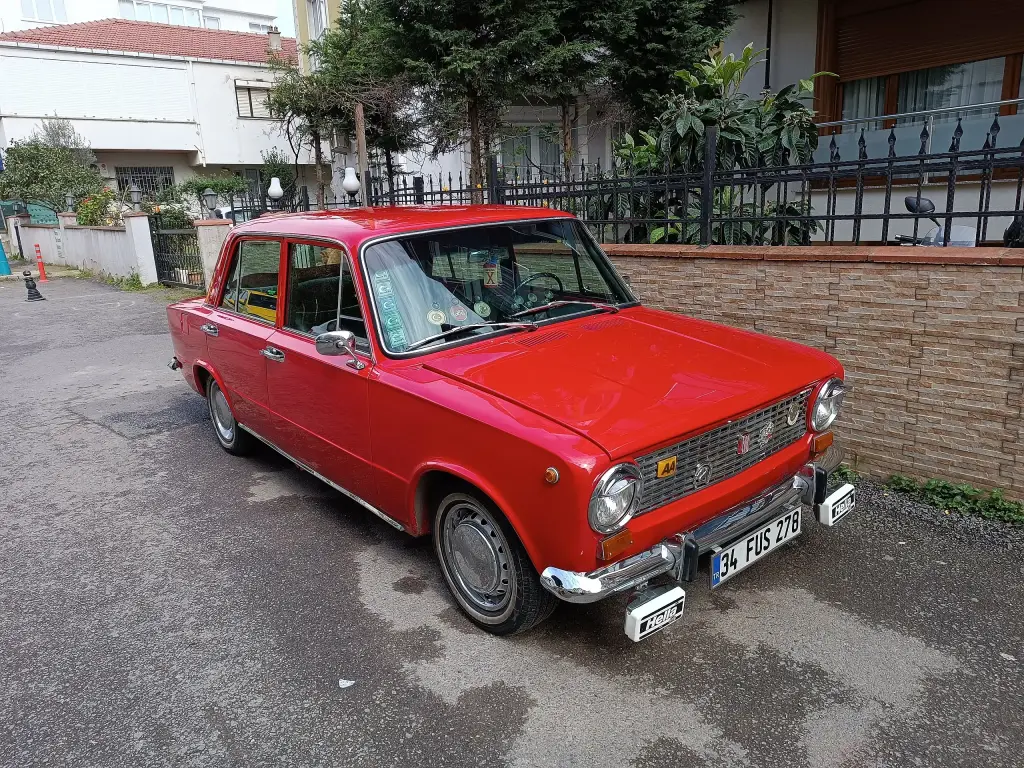
The Fiat 124 was a clean-sheet design by Oscar Montabone, the chief engineer responsible for its development. It used only the all-synchromesh gearbox of the Fiat 1500 and brought together a spacious interior, a coil-spring rear suspension, disc brakes on all four wheels and light construction. The saloon was launched in 1966; a five-door estate and the Sport Spider appeared at the Turin show in November 1966, and the Sport Coupé followed at Geneva in March 1967. The 124 won the 1967 European Car of the Year award. Fiat built it until 1974 and licensed it widely, including to the Soviet Union, where it became the VAZ-2101 and, as the Lada, the vast majority of all 124-derived production.
The Murat 124
Tofaş was founded in 1968, and its plant at Bursa was begun the following year. In 1971 the company introduced its first model, the Fiat 124 produced under licence and locally named Murat 124, and set up its first motorsport team the same year. Factory capacity reached 20,000 cars a year in 1972, and exports to Egypt began in 1975.
The Serçe
In 1983 the Murat 124 was followed by an updated version called the Serçe. Tofaş’s own model history describes the Serçe as the continuation of the Murat 124, while the larger Fiat 131-based Kuş Serisi, introduced in 1977, had taken over as the company’s bigger car. The Serçe was thus the later version of the same Fiat 124 saloon, and it carried the Tofaş name through the 1980s as the company moved on to newer Fiat models such as the Tempra and the Uno.
Design and features
- Fiat 124 mechanicals: all-synchromesh gearbox, a coil-sprung rear axle and disc brakes on all four wheels.
- Licensed production: the first car built by Tofaş, the company founded by Vehbi Koç in 1968.
- Two names, one car: sold as the Murat 124 from 1971 and as the Serçe from 1983.
- Award-winning basis: the Fiat 124 was the 1967 European Car of the Year.
Tofaş Serçe versions
- Fiat 124 (1966–1974): the Italian original, with saloon, estate, Sport Coupé and Sport Spider bodies.
- Murat 124 (from 1971): Tofaş’s licensed four-door saloon and the company’s first model.
- Serçe (from 1983): the renamed continuation of the Murat 124.
The larger Fiat 131-based Şahin, Doğan and Kartal took over at the top of the Tofaş range, and the history of the company is in the Tofaş article. More cars are in the Tofaş collection.
Sources
- Fiat 124, English Wikipedia: design, equipment, award, licensed production
- Tofaş, English Wikipedia: first model, Murat 124 and Serçe
- TOFAŞ, Turkish Wikipedia: 1971 start, 1983 Serçe