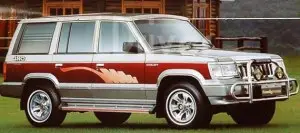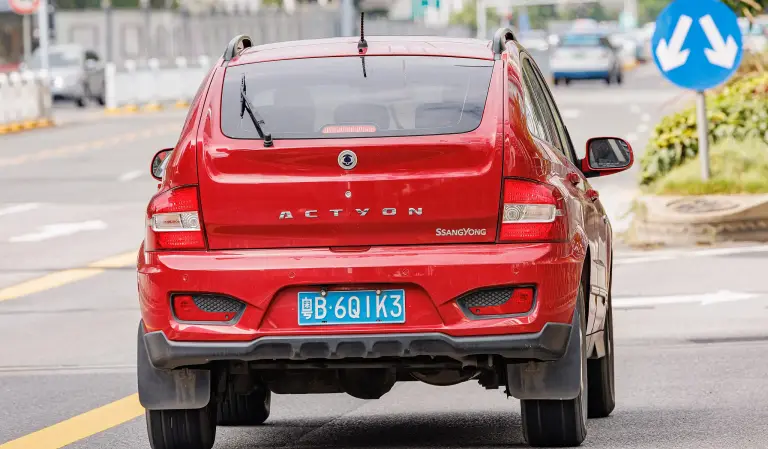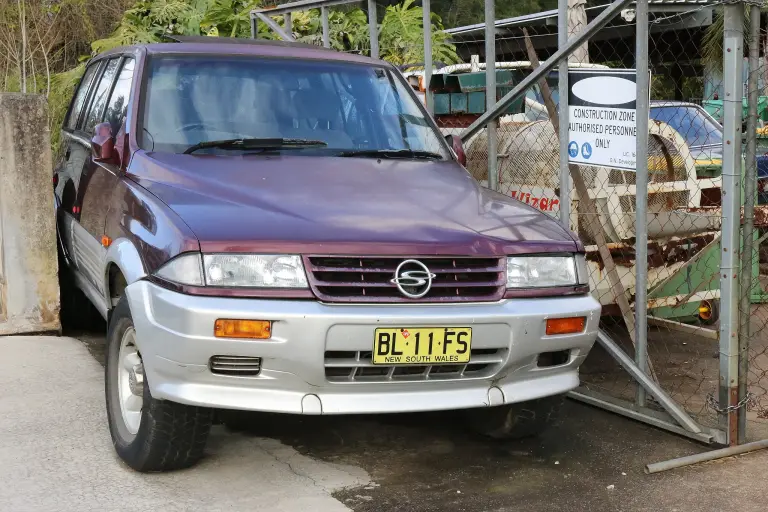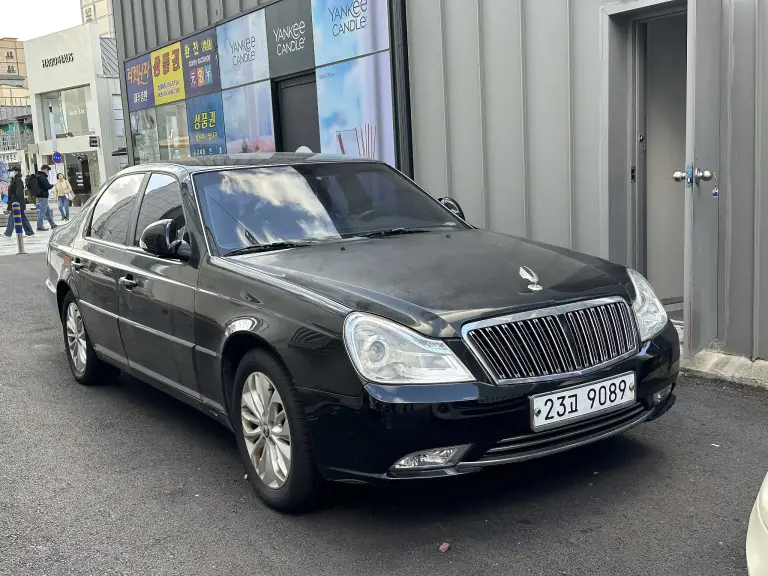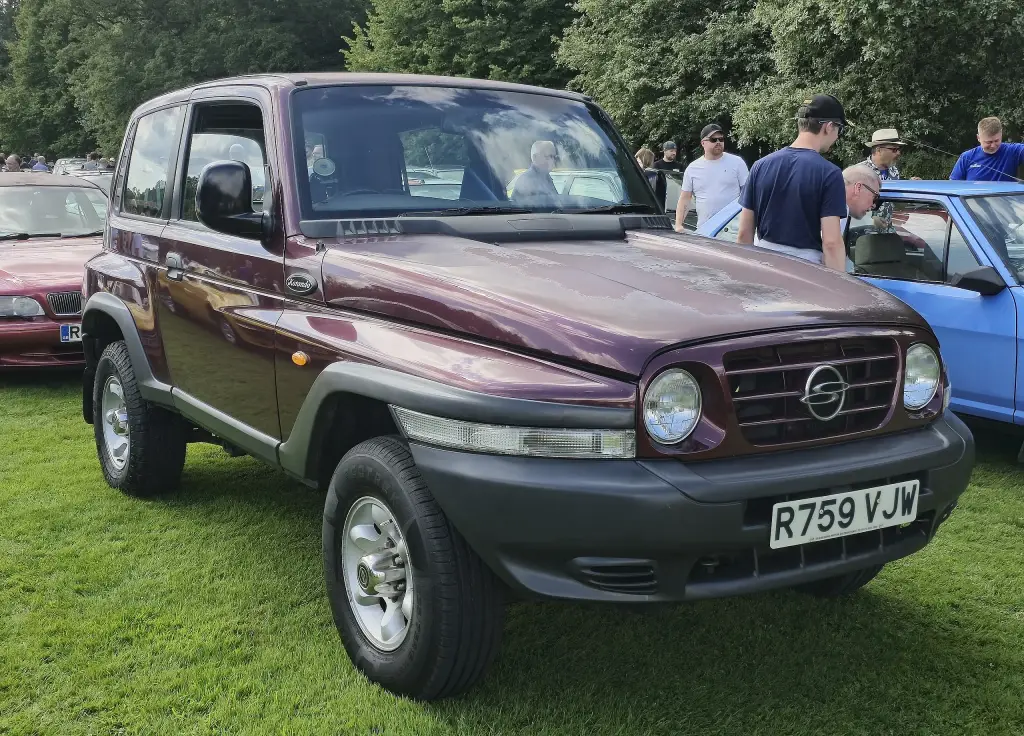
The Korando, now sold as the KGM Korando, is a mini SUV and compact crossover built by SsangYong from 1983 to 2006 and again from 2010. The name is a contraction of ‘Korea Can Do’, and it is listed in the Guinness Book of Records as Korea’s longest surviving nameplate.
SsangYong Korando at a glance
| Maker | SsangYong Motor (now KG Mobility) |
|---|---|
| Name | contraction of ‘Korea Can Do’ |
| First generation | Jeep-derived, 1983–1996 |
| Second generation | three-door 4×4, 1996–2006 |
| Third generation | C200 crossover, from 2010 |
| Second-generation engines | 2.3 and 3.2 petrol; 2.3 and 2.9 diesel, Mercedes-Benz licence |
| Gearbox | five-speed Borg-Warner manual |
| Third-generation engines | 2.0 turbodiesel, 175 hp; 2.2 diesel from 2016; petrol from 2012 |
| Third-generation drive | front- or four-wheel drive |
| Boot | 480 litres, 1,300 litres with the seats folded |
| Award | SUV of the year in Macedonia, 2012 |
Based on one source, the English Wikipedia article on the SsangYong Korando. The 1996–2006 three-door is the best-documented generation.
History of the SsangYong Korando
From Jeeps to the Korando name
The story begins with Ha Dong-hwan Motor Company, which assembled Jeeps, trucks and buses for the US armed forces and the United Nations Command from 1964. In November 1969 the CJ-5 entered production with a 75 hp Willys Hurricane four; a ten-seater and a pickup followed in 1971. In April 1974 American Motors and Shinjin Motors formed Shinjin Jeep Motors, using a locally built AMC 258 straight six until Isuzu’s 2.8-litre 4BA1 diesel arrived in July 1979. After AMC withdrew in 1978 and Shinjin sold Jeeps to Libya in spite of an embargo, Keohwa took over production in 1981 and rotated the bars in the grille to reduce the resemblance to a Jeep. In November 1982 the nine-seater Family Deluxe appeared, and in March 1983 the range was renamed Korando.
Under SsangYong
Keohwa was absorbed by Dong-A Motor in December 1984 and a facelift came in March 1985, with a changed interior and the 2,238 cc Isuzu C223 diesel replacing the larger engine; a 2-litre Isuzu G200Z petrol followed in June and the pickup was dropped. Korandos were exported to Japan from 1986 and to Europe from 1988. Dong-A was integrated into the SsangYong Group in November 1986 and the company became SsangYong Motor in March 1988. A nine-seat extended version, the Korando K9, was also offered, and production of the Jeep-based Korando ended in 1996.
Second generation (1996–2006)
The ‘New’ Korando arrived in Asia in 1996, in Europe in 1997 and in Australia in 1998. It used a shortened Musso chassis, weighed 1.8 tonnes, was a three-door and was designed by Professor Ken Greenley. Engines were 2.3- and 3.2-litre petrol units or 2.3- and 2.9-litre diesels, all built under Mercedes-Benz licence, with a five-speed Borg-Warner manual gearbox. The interior had a steering wheel arch on both sides so that right-hand-drive conversion was cheaper, with a handle on the passenger side. Daewoo sold the car as the Daewoo Korando from 1999 to 2001 after buying a majority stake in SsangYong. Production ended in 2006, sales continued into 2007, and from 2008 TagAZ in Russia assembled it as the TagAZ Tager, including a five-door long-wheelbase version.
Third generation (C200; 2010–2019)
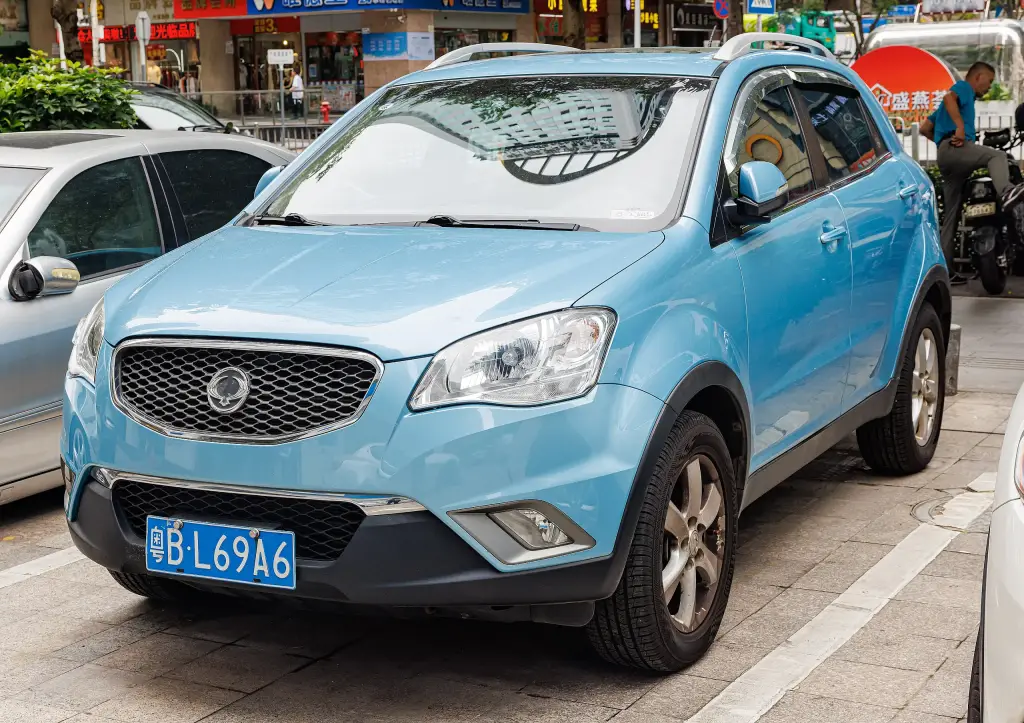
The third-generation Korando, codenamed C200, began production in late 2010 with a slightly longer wheelbase than the Hyundai ix35 and Kia Sportage. In Russia it was sold as the SsangYong New Actyon. It launched with a six-speed manual or six-speed M11 automatic, a 2.0-litre turbodiesel of 175 hp and front- or four-wheel drive; a petrol engine followed in 2012. A 2013 facelift brought a new grille, LED daytime running lamps and new rear lights; in 2016 the 2.0 diesel was replaced by a 2.2-litre Euro 6 unit and the automatic became an Aisin six-speed, and a second facelift appeared in 2017. Combined consumption was 5.5 l/100 km, acceleration to 100 km/h took under ten seconds, six airbags were standard and the boot held 480 litres, or 1,300 with the rear seats folded. Reviewers praised the design, interior space and the new monocoque chassis, and the car was SUV of the year in Macedonia for 2012.
Design and features
- Longest-running nameplate: in use since 1983 and recognised by the Guinness Book of Records.
- Mercedes-Benz engines: the second generation used licensed 2.3 and 2.9 diesels and 2.3 and 3.2 petrol units.
- Reversible interior: the second-generation dashboard was shaped for both left- and right-hand drive.
- Modern crossover: the C200 combined a monocoque chassis, 175 hp diesel and front- or four-wheel drive.
SsangYong Korando versions
- Jeep-based Korando (1983–1996): CJ-5 derived, with AMC and Isuzu engines.
- Korando K9: nine-seat extended version.
- Korando Family (1988): a separate model on an Isuzu Trooper chassis.
- Second generation (1996–2006): three-door with Mercedes-derived engines.
- Daewoo Korando (1999–2001): badge-engineered version.
- TagAZ Tager (from 2008): Russian licence-built three- and five-door cars.
- Third generation C200 (2010–2019): compact crossover, facelifted in 2013 and 2017.
The Korando Family of 1988 is described on its own page, SsangYong Korando Family. The three-door shared its chassis with the Musso; more models are in the SsangYong collection.
Sources
- SsangYong Korando, English Wikipedia: history, generations, engines, equipment