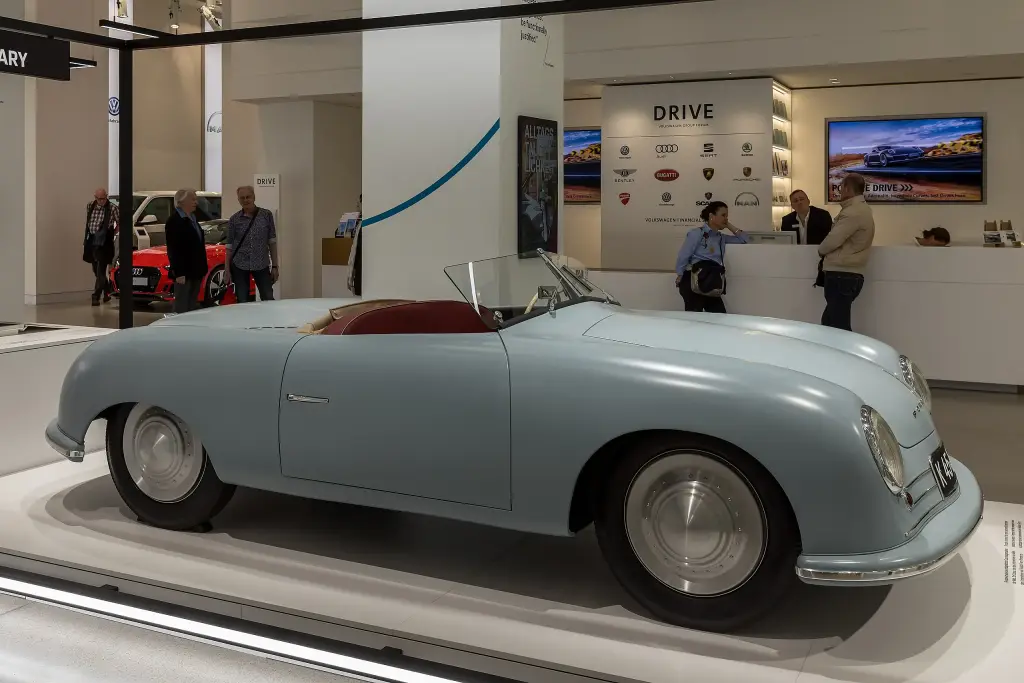

The speedster is an open two-seat body style that began with racing cars stripped of everything unnecessary for speed. Its cut-down form took shape in the 1900s, and the same idea — a light, open car with little between the driver and the road — still appears on modern low-volume sports cars.
Speedster at a glance
| Type | open two-seat body style |
|---|---|
| Name | from early racing cars stripped for speed |
| Formed | 1900s |
| Layout | one or two seats on a ladder-frame chassis |
| Bodywork | most of the body and the fenders removed |
| On board | seats, fuel tank and spare tyres |
| Weather protection | none in the original form |
| Early builders | Mercer and Stutz, with ready-made racing speedsters |
| Related terms | roadster, runabout, spider or spyder |
| Still made | windowless Morgan Roadster, doorless Caterham 7, bodyless Ariel Atom |
Based on one source: the English Wikipedia article on roadsters, which covers the speedster body style. The German and Italian equivalents have no separate page.
History of the Speedster
Racing origins

The earliest motor races were held in Europe from 1894 and in the United States from 1895. Some of the first racing cars were purpose-built or stripped for the greatest possible speed, with minimal or no bodywork at all, and the resulting body style was aptly named the speedster. The cut-down speedster really took form in the 1900s: after most of the body and the fenders had been removed, an empty platform on a ladder-frame chassis was mounted with one or two seats, a fuel tank and spare tyres.
From race car to road car
American manufacturers Mercer and Stutz started offering ready-made racing speedsters. These cars were intentionally built to be driven to the race track, raced, and driven back home by their owner — essentially the first track day cars. The speedster’s immediate predecessor was the runabout, a body style with a single row of seats and no doors, windscreen or other weather protection. Another ancestor was the touring car, similar in shape to the modern roadster except for its multiple rows of seats. By the 1920s roadsters were appointed much like touring cars, with doors, windshields, simple folding tops and side curtains.
Speedster and roadster today
The terms overlap. A roadster is an open two-seat car with an emphasis on sporting appearance or character; in Britain the older terms were open two-seater and two-seat tourer, and roadster has been used increasingly there since the 1950s. In 1916 the United States Society of Automobile Engineers defined a roadster as an open car seating two or three, possibly with additional seats on the running boards or rear deck. Roadster bodies were offered on cars of every size and class, from the Ford Model T and Austin 7 to the Cadillac V-16, Duesenberg Model J and Bugatti Royale. By the 1970s roadster could be applied to any two-seater of sporting appearance, and models such as the Alfa Romeo Spider, MGB and Triumph TR4 were as well equipped as convertibles. The Mazda MX-5, introduced in 1989, is the highest-selling roadster. The early minimal style is still produced by low-volume makers, including the windowless Morgan Roadster, the doorless Caterham 7 and the bodyless Ariel Atom.
Design and features
- Minimal bodywork: the original speedster ran with most of the body and the fenders removed.
- One row of seats: room for one or two people, with the seat set well back on the chassis.
- No weather protection: no doors, windscreen or folding top in the earliest form.
- Built around speed: a light open car with only the essentials — seats, fuel tank and spare tyres.
- A living idea: the same stripped-back approach survives on modern low-volume sports cars.
Speedster versions
- Racing speedster (1900s): a stripped racer with a platform chassis, seats, tank and spare tyres.
- Ready-made speedster: Mercer and Stutz cars built to be driven to the track, raced and driven home.
- Runabout: single row of seats, no doors or windscreen — the speedster’s immediate predecessor.
- Classic roadster: from the 1920s with doors, windscreen, folding top and side curtains.
- Spyder: the alternative spider or spyder name, as on the 1962 Chevrolet Monza Spyder.
- Modern minimal roadster: Morgan Roadster, Caterham 7 and Ariel Atom, still built without a full body.
More open two-seaters are collected in the Speedster section.
Video: Porsche 911 (964) Speedster classic review
Video on YouTube.
Sources
- Roadster (car), English Wikipedia: definition, speedster history, roadster history and modern examples