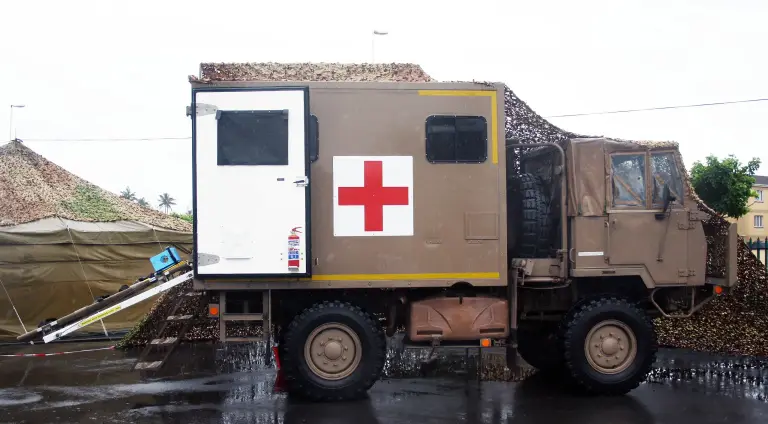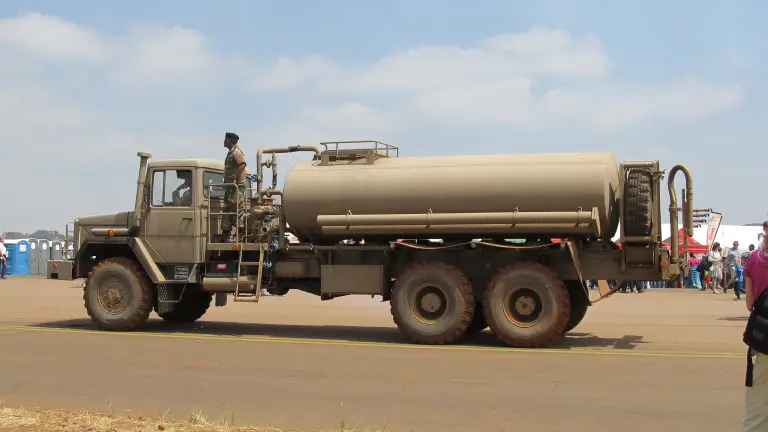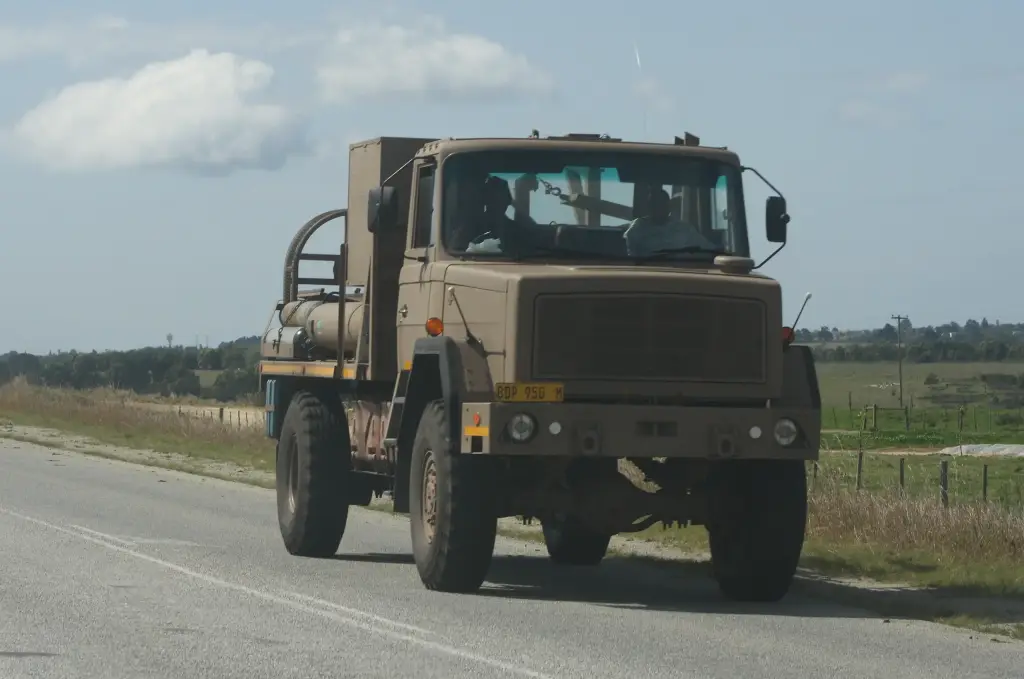
The SAMIL 50 is the middle model of the SAMIL range of military trucks, the standard logistical transport vehicles of the South African Defence Force and its successor, the SANDF. It was an upgraded Magirus Deutz diesel-engined truck with a high-strength chassis, and it also provided the basis for the 7-tonne SAKOM 50A.
SAMIL 50 at a glance
| Maker | SAMIL (South African MILitary) |
|---|---|
| Type | military logistics truck |
| Operator | South African Defence Force, later the SANDF |
| Place in the range | between the SAMIL 20 and the SAMIL 100 |
| Base | upgraded Magirus Deutz diesel-engined trucks |
| Chassis | high-strength, for severe off-road conditions |
| Derivative | SAKOM 50A, a 7-tonne 4×2 version for second-line duties |
| SAKOM cab | SAMIL 20 cab |
| Original production ended | 1998 |
| Re-manufactured by | Truck-Makers, Rosslyn, Pretoria; Drakensberg Truck Manufacturers and N1 Trucks, Wallmansthal; Transvaal Motors, Boksburg |
| Civilian equivalent | SAMAG (South African MAGirus) |
| Surplus use | mining, exploration, contracting, farming, tourism and forestry |
The SAMIL 50 is described in a shared English Wikipedia article on the whole SAMIL Trucks range; this page is based on that single source.
History of the SAMIL 50
A South African military workhorse
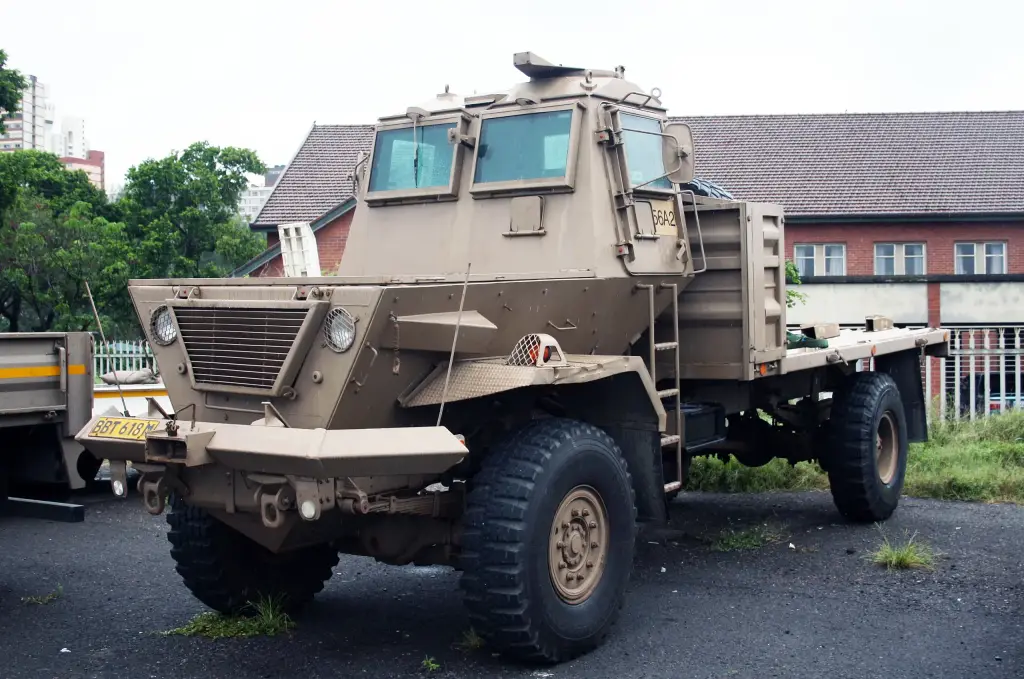
SAMIL, short for South African MILitary, was the name given to the standard logistical transport vehicles of the South African Defence Force and, later, the South African National Defence Force. The trucks were essentially upgraded versions of Magirus Deutz diesel-engined trucks. Their high-strength chassis was chosen to handle severe off-road conditions, which made them an ideal vehicle for the South African Army. The SAMIL 50 sat between the lighter SAMIL 20 and the heavy SAMIL 100.
The SAKOM 50A derivative
The SAMIL 50 also produced a distinct second-line model. The SAKOM 50A was a 7-tonne 4×2 version of the truck, built with a SAMIL 20 cab and employed on second-line duties rather than the front-line logistical role of the 4×4 SAMILs. The existence of this derivative shows how far the range was adapted to different loads and duties.
End of production and re-manufacture
Original production of the SAMIL range ended in 1998. The trucks are now re-manufactured by Truck-Makers in Rosslyn, Pretoria, by Drakensberg Truck Manufacturers and N1 Trucks in Wallmansthal and by Transvaal Motors in Boksburg. Reconditioned and remanufactured military surplus SAMIL trucks have also been sold to the private sector, to mining groups, exploration companies, contractors, farmers and organisations in tourism and forestry. The civilian versions of the range were marketed as SAMAG, for South African MAGirus.
Design and features
- Middle of the range: the SAMIL 50 filled the gap between the light SAMIL 20 and the heavy SAMIL 100.
- Magirus Deutz base: an upgraded version of the German diesel-engined truck.
- High-strength chassis: built for severe off-road conditions.
- SAKOM 50A: a 7-tonne 4×2 second-line derivative with the SAMIL 20 cab.
- Long service: production ended in 1998, but the trucks are still re-manufactured and sold on.
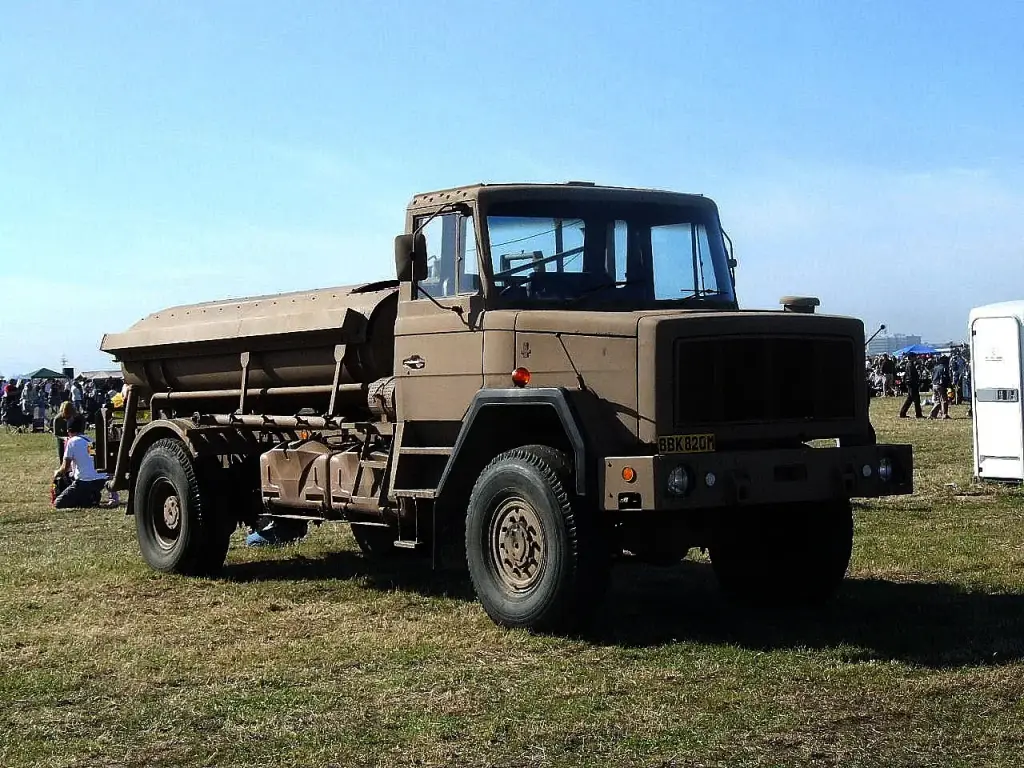
SAMIL 50 versions
- SAMIL 50 cargo truck: the standard logistical body of the middle model.
- SAKOM 50A: 7-tonne 4×2 version with a SAMIL 20 cab, used on second-line duties.
- Water tanker: a tanker body on the SAMIL 50 chassis.
- Field kitchen and pantry: a mobile catering body for army units.
- Flat bed: a general-purpose flat-bed body for carrying mixed loads.
The SAMIL 50 was the middle truck between the SAMIL 20 and the SAMIL 100; its SAKOM 50A derivative used the smaller truck’s cab. More military and civilian trucks are in the SAMIL collection.
Video: SAMIL 50s towing out a stuck truck in Botswana
Video on YouTube.
Sources
- SAMIL Trucks, English Wikipedia: range, chassis, SAKOM 50A, re-manufacture and surplus sales