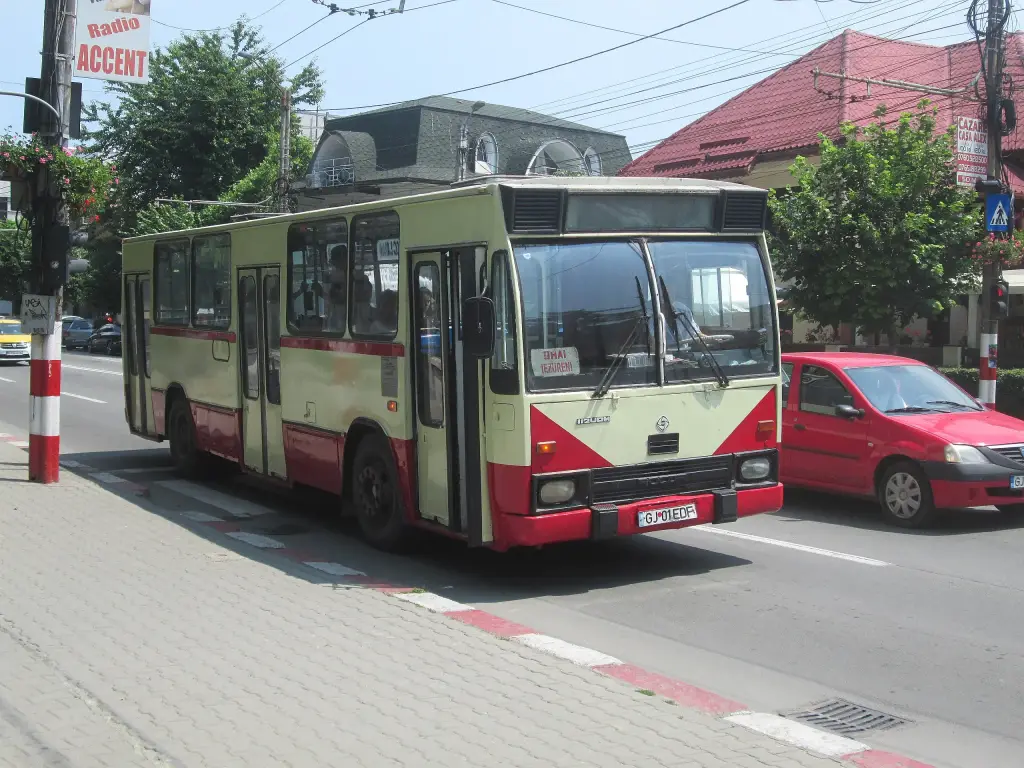

The DAC 112 UDM was an urban bus of 12 metres built at the Bucharest works that later became Rocar. It was produced from 1979 to 2000, and in 1993, when the factory took the Rocar name, the same vehicle was sold as the Rocar 112 UDM.
Rocar DAC 112 UDM at a glance
| Maker | Autobuzul works, Bucharest, later Rocar Bucureşti |
|---|---|
| Production | 1979–2000 |
| Also sold as | Rocar 112 UDM from 1993 |
| Type | urban bus, 12-metre class |
| Length, width, height | 11,400 / 2,500 / 3,040 mm |
| Wheelbase | 5,650 mm |
| Floor height | 930 mm |
| Kerb weight / gross weight | 12,500 / 23,000 kg |
| Seats | 24–28 |
| Doors | 3 |
| Engine | horizontal four-stroke diesel, 192 or 240 hp |
| Top speed | 65 km/h |
The model has no English Wikipedia article; this page is based on the Romanian article on the DAC 112 UDM. Based on one source.
History of the Rocar DAC 112 UDM
A Bucharest city bus
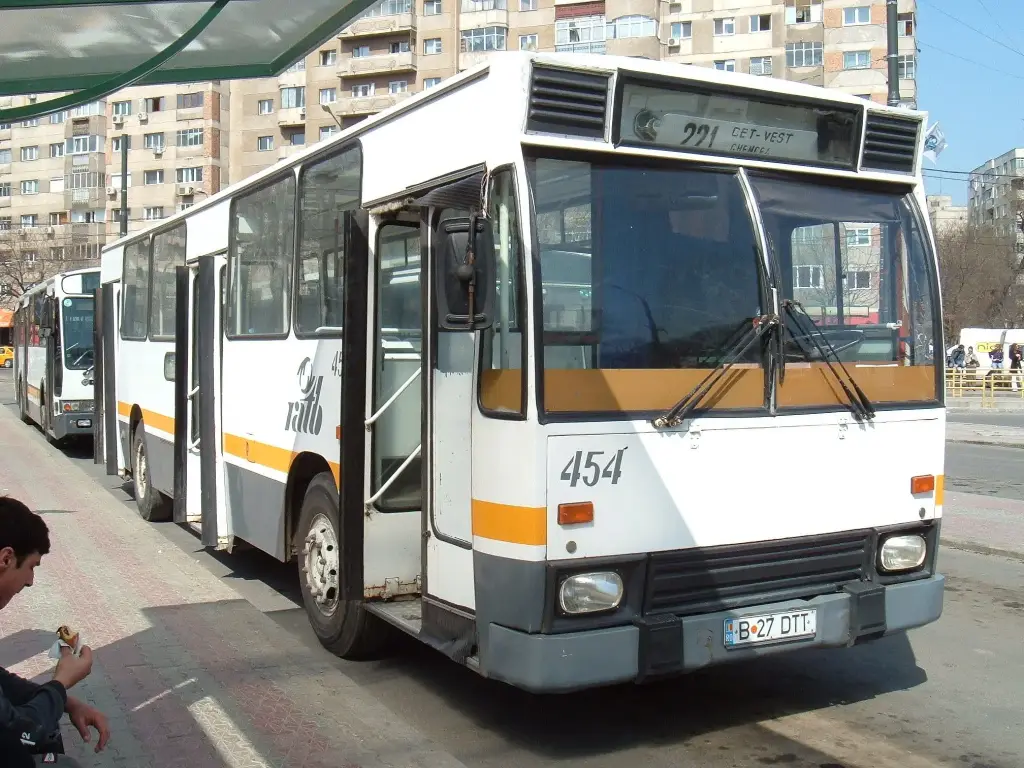

The 112 UDM was built by the Bucharest bus works, the enterprise known for most of its life as Autobuzul and from 1993 as Rocar Bucureşti. In the model code the letters UD stand for Urban Diesel, while the number 112 identifies the factory’s first series of 12-metre vehicles. The DAC name was shared with the truck maker of Braşov, which had no part in the bus.
A long run with small changes
Production began in 1979 and continued for 21 years, until 2000. Over that period the bus received some modifications, but they were limited in scope: the 112 UDM remained recognisably the same vehicle from the first examples to the last. Its long life made it one of the most familiar shapes on Romanian city streets, and it served operators well beyond Bucharest.
From DAC to Rocar
The change of name in 1993 divided the model’s history in two. While the works was called Autobuzul the bus was the DAC 112 UDM; once the company had been reorganised as Rocar Bucureşti, the same machine was marketed as the Rocar 112 UDM. The two names therefore describe one bus rather than two successive designs, which is why surviving vehicles are catalogued under either badge.
Design and features
- Urban Diesel layout: a 12-metre city bus with three doors and standing room for about 100 passengers at 8.5 people per square metre.
- Horizontal diesel engine: mounted under the floor, in 192 hp form from RABA-MAN or the Braşov works, or as a 240 hp turbo-diesel.
- Choice of transmissions: a hydramatic automatic on some vehicles, otherwise a four- or five-speed manual gearbox.
- Long production: built without a major redesign from 1979 to 2000.
- Two badges, one bus: sold as the DAC 112 UDM and, from 1993, as the Rocar 112 UDM.
Rocar DAC 112 UDM versions
- DAC 112 UDM (1979–1993): the original name, used while the factory was the Autobuzul works.
- Rocar 112 UDM (from 1993): the same bus under the new company name.
- DAC 112EM: a trolleybus version of the 112 fitted with a TN-76 electric motor.
- DAC 117 UD: the articulated member of the family, built from 1979 to 1987.
The 112 UDM belonged to the Bucharest works’ family of city vehicles, which also produced the articulated DAC 117 UD and the trolleybus version. More vehicles from the same maker are in the Rocar collection.
Sources
- DAC 112 UDM, Romanian Wikipedia: production years, names, dimensions, engines, trolleybus version