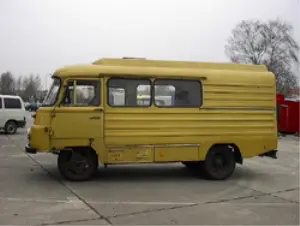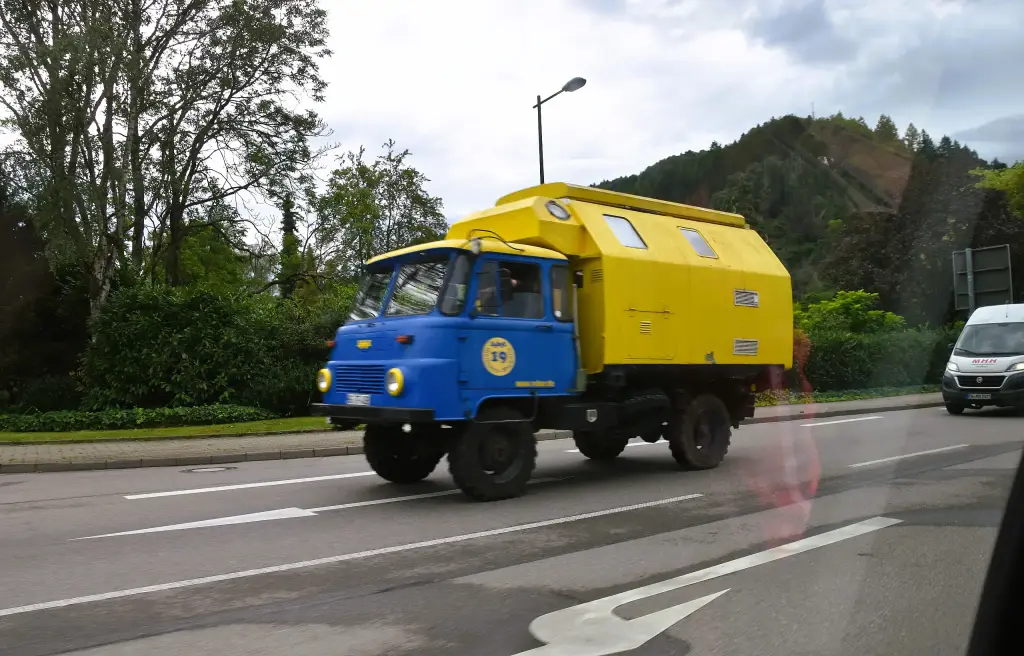
The Robur LO 3000 is a three-ton lorry made by the East German industrial vehicle manufacturer VEB Robur-Werke Zittau from 1973 until 1984. It was the civilian rear-wheel drive Robur of its time and was built alongside the all-wheel drive LO 2002 A.
Robur LO at a glance
| Maker | VEB Robur-Werke Zittau, East Germany |
|---|---|
| Brand | IFA, sold as Robur |
| Production | 1973–1984 |
| Payload | 3,000 kg |
| Layout | forward control, body on frame, front engine, rear-wheel drive |
| Engine | LO 4/2 air-cooled 3,345 cm³ straight-four petrol |
| Gearbox | five-speed manual |
| Brakes | vacuum-assisted hydraulic dual circuit, duo servo drums |
| Tyres | 6.50–20 crossply |
| Trailer mass | 2,600 kg |
| Wheelbases | two offered |
| Body styles | more than twenty, including a bus |
| Successor | LO 3001 from 1985 |
History of the Robur LO
Predecessors: the LO 2500 of 1961
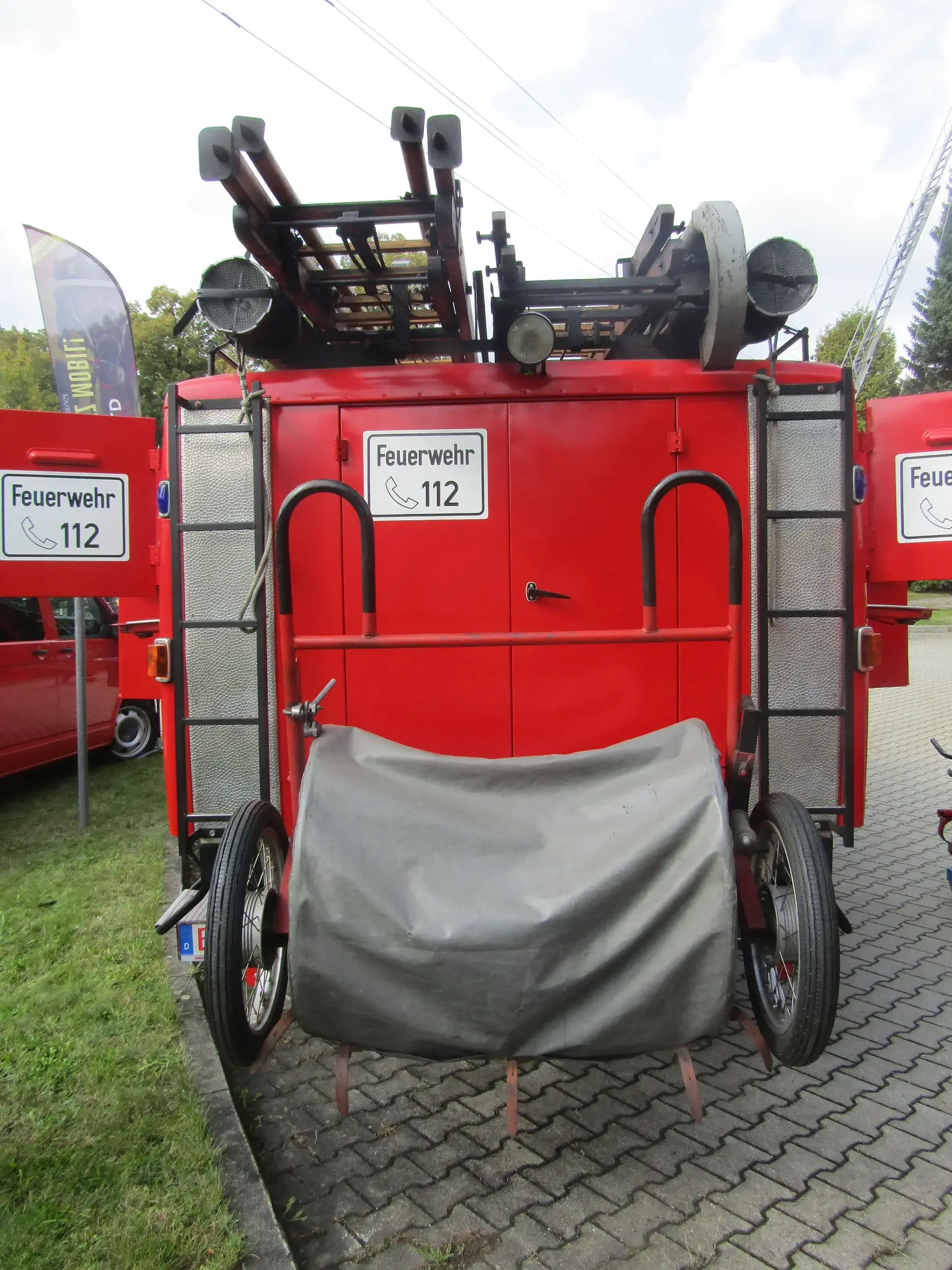
The Robur lorry range was introduced at the Leipzig Spring Fair in 1961 as the LO 2500, a 2.5-tonne lorry and successor to the Robur Garant 30K. It used the air-cooled carburettor petrol engine of its predecessor, raised to 70 PS (51.5 kW), and was joined by the all-wheel drive LO 1800 A and LO 2500 A. An official assessment in 1963 was lukewarm, criticising the brakes, the heavy steering, the fuel consumption and the rear-hinged doors, but the lorry still sold well abroad: contracts worth more than 53 million DM were signed at the 1961 fair, and 20,000 Roburs had been delivered to Czechoslovakia by 1967.
Modellpflege and the LO 2501
A diesel engine announced in 1959 became available in 1963 and was dropped again in 1968. In 1965 the engine was moved 44 cm forward, which enlarged the load area and raised bus seating from 18 to 21. Detail improvements in 1968 produced the LO 2501 and LO 1801 A, recognisable by a radiator grille without the model lettering; the LO 2501 brought a dual-circuit braking system. 1966 was a peak year with 7,000 lorries built, 4,500 of them exported.
The LO 3000
The LO 3000 of 1973 answered the long-standing call for a three-tonne payload. Compared with its predecessor it had a more powerful engine, ball-and-nut steering, an improved braking system and therefore a higher payload. From 1972 to 1979 the East German design bureaus worked on a successor, the O611/D609, developed alongside the IFA L60; the design reached a stage where it could have entered series production but was abandoned in favour of keeping the LO 3000 in production. In 1985 the LO 3000 was replaced by the LO 3001, a lightly modified version with smaller wheels and a skid plate, and the range continued until production ended in 1991.
Design and features
- Air cooling: the LO 4/2 engine has finned single cylinders and no radiator, a Robur speciality suited to subtropical markets.
- Body-on-frame construction: a flexible ladder frame with two U-profile longitudinal members and a rear cross member for a trailer hitch.
- Many bodies: two wheelbases and more than twenty body styles, including box vans, minibuses and workshop vehicles.
- Dual-circuit brakes: vacuum-assisted hydraulic brakes with duo servo drums, unusual for a lorry of this class.
- All-wheel drive stablemate: the LO 2002 A was built alongside the civilian rear-wheel drive LO 3000.
Robur LO versions
- LO 3000 flatbed: the standard platform lorry with a 3,000 kg payload.
- LO 3000 bus: a passenger version among the more than twenty body styles.
- Box and special bodies: vans, insulated bodies and multi-purpose sales vehicles were built on the same chassis.
- LO 2002 A: the all-wheel drive model produced at the same time.
- LO 3001 (1985): the final development with smaller wheels and a skid plate.
The diesel-engined version is described in the article on the Robur LD 3000. More vehicles from Zittau are collected in the Robur category.
Sources
- Robur LO 3000, English Wikipedia: production years, technical description, engine
- Robur (LKW), German Wikipedia: LO 2500 history, model updates, end of production