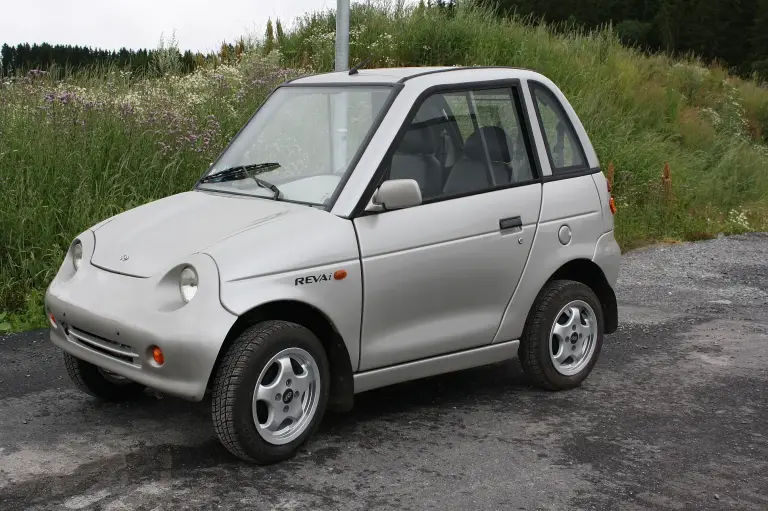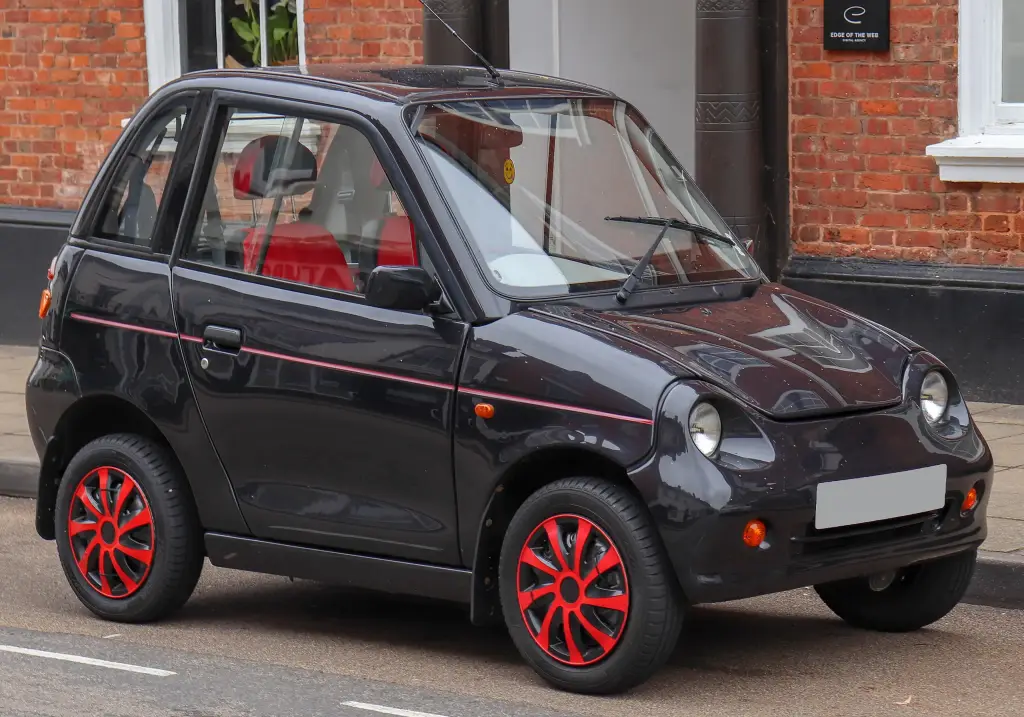
The REVAi was introduced in January 2008 as a thorough update of the Indian city electric car, and in the United Kingdom it was sold as the G-Wiz i. It swapped the old DC drive for an AC system, raised the top speed to 80 km/h (50 mph) and gained a reinforced chassis developed with Lotus Engineering. Production ended in 2012, when the Mahindra e2o took its place.
REVAi at a glance
| Maker | Reva Electric Car Company, Bangalore, India |
|---|---|
| Production | 2008–2012 (REVAi name) |
| Also called | G-Wiz i (United Kingdom) |
| Body | three-door hatchback, 2.6 m (8 ft 6 in) long |
| Motor | three-phase AC, 13 kW (17 hp) peak |
| Controller | 350 amp |
| Batteries | eight 6 V, 200 Ah lead-acid, 48 V |
| Top speed | 80 km/h (50 mph) |
| Nominal range | 80 km (50 mi) |
| Weight | 665 kg (1,466 lb), including 270 kg of batteries |
| Boost switch | 40 per cent extra torque |
| European class | heavy quadricycle (L7) |
The REVAi is described in the English Wikipedia article of the same name; this page is based on one source.
History of the REVAi
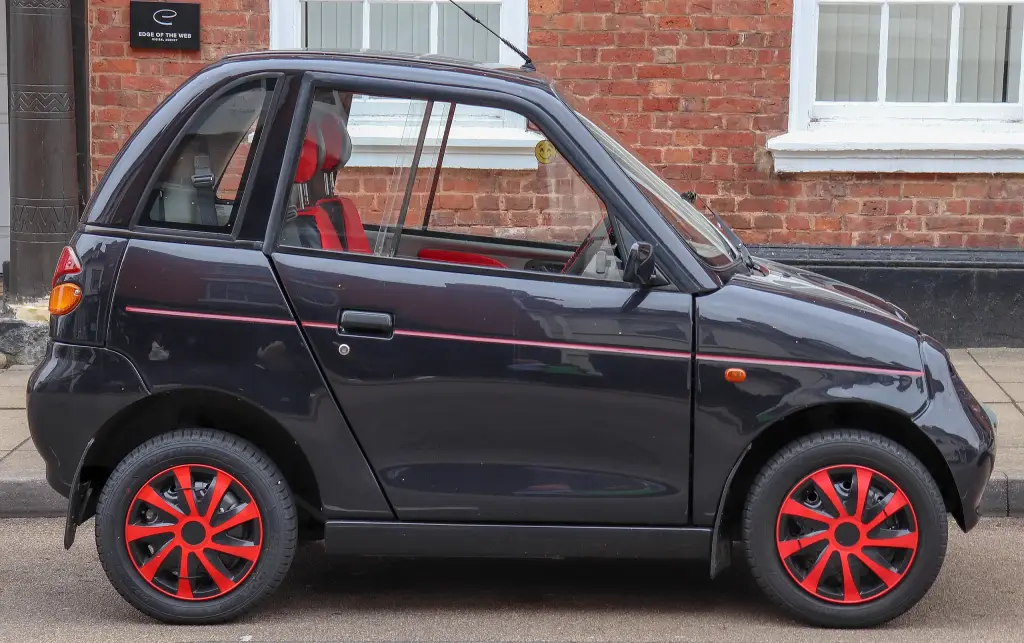
The REVAi replaced the original REVA in January 2008. The body stayed small — 2.6 m (8 ft 6 in) long, 1.3 m (4 ft 3 in) wide and 1.5 m (4 ft 11 in) high, with two adults in front and two children behind — but the mechanical layout was new. Behind the name in Britain, where the car was sold as the G-Wiz i and was for several years the country’s best-selling electric car, was the same Bangalore manufacturer, Reva Electric Car Company.
Drive and battery
Instead of the DC motor of the first model, the REVAi uses a three-phase AC motor rated at 13 kW (17 hp) peak, fed through a 350 amp controller. The batteries are the same eight 6 V, 200 Ah lead-acid units under the front seats, connected in series for 48 V. A boost switch gives 40 per cent extra torque for acceleration and hill climbing and takes the top speed to 80 km/h. The complete car weighs 665 kg (1,466 lb), of which 270 kg (600 lb) is battery. The nominal range is 80 km (50 mi), although fast driving or use of the heater or air conditioning reduces it.
Safety work with Lotus
The first REVA did not have a chassis strong enough to pass a 40 km/h (25 mph) crash test. For the REVAi the company worked with Lotus Engineering on front disc brakes, a collapsible steering column and a much revised, reinforced chassis, which was successfully crash tested at 40 km/h by ARAI in India. The car remains a heavy quadricycle (category L7) in Europe and can be exported to the United States as a neighbourhood electric vehicle with a 25 mph speed limiter.
L-ion and the end
In January 2009 Reva added the REVA L-ion, the same car with lithium-ion batteries: kerb weight fell to 565 kg (1,246 lb), acceleration improved, charging time dropped to six hours and the nominal range rose to 120 km (75 mi), with less loss in cold or hot weather. An off-board three-phase charging station could give a 90 per cent charge in an hour, and a roof solar panel was planned. British sales, the model’s main market, ended by the end of 2011; production stopped in 2012 and the Mahindra e2o replaced the car.
Design and features
- AC drive: a 13 kW three-phase motor and 350 amp controller instead of the old DC system.
- Boost switch: 40 per cent more torque when needed, enough for hills and overtaking in town.
- Stronger structure: a Lotus-assisted chassis that passed a 40 km/h crash test.
- City footprint: 2.6 m long with fold-down rear seats and a 270 kg payload.
REVAi versions
- REVAi (2008–2012): the standard lead-acid car, sold as the G-Wiz i in Britain.
- REVA L-ion (2009): lithium-ion batteries, 565 kg, 120 km nominal range.
- REVA Standard: the basic trim level offered alongside the better-equipped Li-Ion in some markets.
- US export version: limited to 25 mph and registered as a neighbourhood electric vehicle.
The REVAi followed the original REVA, and its place was taken in 2012 by the Mahindra e2o. More cars of the marque are in the REVA collection.
Video: Reva i: interior of the electric car
Video on YouTube.
Sources
- REVAi, English Wikipedia: models, design, L-ion, sales