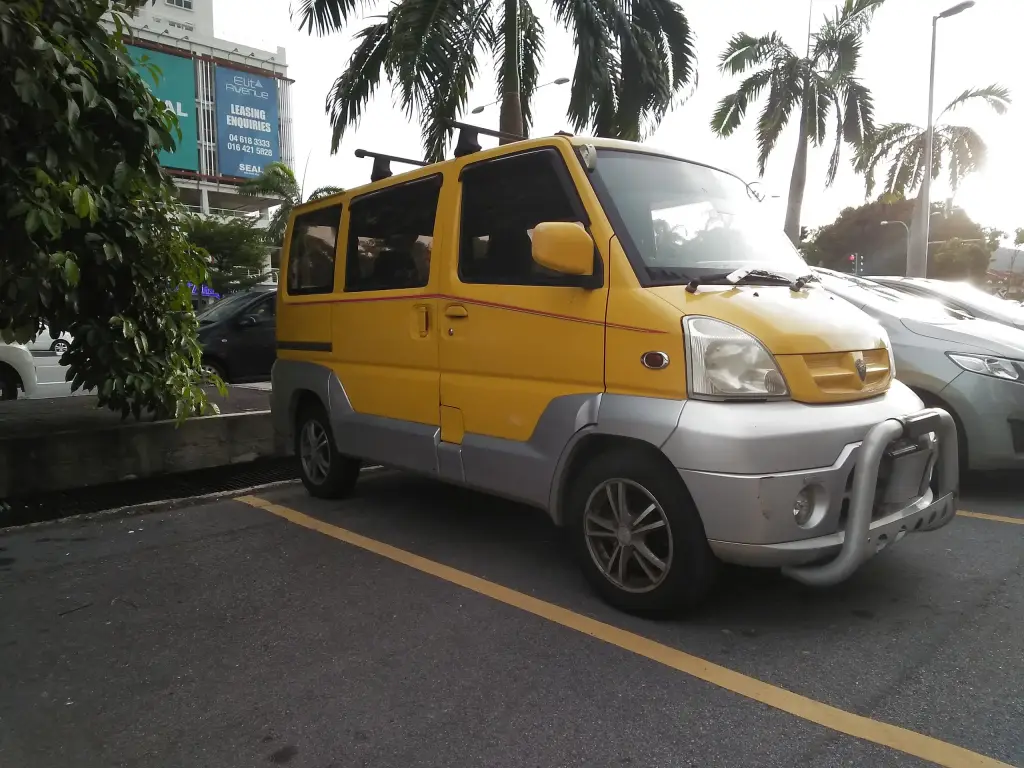
The Proton Juara is a microvan and mini MPV that Proton produced between 2001 and 2004. Launched on 22 July 2001, it was the company’s first model that was neither a saloon, a hatchback nor a coupé. Poor sales ended production early.
Proton Juara at a glance
| Maker | Proton, Malaysia |
|---|---|
| Class | microvan / mini MPV |
| Production | 2001–2004 |
| Launched | 22 July 2001, KLCC Esplanade |
| Codename | Proton RGW |
| Basis | Mitsubishi Town Box Wide |
| Engine | 1.1-litre Mitsubishi 4A31 S4, 71 hp |
| Gearbox | four-speed automatic |
| Top speed | 135 km/h |
| 0–100 km/h | 18.1 seconds |
| Seats | three rows, up to six |
| Built at | Pekan, Pahang |
Based on one source, the English Wikipedia article on the Proton Juara.
History of the Proton Juara
Proton began work on its first MPV, codenamed RGW, in late 1999. The car was based on the Mitsubishi Town Box Wide platform, which Proton intended to re-engineer over two or three years for local tastes, and Mitsubishi had expressed interest in rebadging the result for export. A prototype was finished by November 2000 and production began in the second quarter of 2001 at the HICOM Automotive Manufacturers Malaysia plant in Pekan, Pahang, now part of DRB-HICOM.
Launch and reception
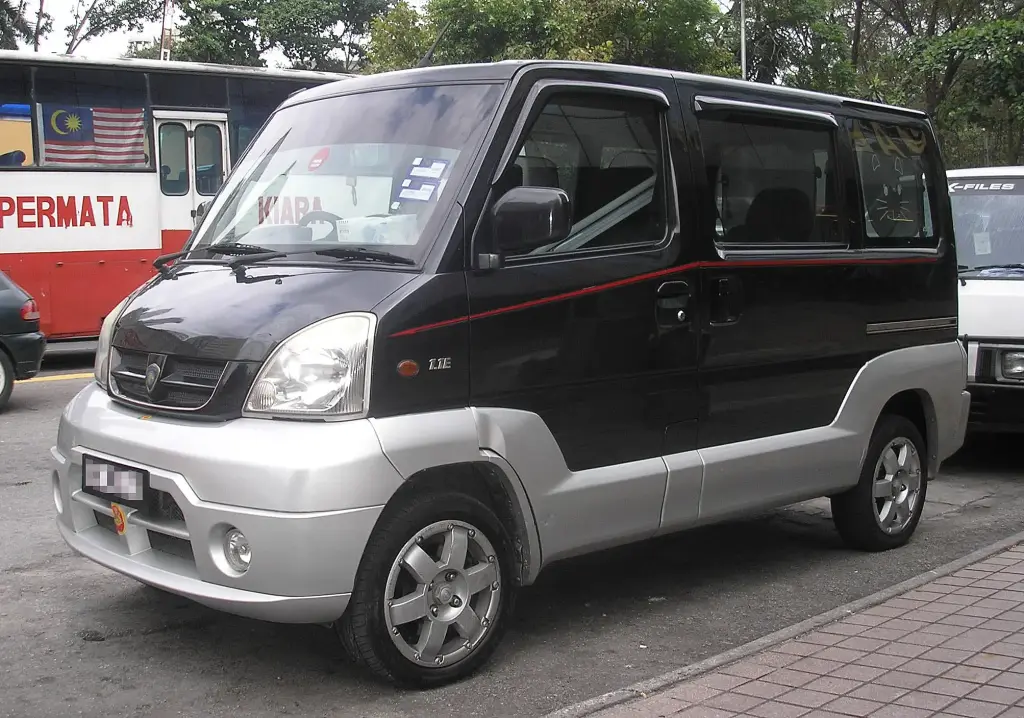
The Juara was launched on 22 July 2001 at the KLCC Esplanade with the endorsement of prime minister Mahathir Mohamad. Its name, which means champion in Malay, was revealed only on the launch day and was meant to honour the country’s sports champions. The body stayed close to the Town Box Wide apart from a Proton grille, front bumper, bodyside mouldings and 14-inch alloy wheels. Inside there were three rows and up to six individual seats; the second and third rows could be moved, removed or folded. Dual front power windows with anti-trap, power mirrors, follow-me-home lights and a CD radio were standard. Four colours were offered: yellow, silver, iridium and black, all with two-tone bumpers and mouldings. The 1.1E was the most popular trim at about RM49,200, and the closest rival was the Perodua Kenari.
Mechanicals
The Juara used a 1.1-litre Mitsubishi 4A31 S4 four-cylinder engine with electronic fuel injection, producing 71 hp (53 kW) at 6,000 rpm and 94 Nm at 4,500 rpm. Only a four-speed automatic was offered, with a top speed of 135 km/h and 0–100 km/h in 18.1 seconds. MacPherson struts at the front and trailing arms at the rear were tuned, Proton said, for car-like handling using expertise gained from Lotus. The Juara was rear-wheel drive, one of very few Protons so laid out, and the first Proton with electric power steering. The body had anti-intrusion bars, ventilated front disc brakes, rear drums and a load-sensing valve, but there were no airbags or anti-lock brakes.
End of the line
The car’s unconventional kei-car dimensions and van-like shape were not well received; some Malaysians called it a moving fridge. Production stopped a few months after the launch, resumed in mid-2002 with significantly lower prices, but sales stayed weak. Proton discontinued the Juara in 2004 and never exported it. Its successor, the Exora, arrived on 15 April 2009 and became a best-seller.
Design and features
- Six seats in three rows: movable, removable and folding rear seats.
- Rear-wheel drive: a rare layout for Proton.
- First Proton with electric power steering.
- Van-like space on a kei-car footprint.
Proton Juara versions
- Juara 1.1E: the most popular trim, about RM49,200 at launch.
- Other trims: Proton sold the car in several trim variants with the same engine.
- Early 2001 cars: the first batch, before production paused.
- 2002 relaunch: the same car at significantly reduced prices.
The Juara was Proton’s first people carrier; the company’s mainstay at the time was the Proton Saga. More models are in the Proton collection.
Video: PROTON JUARA 10th Anniversary 2011
Video on YouTube.
Sources
- Proton Juara, English Wikipedia: development, launch, engines, sales