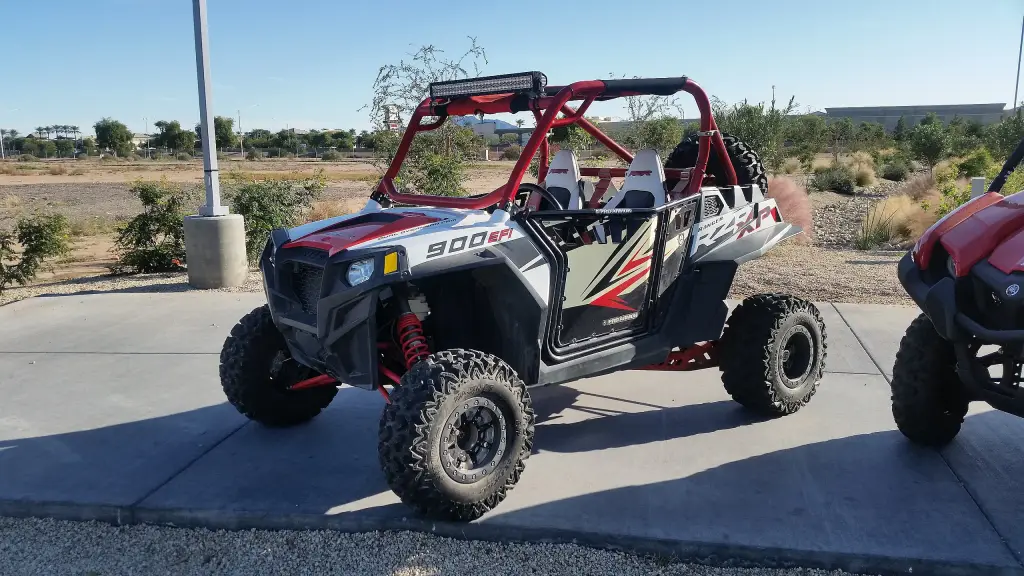

The Polaris RZR is a sport side-by-side built by Polaris Industries. Launched in 2007 as a 2008 model, it was first sold as the Ranger RZR, a sub-model of the larger, work-oriented Ranger. Its popularity was such that Polaris eventually dropped the Ranger name and made the RZR a model of its own.
Polaris RZR at a glance
| Maker | Polaris Industries (Polaris Inc. from 2019), Medina, Minnesota |
|---|---|
| Type | sport side-by-side (utility task vehicle) |
| Launched | 2007, as a 2008 model |
| Original name | Ranger RZR |
| Civilian models | 170, 900, S 900, XP 900, S 1000, XP 1000, Turbo S, Pro R |
| Engine | Polaris ProStar, developed in house from 2010 |
| Military versions | MRZR-2, MRZR-4, MRZR Alpha, MRZR Alpha XP, MRZR D2, MRZR D4 |
| USSOCOM order | up to 1,500 MRZR-2 and MRZR-4, September 2013 |
| US Marine Corps | 144 diesel MRZR-D, $2.5 million, November 2016 |
| Military payload | four troops and a 1,500 lb (680 kg) cargo bed in the MRZR-D |
| Safety penalty | $27.5 million fine by the CPSC, April 2018 |
based on one source: the English Wikipedia article on the RZR. Its specifications section is empty, so no performance figures are given here.
History of the Polaris RZR
Ranger RZR, 2008
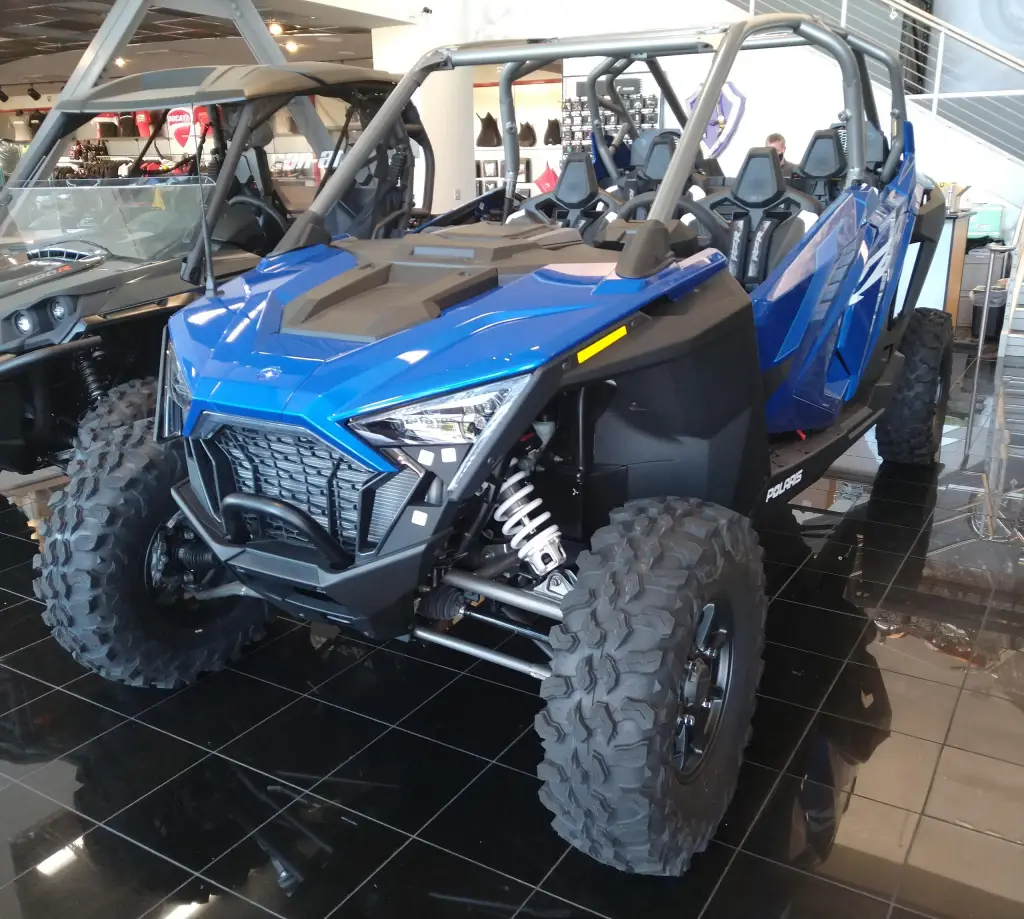

When the machine appeared for the 2008 model year it was officially the Ranger RZR, presented as a sporty branch of the Ranger family. The Ranger was the workhorse of the Polaris range, and the new version was pitched as its faster, more playful relative rather than as a separate line. Buyers took to it quickly, and Polaris responded by taking the Ranger badge away: the RZR became a stand-alone model in the catalogue.
ProStar engine, 2010
For 2010 Polaris designed its own engine for the RZR, the ProStar, instead of relying on the unit used until then. The change was more than a power upgrade. On the earlier engine the exhaust was cooled by airflow; on the ProStar the exhaust header ran from the front of the engine and turned through 180 degrees to leave at the rear, which put a hot spot directly behind the occupants.
The range grows
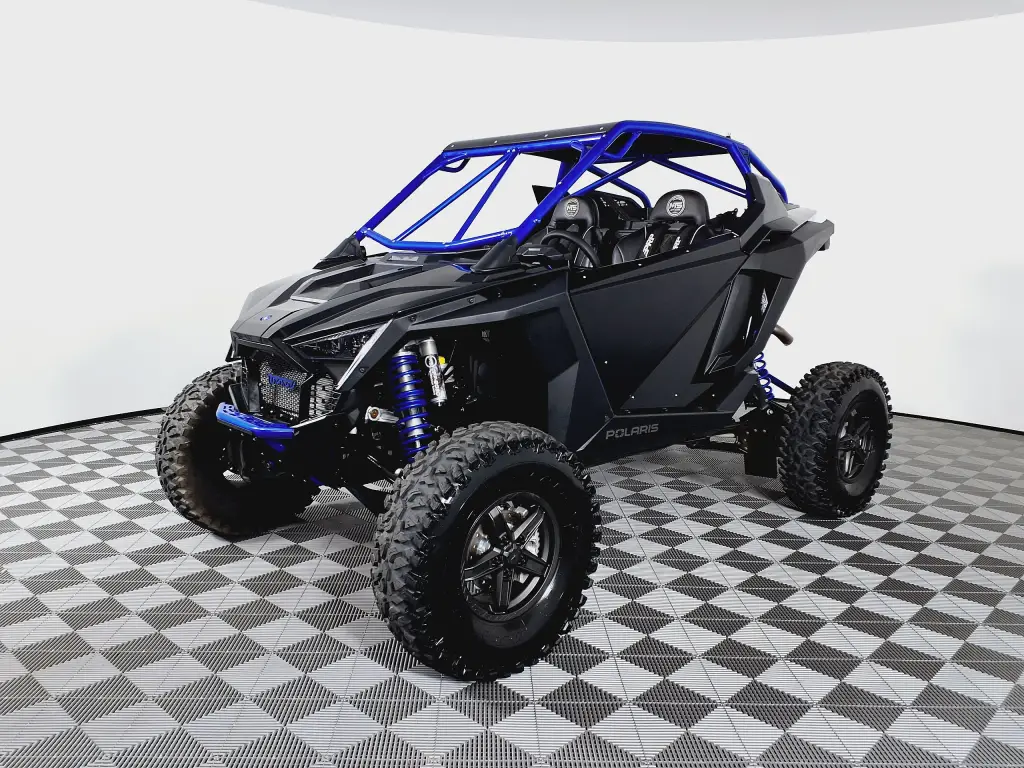
From that single starting point the RZR spread into a whole family of civilian models, from the small RZR 170 up through the 900, S 900 and XP 900 to the S 1000, XP 1000, Turbo S and Pro R. Each step added capacity or performance, and the line kept the two-abreast, sporting character of the original.
MRZR in military service
In September 2013 the U.S. Special Operations Command placed an order with Polaris Defense for up to 1,500 MRZR-2 two-seat and MRZR-4 four-seat machines. One drawback was noted at once: the vehicles kept their original petrol engines, which cannot run on standard military JP-8 fuel, and two fuel types in the supply chain are unwanted. Because few of these machines see combat and civilian buyers have no interest in diesel, an engine change was thought unlikely at the time.
It happened anyway. In November 2016 the U.S. Marine Corps signed a $2.5 million contract for 144 diesel MRZR-D vehicles, able to run on JP-8. The Marines wanted them because an unarmoured MRZR fits inside an MV-22 Osprey, so it can be flown long distances to support ground units. The vehicle carries four marines and a small cargo bed rated at 1,500 lb (680 kg), and the plan was 18 per infantry regiment, delivered between late January and April 2017. Earlier, in 2010, U.S. Army soldiers in Kandahar Province used RZR 800 Light Tactical ATVs that could be carried inside a CH-47 Chinook. The Royal Navy has bought MRZR-D4 vehicles for the Royal Marines, and a version of the MRZR has served with UK Special Forces for years.
Fires and recalls
The ProStar layout brought trouble. Owners reported plastic panels between the passengers and the engine melting and smoking, and Polaris issued a service bulletin rather than a recall, which does not oblige the company to notify buyers or the Consumer Product Safety Commission. Accidents followed: in July 2014 an 11-year-old girl in Texas was badly burned when a Polaris tipped over and caught fire; a 15-year-old passenger was killed in a fire in July 2015; two women in Arizona died in September 2016. In April 2018 the CPSC fined Polaris a record $27.5 million over late reporting of two 2016 claims, saying the company had received reports of 150 RZR fires yet failed to notify the agency at once. More than half a million RZRs have been recalled for defects that could lead to fires, burns or death, and owners have continued to report fires on machines already repaired.
Design and features
- Sport side-by-side layout: a two-seat utility vehicle built for speed and trail use rather than farm work.
- Model range: eight civilian models listed for the US market, from the RZR 170 to the RZR Pro R.
- In-house engine: the ProStar of 2010 was Polaris’s own design, not a bought-in unit.
- Air-transportable military versions: the MRZR fits inside an MV-22 Osprey or a CH-47 Chinook.
- Diesel option for the military: the MRZR-D runs on JP-8, the standard fuel of NATO forces.

Polaris RZR versions
- Ranger RZR (2008): the original machine, sold as a sub-model of the Ranger.
- RZR 170: the smallest civilian model in the range.
- RZR 900, S 900, XP 900: the 900 family, in standard, wide-track S and high-performance XP forms.
- RZR S 1000, XP 1000: the litre-class versions that followed.
- RZR Turbo S and Pro R: the turbocharged and later flagship models.
- MRZR-2, MRZR-4, MRZR Alpha, MRZR D2 and D4: military versions in two- and four-seat form, the D models diesel-powered.
Other off-road machines of the marque are collected in the Polaris category, and the background to the vehicles is in the Articles section.
Video: UTVUnderground Presents: RJ Anderson XP1K2
Video on YouTube.
Sources
- Polaris RZR, English Wikipedia: launch, Ranger RZR naming, model list, MRZR contracts, ProStar engine, fires and recalls