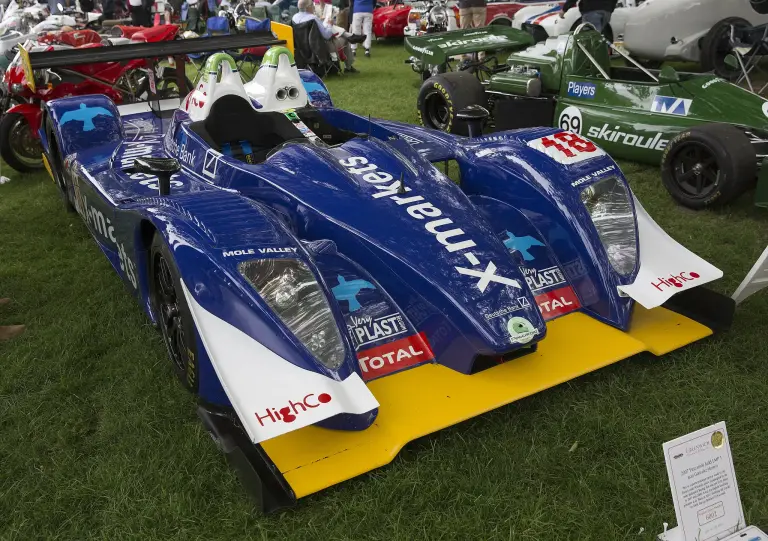
Pescarolo Sport was a French motorsport team based at Le Mans and founded in February 2000 by the racing driver Henri Pescarolo and the publisher François Granet. It began as a Courage customer and ended as a constructor of its own Le Mans prototypes, finishing second at the 24 Hours in 2005 and 2006.
Pescarolo Sport at a glance
| Founded | February 2000, Le Mans |
|---|---|
| Founders | Henri Pescarolo and François Granet |
| Base | Technoparc des 24 Heures du Mans |
| First chassis | Courage C52, a rebranded 1997 Courage C41 |
| Engines | Peugeot A32 V6 turbo to 2003, Judd V10 from 2004 |
| Own prototype | Pescarolo 01, from 2007 |
| Best at Le Mans | second overall in 2005 and 2006 |
| Series titles | Le Mans Series 2005 and 2006 |
| Receivership | 15 June 2010 |
| Assets sold | October 2010, for €400,000 |
| Later name | Pescarolo Team, 2011–2013 |
| Brand revival | taken over in 2016 by Jocelyn Pedrono |
History of the Pescarolo Sport
Beginnings with Courage
Henri Pescarolo had won at Le Mans many times, but always for other teams. From 1994 to 1998 he drove for Courage Compétition, and in 1999 he ran his own entry, the Pescarolo Promotion Racing Team, with a Courage chassis; the car finished ninth. On 1 January 2000 Pescarolo Sport was founded in Le Mans, close to the circuit and to Courage’s headquarters. The team used Courage C52 chassis — in fact rebranded 1997 C41 cars — with turbocharged Peugeot engines, and in its first Le Mans it finished fourth with Sébastien Bourdais, Olivier Grouillard and Emmanuel Clerico, behind three works Audis.
The Courage C60 years
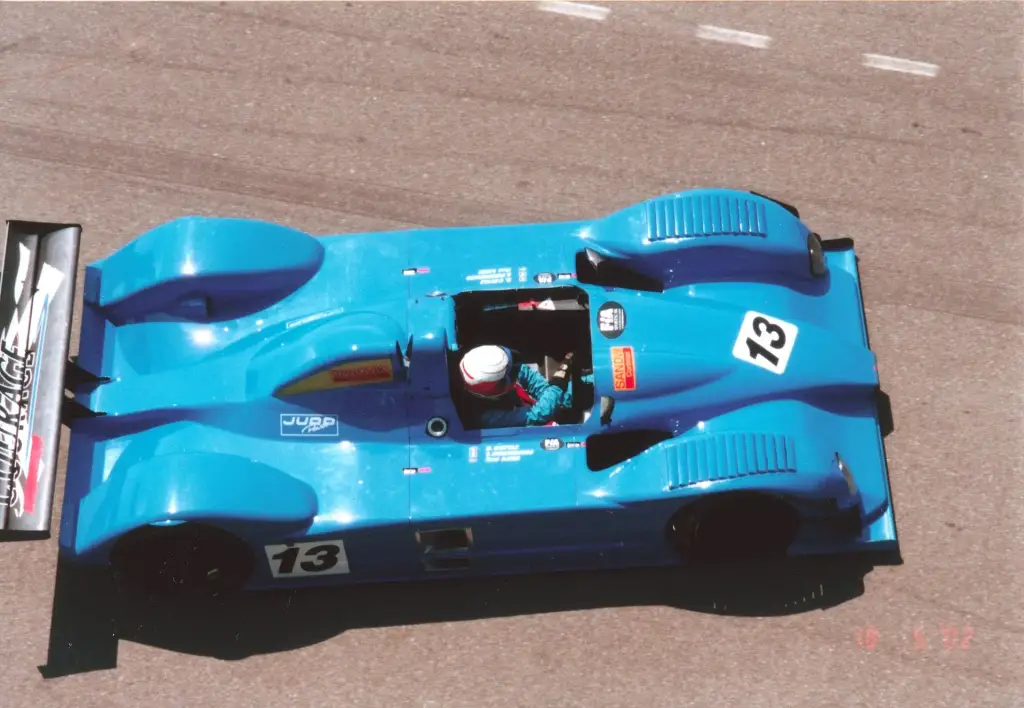
For 2001 the team bought two new Courage C60 chassis and raced them in the American Le Mans Series, the European Le Mans Series, the FIA Sportscar Championship and at Le Mans, where only one car finished, in thirteenth place. The season improved in July with a first win in the 1000 km of Estoril, followed two weeks later by another at Magny-Cours. The designer André de Cortanze joined in the autumn of 2001, and in 2002 the team ran a full FIA Sportscar Championship, taking two more wins and second place in the teams’ standings behind Racing for Holland. In 2003 the team won again but retired three times in a row and was runner-up once more; at Le Mans both cars finished, eighth and ninth, yet Peugeot then stopped supplying engines.
Constructor and title contender
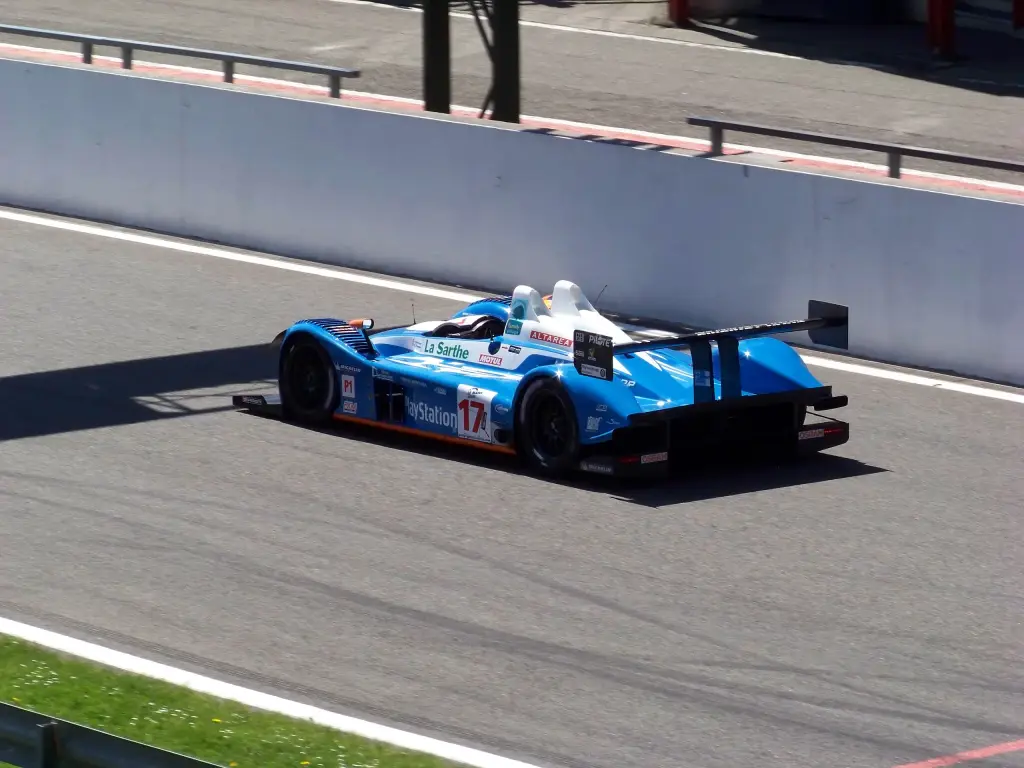
Investment from Sony, promoting the PlayStation 2 and Gran Turismo 4, paid for new Judd GV5 V10 engines and for the team’s first engineering work of its own. The Courage chassis were reworked so heavily that for 2004 the cars were renamed Pescarolo C60. That year the team finished fourth at Le Mans behind a trio of Audis, and in 2005 it won two rounds of the Le Mans Endurance Series to take its first championship by two points. At Le Mans the team took pole position, set the fastest lap and finished second, two laps behind an Audi. In 2006 Pescarolo Sport won all five races of the Le Mans Series to defend the title and was second at Le Mans again, this time behind an Audi R10.
Decline and revival
In October 2007 Henri Pescarolo bought Jacques Nicolet’s Saulnier Racing and created Pescarolo Automobiles, with the racing team as a division; the team’s first own prototype, the Pescarolo 01, had appeared that year. The company went into receivership on 15 June 2010 and was liquidated a month later. At the auction of its assets on 15 October 2010 Jacques Nicolet, owner of OAK Racing, and Joël Rivière bought the team’s property for €400,000, which let Henri Pescarolo return in 2011 as Pescarolo Team. That company was wound up on 8 January 2013. On 19 May 2016 Jocelyn Pedrono took over the manufacture of the Pescarolo prototypes and the Pescarolo Sport brand, with the aim of maintaining and developing the endurance cars; he died on 20 October 2025 at the age of 51.
Design and features
- Le Mans at home: the workshop stood in the Technoparc des 24 Heures du Mans, next to the circuit’s south entrance.
- From customer to constructor: Courage chassis were modified step by step until the cars carried the Pescarolo name from 2004.
- Small budget, works pace: in 2005 the team took pole, the fastest lap and second place at Le Mans against the Audis.
- Two titles: the Le Mans Series championship in 2005, defended with five wins from five races in 2006.
Pescarolo Sport versions
- Courage C52 (2000): rebranded 1997 Courage C41 chassis with Peugeot turbo engines; fourth at Le Mans.
- Courage C60 (2001–2003): two customer chassis, later reworked by André de Cortanze.
- Pescarolo C60 (2004–2006): the team’s own development of the C60 with a 5-litre Judd GV5 V10.
- Pescarolo 01 (from 2007): the first prototype designed and built by the team itself.
- Pescarolo 02: the car named in the 2016 revival project.
The cars of the Judd years are described in the article on the Pescarolo-Judd. More French endurance racers are in the Pescarolo collection.
Sources
- Pescarolo Sport, English Wikipedia: founding, seasons, results, receivership
- Pescarolo Sport, French Wikipedia: liquidation, auction, 2016 revival