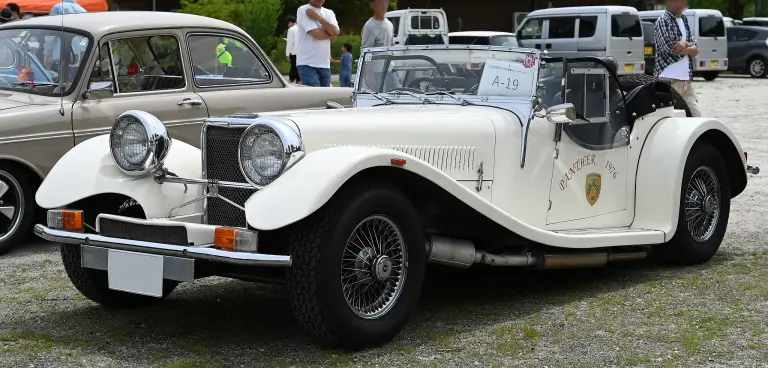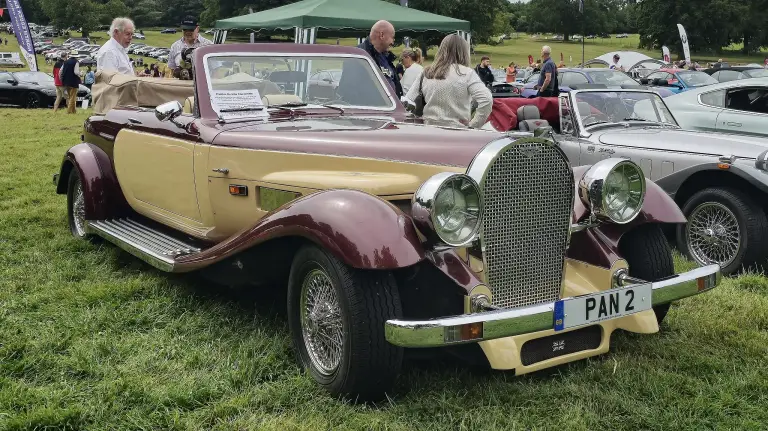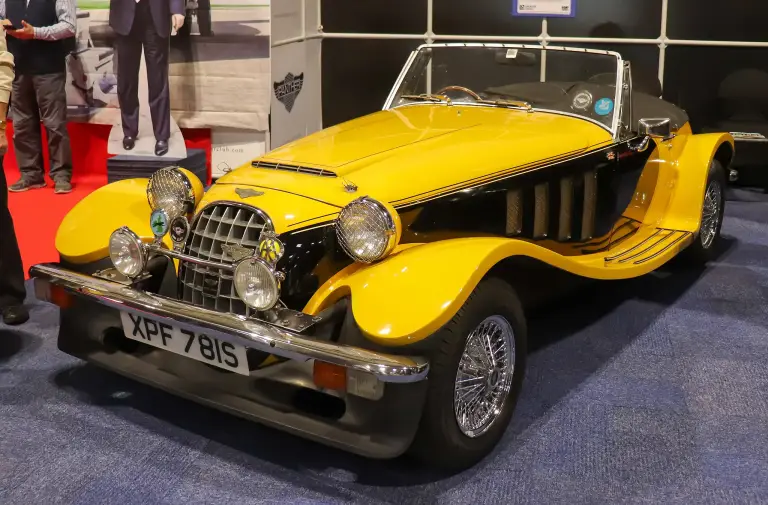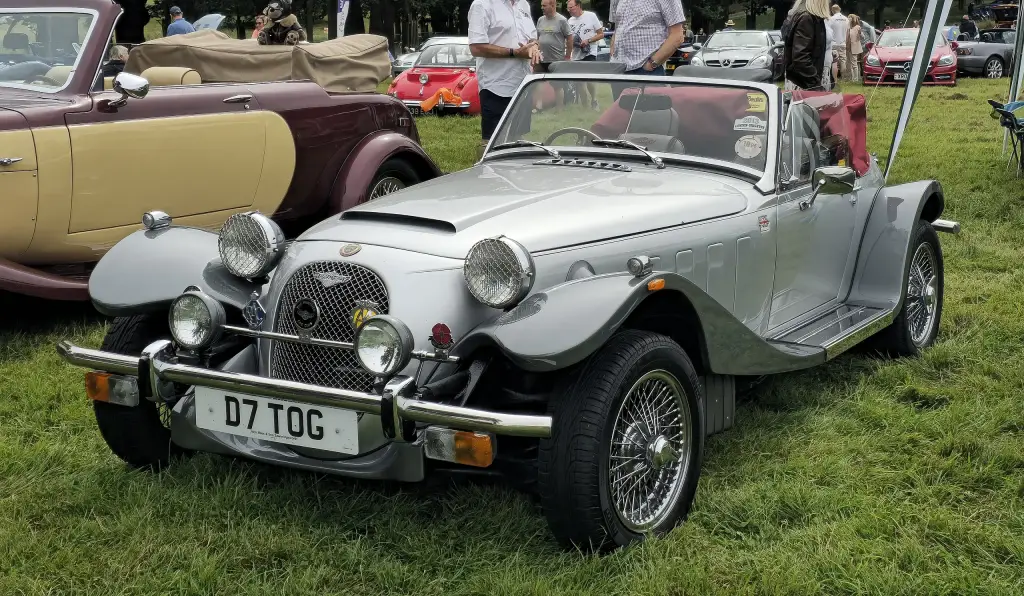
The Panther Kallista is an automobile produced by Panther Westwinds from 1982 to 1990, and later by SsangYong until 1993. It replaced the Lima as Panther’s volume model for the 1980s.
Panther Kallista at a glance
| Maker | Panther Westwinds, Britain; later SsangYong, Korea |
|---|---|
| Production | 1982–1990 (Panther), 1991–1993 (SsangYong) |
| Predecessor | Panther Lima |
| Body | aluminium over a purpose-built steel chassis |
| Style | resembling earlier Allard and Morgan cars |
| Engines | Ford 1.6 L CVH four to 2.9 L Cologne V6 |
| Acceleration | 0–60 mph in under 8 seconds |
| SsangYong engines | 2.0 L DOHC 8V N9A and 2.9i V6 |
| SsangYong gearbox | Ford MT75 five-speed manual; automatic with the 2.9i |
| SsangYong body | GRP as standard, aluminium as an option |
| SsangYong built | 77 |
based on one source: the English Wikipedia article on the Kallista. It gives no production total for the British-built cars.
History of the Panther Kallista
A Ford-engined successor to the Lima
Where the Lima had used Vauxhall mechanicals, the Kallista turned to Ford. Its engine range ran from the 1.6-litre CVH straight-four to the 2.9-litre Cologne V6. Like its predecessor it carried styling that resembled earlier Allard and Morgan cars, and it used an aluminium body over a purpose-built steel chassis. The combination was quick: the Kallista could accelerate from 0 to 60 mph in under eight seconds.
On screen
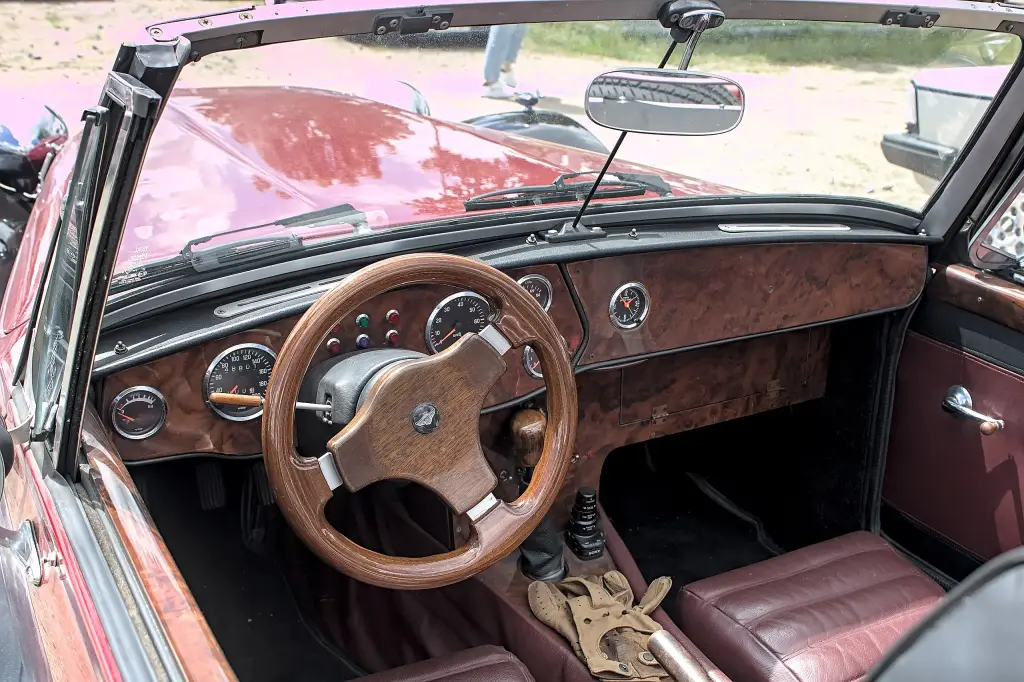
A Kallista appears in the 1987 film Timestalkers.
The SsangYong Kallista
SsangYong Motor Company released a badge-engineered version in 1991 called the SsangYong Kallista. Production by SsangYong ended in 1993, with only 77 models built. The SsangYong-built cars used only the 2.0-litre DOHC 8-valve N9A and the 2.9i V6 engines, a GKN Salisbury rear axle and Ford MT75 five-speed manual gearboxes, with the 2.9i also assembled with an automatic transmission. An aluminium body was an extra option, with glass fibre reinforced plastic being the standard; the bodies made by SsangYong are 10 cm wider than the early Harlow-built models.
Design and features
- Ford power: engines from the 1.6-litre CVH four to the 2.9-litre Cologne V6.
- Light construction: an aluminium body over a purpose-built steel chassis.
- Quick for its class: 0–60 mph in under eight seconds.
- Retro looks: styling in the mould of earlier Allard and Morgan cars.
- Korean successor: a badge-engineered SsangYong version from 1991 to 1993.
Panther Kallista versions
- Kallista (1982–1990): the British-built car with Ford four and V6 engines.
- SsangYong Kallista (1991–1993): badge-engineered version, 77 built, with the 2.0 N9A or 2.9i V6.
- SsangYong automatic: the 2.9i V6 was also assembled with an automatic transmission.
The Kallista replaced the Lima as Panther’s volume model, and the company had earlier built the J72 and the De Ville. More cars are in the Panther collection.
Video: Panther Kallista 2.9i
Video on YouTube.
Sources
- Panther Kallista, English Wikipedia: engines, body, performance, SsangYong version