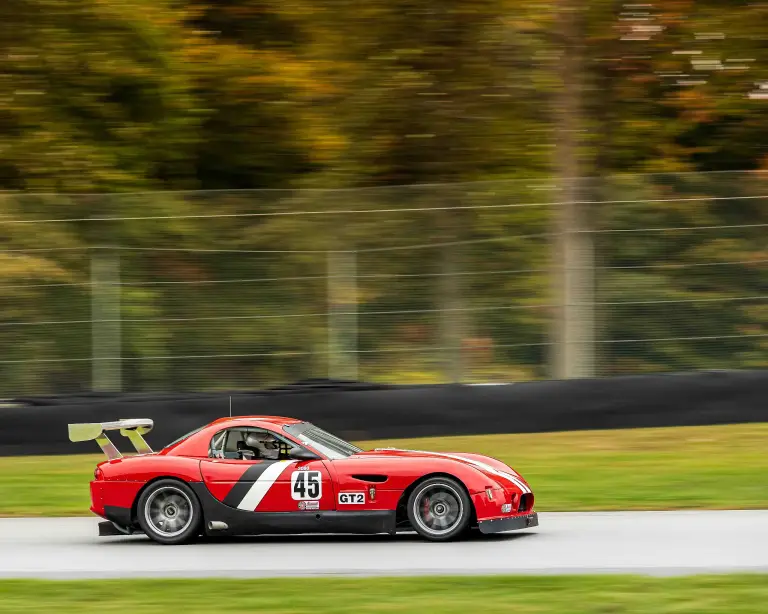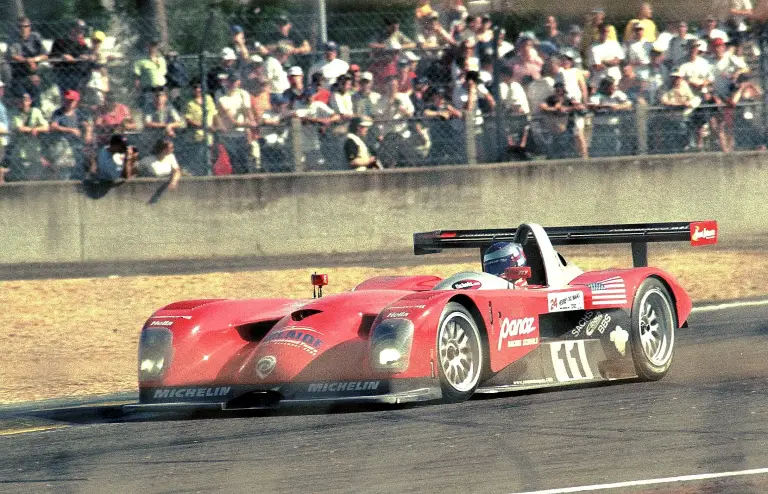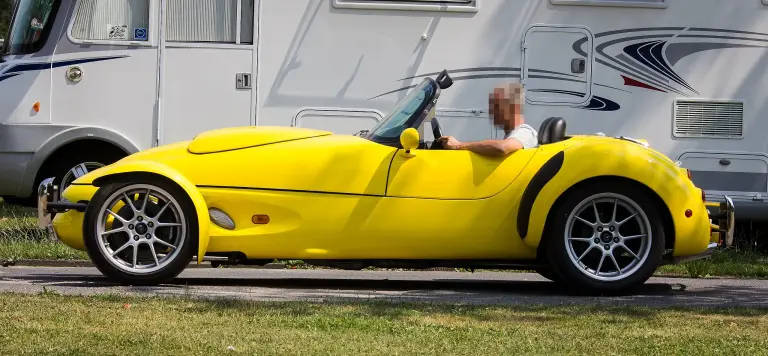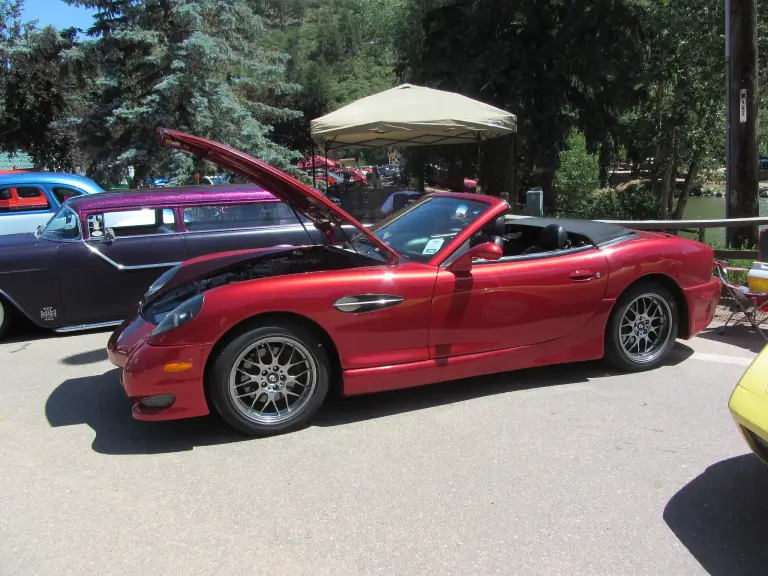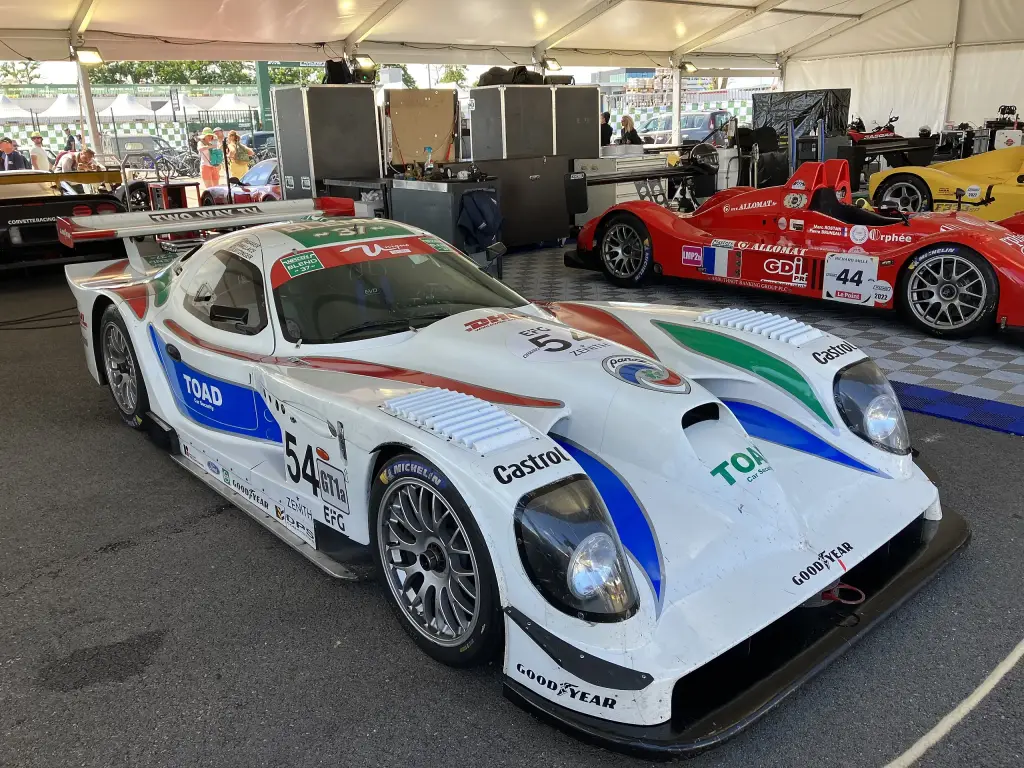
The Panoz Q9, nicknamed “Sparky”, was a hybrid version of the Esperante GTR-1 built for the 1998 racing season, a decade before hybrid systems became common at Le Mans. Panoz, Reynard and the English firm Zytek built the car, David Price Racing developed and ran it, and it was painted purple with large yellow lightning bolts in honour of its electric power.
Panoz Q9 at a glance
| Built | 1998 |
|---|---|
| Basis | Panoz Esperante GTR-1 |
| Nickname | Sparky |
| Partners | Panoz, Reynard, Zytek |
| Team | David Price Racing |
| Petrol engine | 6.0 L Ford V8 prepared by Roush |
| Electric motor | Zytek brushless DC, oil cooled, 35 lb (16 kg) |
| Battery | VARTA 300 V nickel-metal hydride, 260 cells, 220 lb (100 kg) |
| Electric output | 195 hp, about 30 per cent of roughly 650 hp |
| Livery | purple with yellow lightning bolts |
The Q9 is described in a section of the English Wikipedia article on the Esperante GTR-1; this page is based on that section alone. Free photographs of the purple Q9 itself were not available, so the old picture stays as the cover.
History of the Panoz Q9
Why a hybrid racing car
In 1998 battery-electric cars such as the General Motors EV1 were on the streets of California and the first Toyota Prius hybrids had appeared, but hybrid systems were still about a decade away from Formula One and Le Mans. Panoz reached an agreement with the English firm Zytek to develop a hybrid electric motor for the Esperante GTR-1, which had been built for grand tourer racing in 1997 with an unusual front-mounted engine and a large nose that earned it the nickname “Batmobile”.
How the system worked
The electric motor drove the rear wheels during acceleration, so the petrol engine needed to supply less power and the car used less fuel. A set of batteries powered the motor, and a regenerative braking system charged them again, with the same motor acting as a generator — recovering energy that would otherwise have been lost as heat in the brakes. Less fuel meant fewer pit stops in endurance races such as the 24 Hours of Le Mans and therefore more time on the track and a greater distance covered between stops.
The hardware
Zytek’s oil-cooled, permanent-magnet brushless DC motor/generator drew its power from a VARTA 300-volt pack of 260 nickel-metal hydride cells weighing only 220 pounds, with the motor adding another 35. Together they provided 195 hp on demand, about 30 per cent of the roughly 650 horsepower produced by the hybrid power unit. The racing GTR-1 itself used a 6.0-litre Ford V8 built by Roush Racing of NASCAR rather than the 4.6-litre 32-valve engine of the road-going Esperante, and was maintained by Panoz’s Élan Power Products.
Design and features
- Early hybrid racing car: an electric motor assisting the V8 years before hybrids were common at Le Mans.
- Regenerative braking: the motor generated electricity under braking to recharge the battery pack.
- Light battery pack: 260 NiMH cells weighing 220 lb, with a 35 lb motor.
- Unmistakable livery: purple paint with large yellow lightning bolts.
Panoz Q9 versions
- Q9 GTR-1 Hybrid: the single hybrid car described here, run by David Price Racing in 1998.
- Esperante GTR-1: the conventionally powered racing car on which it was based.
- Road-legal GTR-1: built to satisfy homologation rules and retained by Don Panoz, with a smaller 5.3-litre V8.
The Q9 was built on the LMP-1 Roadster-S’s predecessor, the Esperante GTR-1, and shares its name with the road-going Panoz Esperante, though the two have no mechanical connection. More cars are in the Panoz collection.
Sources
- Panoz Esperante GTR-1, English Wikipedia: Q9 hybrid system, battery, livery, team