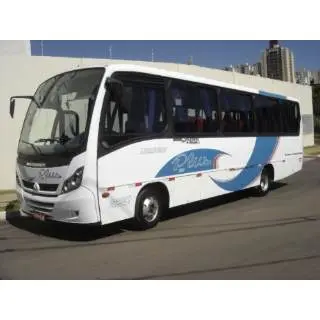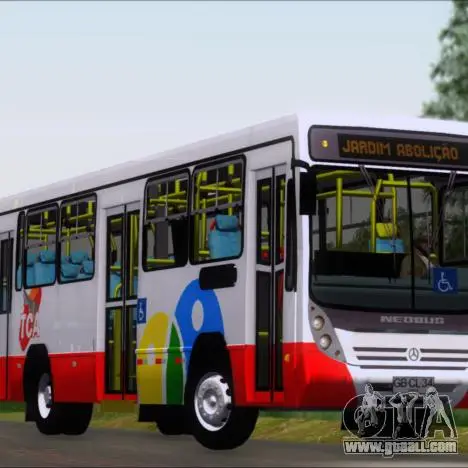
The Neobus Mega is the urban bus body of the Brazilian manufacturer Neobus. It was introduced in 1996, the year the company was officially founded, and stayed in the range for a quarter of a century: from the first Mega to the New Mega, with BRT, BRS and articulated versions along the way.
Neobus Mega at a glance
| Maker | Neobus (San Marino Neobus), Caxias do Sul, Brazil |
|---|---|
| Body type | urban bus |
| Mega 1996 | 1996–2000 |
| Mega Evolution | 1997–1999 |
| Mega 2000 | 1999–2004 |
| Mega 2004 | 2002–2006 |
| Mega 2006 | 2005–2013 |
| Mega BRT / BRS | 2010–2015 / 2011–2015 |
| Mega Plus | 2013–2018 |
| Mega Plus Articulado | 2016–2018 |
| New Mega | 2018–2021 |
There is no Wikipedia article on the Mega itself; the dates come from the model list in the Portuguese article on Neobus, which groups the Mega versions under urban buses. based on one source.
History of the Neobus Mega
Neobus was officially founded in 1996 in Guarulhos, and its roots go back to Ciferal Paulista of 1978, renamed Condor in 1981 and Thamco in 1985. Three years later the company was taken over by San Marino Implementos and, as San Marino Neobus, moved to Caxias do Sul in Rio Grande do Sul. The Mega appeared in that first year, 1996, as the company’s urban bus body, and it became the core of the range.
Mega 1996, Evolution and Mega 2000
The first Mega was built from 1996 to 2000. In 1997 a companion model, the Mega Evolution, was added for two years, and in 1999 the range moved on to the Mega 2000, made until 2004. The names in this period are numbered by the year of their introduction, which makes the Mega family easy to date at a glance.
Mega 2004, Mega 2006 and the BRT years
The Mega 2004 was listed from 2002 to 2006, overlapping the end of the Mega 2000. It was followed by the Mega 2006, the longest-lived of the classic versions, built from 2005 to 2013. In the early 2010s two versions for dedicated bus corridors were added: the Mega BRT of 2010–2015 and the Mega BRS of 2011–2015.
Mega Plus, articulated bodies and New Mega
The Mega Plus of 2013–2018 replaced the Mega 2006, and from 2016 it was joined by two more versions, the Mega BRT II and the Mega Plus Articulado, both built until 2018. The last model of the line was the New Mega of 2018–2021. It was made in the years when the Marcopolo group moved from a 45 per cent share in Neobus to full ownership, before the Ciferal company name came back in March 2022.
Design and features
- Twenty-five years in the range: the Mega was built from 1996 to 2021 in eleven versions.
- Year-named models: Mega 1996, Mega 2000, Mega 2004 and Mega 2006 were named after the year they were introduced.
- Corridor versions: the Mega BRT, Mega BRS and Mega BRT II were made for bus rapid transit and rapid systems.
- Articulated body: the Mega Plus Articulado of 2016–2018 was the long, jointed member of the family.
Neobus Mega versions
- Mega 1996 (1996–2000): the first urban body of the name.
- Mega Evolution (1997–1999) and Mega 2000 (1999–2004): the versions of the turn of the century.
- Mega 2004 (2002–2006) and Mega 2006 (2005–2013): the models of the 2000s.
- Mega BRT (2010–2015) and Mega BRS (2011–2015): bodies for dedicated corridors.
- Mega Plus (2013–2018), Mega BRT II and Mega Plus Articulado (2016–2018): the last classic versions.
- New Mega (2018–2021): the final generation.
The Mega was the urban side of the Neobus range, beside the intercity Spectrum and above the small Thunder models. More bodies are in the Neobus collection.
Sources
- Neobus, Portuguese Wikipedia: model list with production years, company history
- Neobus, English Wikipedia: the two companies of the same name