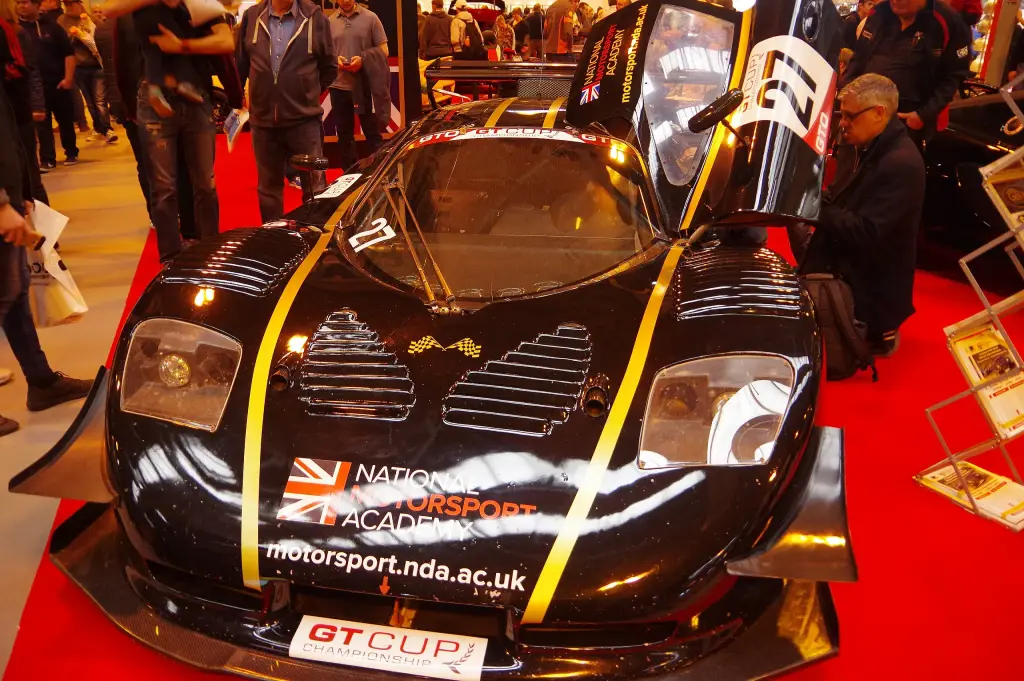

The Mosler MT900 was a low-volume sports car built by American manufacturer Mosler Automotive between 2001 and 2011. Its initials stood for Mosler, designer Rod Trenne and the 900 kg weight the car was meant to reach; in the end the road car came out at 1,175 kg, but the racing versions built on it won races in the United States and Britain.
Mosler MT900 at a glance
| Maker | Mosler Automotive, United States |
|---|---|
| Production | 2001–2011 |
| Designed by | Rod Trenne, formerly of the Corvette C5 programme |
| Chassis | carbon fibre |
| Engine | 5.7-litre LS6 V8, mid-mounted |
| Power | 350 hp (261 kW), 350 lb·ft (475 N·m) |
| Gearbox | ZF transaxle, mounted upside down |
| Kerb weight | 1,175 kg (2,590 lb) |
| 0–60 mph | 3.5 seconds (Car and Driver) |
| Top speed | 150 mph (241 km/h), redline limited |
| Drag coefficient | 0.25 |
| Price when new | US$164,000 |
| Built | about 35 road cars and 50 racing cars |
The racing history of the MT900R — the 2001 Daytona debut, Perspective Racing, Rollcentre and Balfe in British GT, and the Bathurst 24 Hour — is set out in the English Wikipedia article and is summarised here rather than repeated race by race. The MT900R shares its article with the road car and is covered in the same page.
History of the Mosler MT900
The MT900 was designed by Rod Trenne, who had previously worked on the Corvette C5. The name came from Mosler, Trenne and the 900 kg target weight. Components for 25 cars had been produced by January 2005, although only about 35 road cars and 50 racing versions were officially completed, roughly twenty of them MT900S. The model replaced the Mosler Raptor.
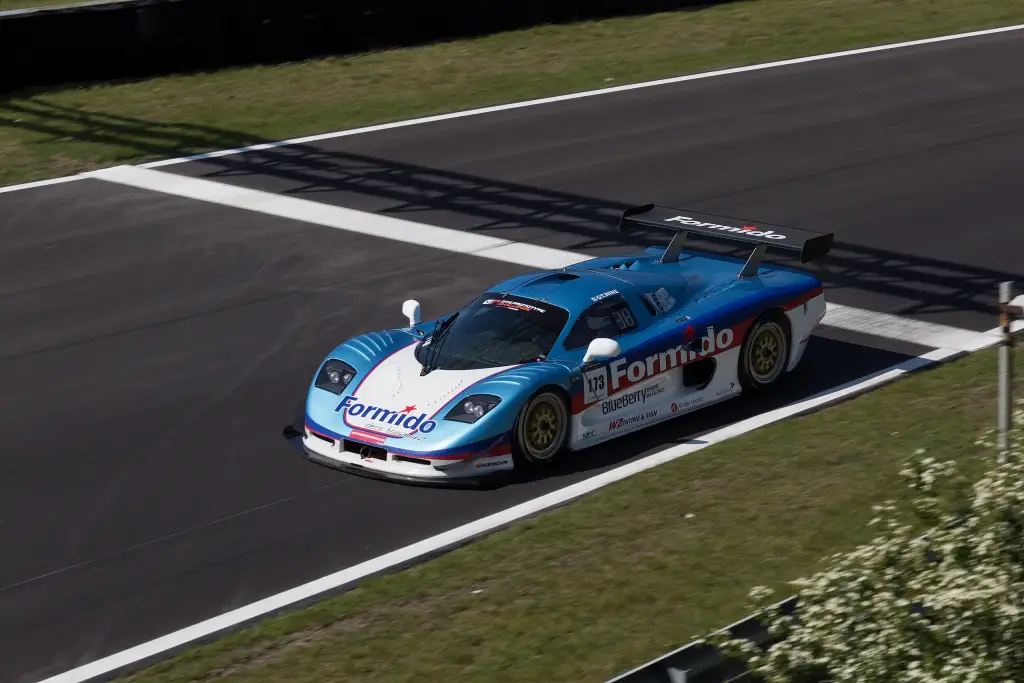

Under the skin the car used a carbon-fibre chassis with an LS6 V8 mounted amidships and driving the rear wheels. The engine gave 350 hp and 350 lb·ft, and a ZF transaxle designed for Porsche was turned upside down so that the engine could sit in front of the rear axle. The original MT900 weighed 1,175 kg, far more than intended, yet Car and Driver recorded 0–60 mph in 3.5 seconds, a quarter mile in 12.0 seconds at 118 mph, a 150 mph top speed limited by the redline and 1.02 g on the skidpad. The body was shaped for aerodynamics with a drag coefficient of 0.25. The list price was US$164,000, and only a single prototype of the original car was built.
The basic car was developed into the MT900S for 2005, with 435 hp from a Corvette Z06-derived LS6 and a weight of 998 kg without fuel. One early prototype, 177 kg heavier and 65 hp down on the production car, still reached 60 mph in 3.5 seconds; a later 600 bhp edition did it in 3.1 seconds in a Car and Driver test in early 2006. In June 2005 Mosler announced EPA and California Air Resources Board certification, which allowed road car sales to begin in the United States at $189,000. The American filmmaker George Lucas took delivery of the first street-legal MT900S in December 2006. Production of the MT900S ended in May 2011.
Design and features
- Carbon-fibre chassis: a light structure around a mid-mounted American V8.
- Inverted ZF transaxle: a Porsche-designed unit turned upside down to place the engine ahead of the rear axle.
- Aerodynamic body: a drag coefficient of 0.25 and a shape drawn for stability at speed.
- Racing backbone: the same basic car served as the MT900R, the GT3 and the road-going MT900S.
Mosler MT900 versions
- MT900 (2001): the original 350 hp road car, of which a single prototype was built.
- MT900R: the race-ready version, offered at an estimated $119,000.
- MT900 GT3 (late 2006): Rollcentre Racing’s adaptation for the FIA GT3 category, using the 7.0-litre LS7 V8 instead of the 5.7-litre LS1.
- MT900S (2005–2011): the updated road car with 435 hp and a dry weight of 998 kg.
- MT900S Photon: an optional performance package adding a Hewland transmission.
Other low-volume sports cars of the period are gathered in the Exotic Cars collection, and the Mosler collection holds the rest of the marque.
Sources
- Mosler MT900, English Wikipedia: design, chassis, performance, racing history, MT900S