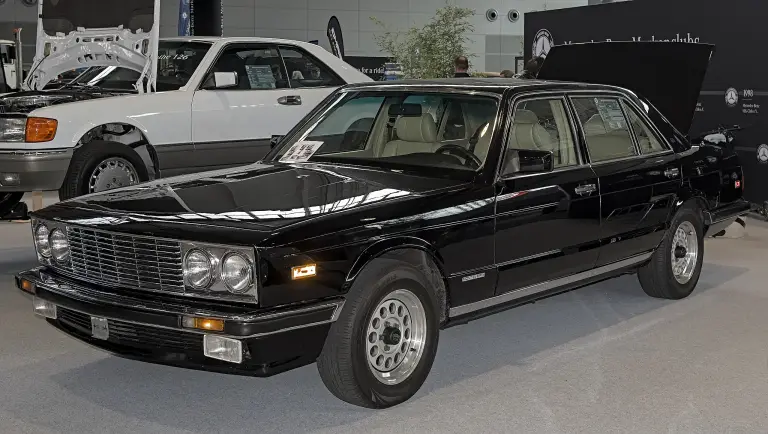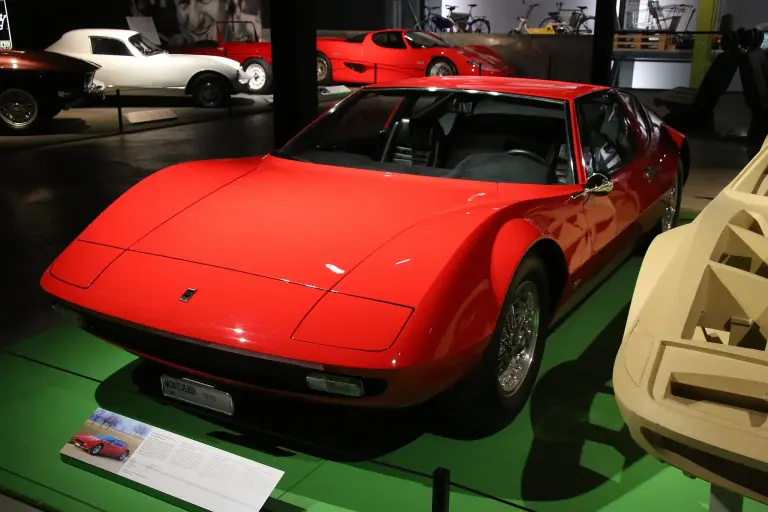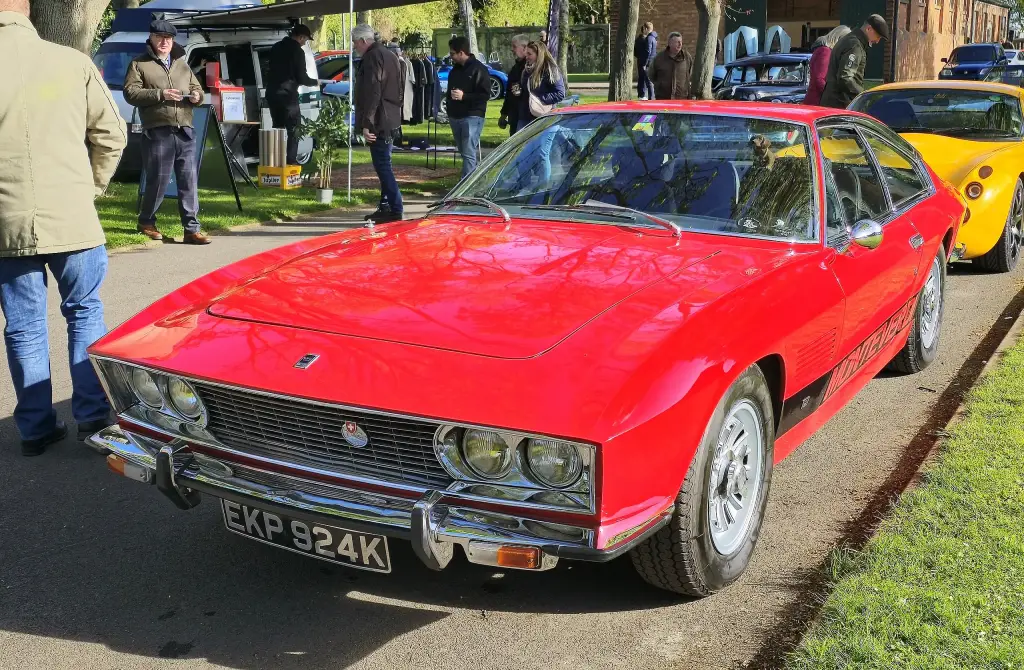
The Monteverdi High Speed 375 was a series of Swiss grand tourers built from 1967 to 1976. Each combined an Italian body with uncomplicated American V8 engineering, a formula already proven by Facel Vega, Iso Rivolta and Jensen. The range grew to include coupés, a convertible and a sedan.
Monteverdi High Speed 375 at a glance
| Maker | Automobile Monteverdi, Basel |
|---|---|
| Production | 1967–1976 |
| Bodies | coupé, convertible, sedan |
| Chassis | box frame of square steel tubes |
| Frame maker | Stahlbau AG, Muttenz |
| Engine | Chrysler V8, 7.2 litres |
| Claimed power | 375 hp SAE gross |
| Transmission | TorqueFlite automatic, some four-speed manuals |
| Suspension | double wishbones front, Salisbury axle rear |
| Coachbuilders | Pietro Frua, then Carrozzeria Fissore |
| Top speed | 238 km/h in period tests |
| Successor | Monteverdi Sierra |
The 375 S coupé and the 375 L 2+2 are variants of one model family and are described together here.
History of the Monteverdi High Speed 375
The Frua coupés
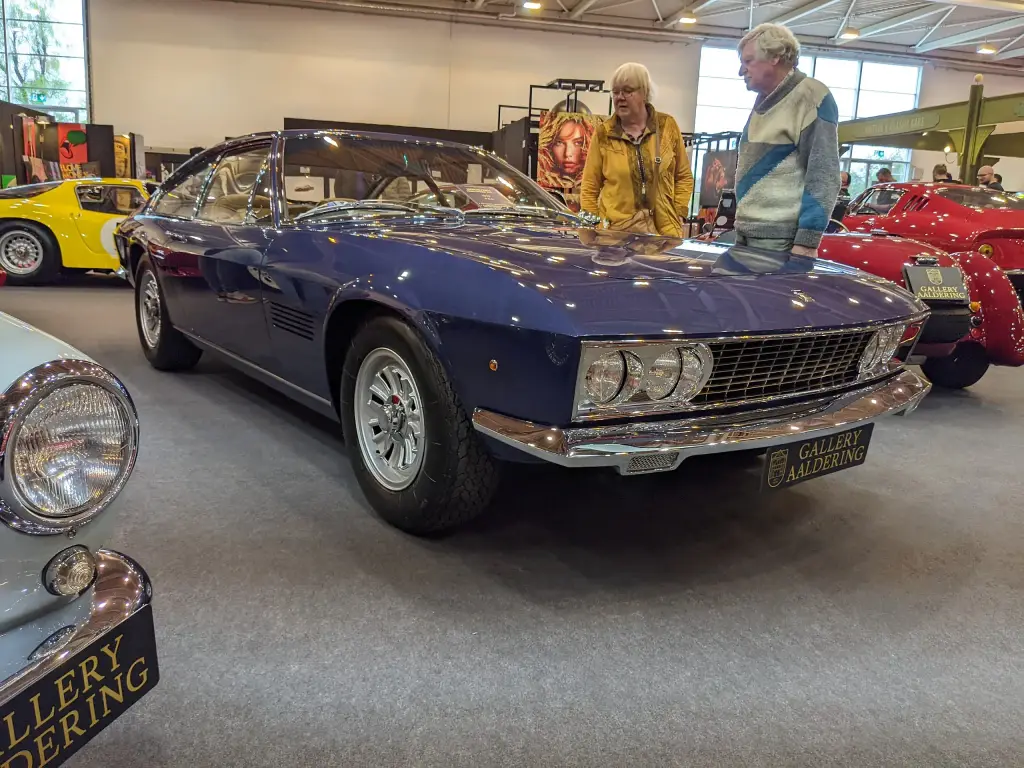
The first model, the High Speed 375 S, was a two-seater coupé with a body by Pietro Frua of Turin. It was shown at the 43rd IAA in September 1967 on the Auto Becker stand and was warmly received; the Zürich daily Blick called it the most beautiful shape ever seen between the Alps and the English Channel. Chassis were assembled in Monteverdi’s Binningen workshop, sent to Turin for their bodies and returned finished. Twelve coupés were built in the first six months. A longer 2+2 version, the 375 L, was shown in 1968 but stayed at the factory and was never sold.
Fissore takes over
Monteverdi planned about 100 cars a year, more than Frua’s hand-built workshop could manage. Production moved to Carrozzeria Fissore in Savigliano, which at first built cars to Frua’s design. When Monteverdi refused to pay licence fees, Frua obtained a court injunction, and a new body was presented in 1969. These Fissore coupés were built from 1969 to 1976. The chassis used British and American components: front suspension by Alford & Alder, rear axles by Salisbury, brakes by Girling, steering by ZF.
Later years
As American emissions rules tightened, the Chrysler engines lost power. By 1974 Monteverdi claimed only 200 km/h for the 375 L 2+2, and road tests did not always reach that figure, against 238 km/h a few years earlier. The company never tuned the engines, adding only a larger oil pan and an oil cooler. Production ended in 1976, and the High Speed was replaced by the cheaper Sierra.
Design and features
- Hybrid concept: Italian coachwork over a Swiss frame with a Chrysler V8 and American automatic.
- Interchangeable power: the Hemi engine was eventually available in all High Speed models.
- Two body series: the Frua-designed cars of 1967–68 and the Fissore-bodied cars from 1969.
- Comfortable tourer: praised for its refined interior and solid handling rather than outright speed.
Monteverdi High Speed 375 versions
- High Speed 375 S: two-seater coupé, first with Frua body and later with Fissore coachwork.
- High Speed 375 L: 2+2 with a longer wheelbase; the Frua prototype was never sold.
- Convertible: open version derived from the coupé, built in small numbers.
- Sedan and Berlinetta: four-door and fixed-roof derivatives of the same family.
- Palm Beach: the cabriolet that also belongs to the High Speed family.
The mid-engined Hai 450 was meant to complement this range, and the Sierra replaced it in 1977. More cars are in the Monteverdi collection.
Video: Monteverdi 375L test drive with Chrysler V8 sound
Video on YouTube.
Sources
- Monteverdi High Speed, English Wikipedia: history, chassis, engines, variants
- Monteverdi High Speed 375, German Wikipedia: Frua dispute, body series, production