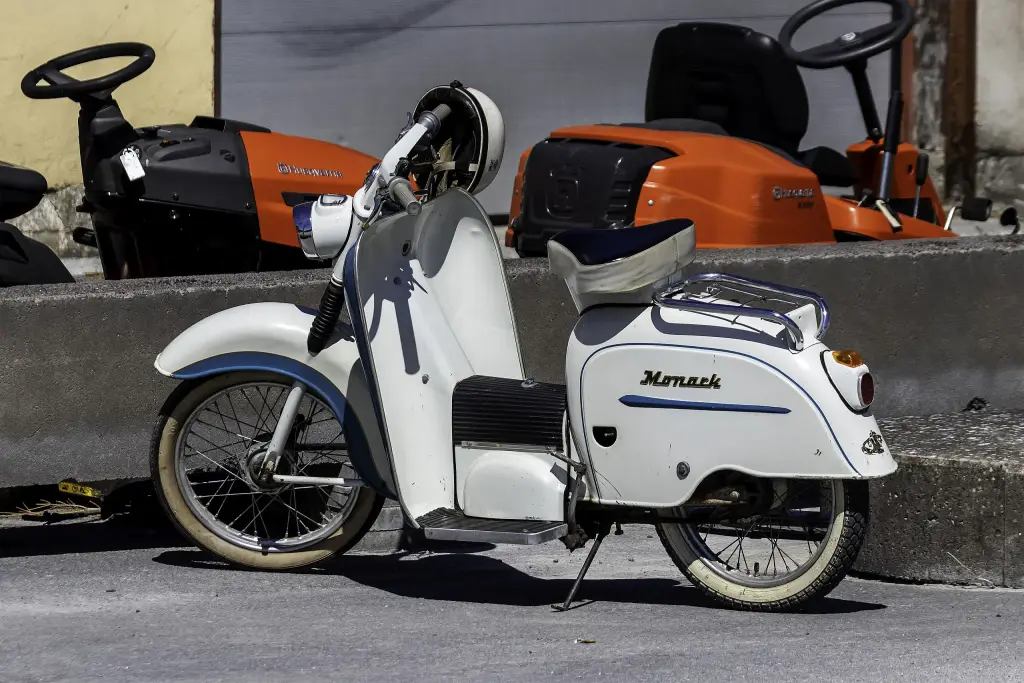

The Monarscoot was a moped that Monark built at Varberg in Sweden between 1957 and 1969. Launched in 1956 as “a monarped for the man who wants to ride in a tailcoat”, it was one of the moped models of its day that stood out most clearly by design.
Monark Monarscoot at a glance
| Maker | Monark, Varberg, Sweden |
|---|---|
| Type | moped |
| Introduced | 1956 |
| Production | 1957–1969 |
| Price in 1958 | 1,095 Swedish kronor |
| Engine from 1957 | German ILO, with pedals |
| From 1961 | footboards and kick start |
| Engine from 1964 | Husqvarna |
| Also sold as | a Husqvarna-badged version under licence |
The Monarscoot is described only in Swedish Wikipedia; this page is based on one source for the model and a second for the company background.
History of the Monark Monarscoot
Monark had been making two-wheelers in Varberg since 1908, when Birger Svensson registered the firm Svenska Cykeldepoten; the Monark name itself came into use in 1917. By the 1950s the factory had grown into one of the largest makers of bicycles, mopeds and motorcycles in northern Europe, with a capacity of about a thousand units a day, and mopeds had become a mass market of their own.
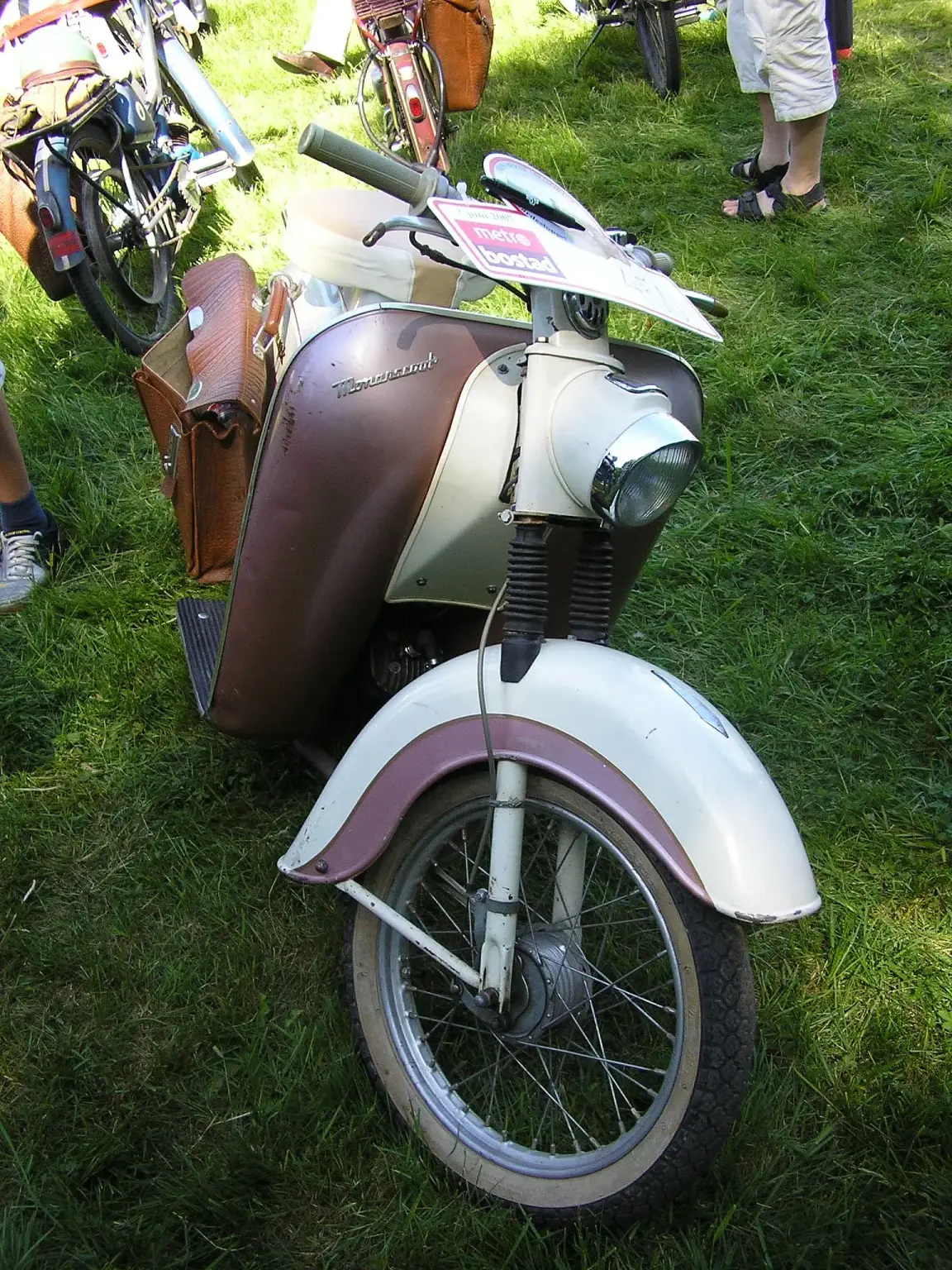

The Monarscoot arrived in 1956 and went into production in 1957. Where most Swedish mopeds of the period still looked like strengthened bicycles, the Monarscoot was shaped like a small scooter, and the Swedish Wikipedia article on the model calls it one of the mopeds that stood out most clearly by design at the time. In 1958 a Monarscoot cost 1,095 kronor.
Its first engine was the German ILO, nicknamed “piano”, driving through pedals, as moped rules then required. In 1961 the regulations changed and pedals were no longer compulsory: the Monarscoot received footboards and a kick start instead. When Svenska Cykelfabriken Monark merged with Nymanbolagen and the business was renamed Monark Crescent AB, or MCB, in 1964, Husqvarna engines went into the Monarscoots.
The model was widely copied in licence. Husqvarna, a competitor, licensed the Monarscoot and sold it under its own name, and other Swedish brands such as Örnen, Svalan and Konsum did the same with MCB models. Production at Varberg ended in 1969.
Design and features
- Scooter styling: a pressed body instead of the bicycle frame of most contemporary mopeds.
- ILO two-stroke: the original German engine, with pedals as the law demanded until 1961.
- Footboards and kick start: fitted from 1961, when pedals stopped being compulsory in Sweden.
- Husqvarna power: from 1964, after the merger that created Monark Crescent AB.
- Licensed twins: the same moped was sold with Husqvarna and other badges.
Monark Monarscoot versions
- Early Monarscoot (1957–1960): ILO engine, pedals, a 1958 price of 1,095 kronor.
- From 1961: footboards and kick start after the change in moped regulations.
- From 1964: Husqvarna engines under Monark Crescent AB.
- Husqvarna version: the licensed copy sold under the competitor’s own name.
The Monarscoot is one of the mopeds in the Monark collection, alongside the rest of the Swedish maker’s two-wheelers.
Sources
- Monarscoot, Swedish Wikipedia: dates, price, engines, pedals, licence copies
- Monark (cykelmärke), Swedish Wikipedia: company history, Varberg, merger of 1964