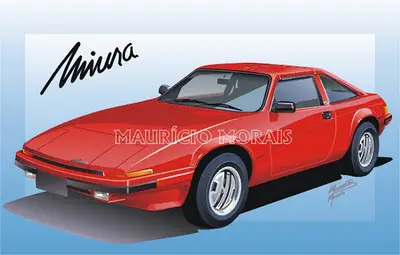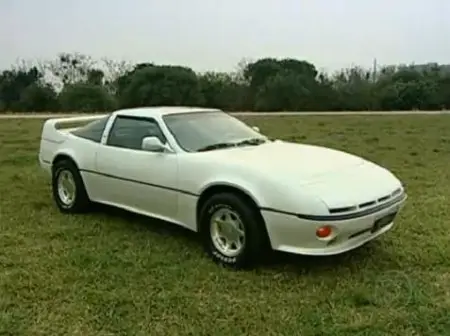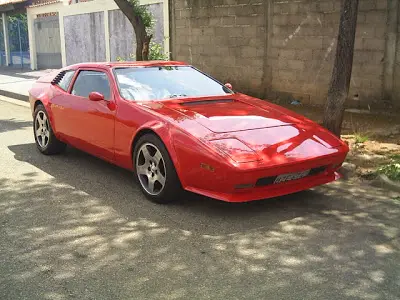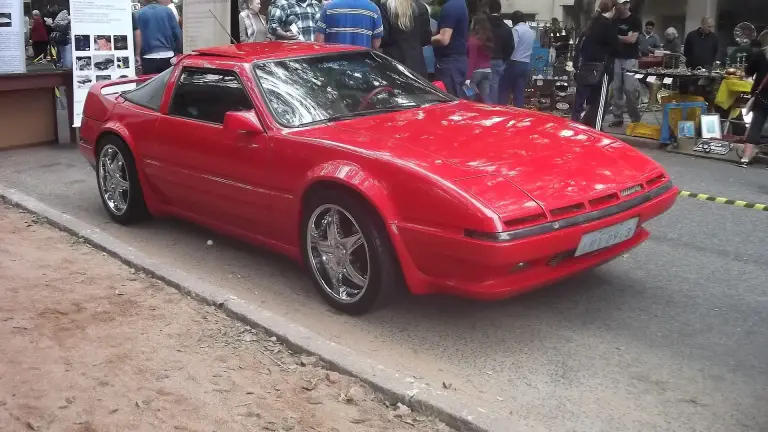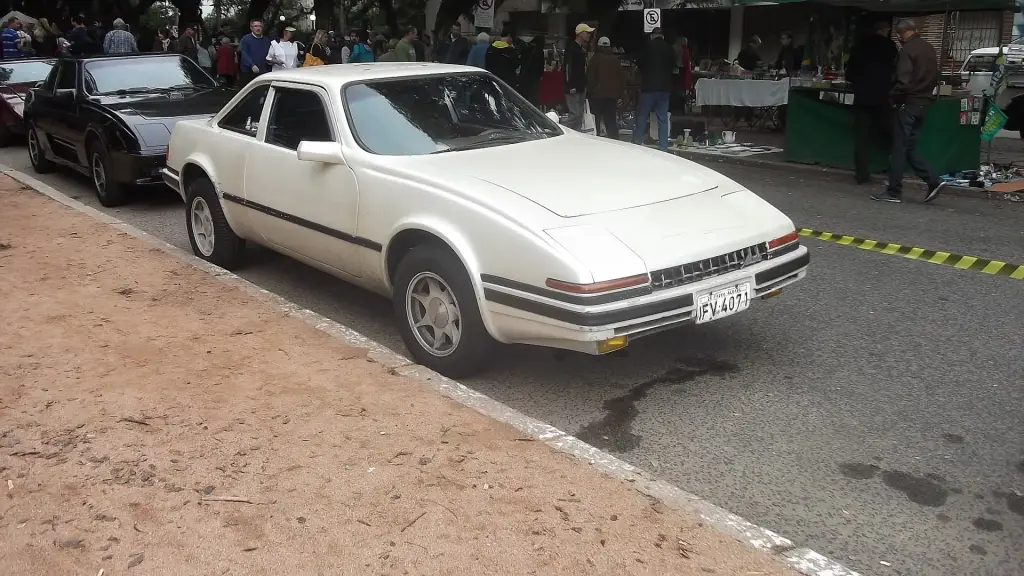
The Miura Saga was the most luxurious car the Brazilian maker Miura produced in the 1980s. Revealed at the 1984 Salão do Automóvel, it combined Volkswagen Santana mechanicals with pop-up headlamps, a talking trip computer and four-wheel disc brakes, and it stayed in production until 1988, when the Saga II took over.
Miura Saga at a glance
| Maker | Miura, Porto Alegre, Brazil |
|---|---|
| Production | 1984–1988, Saga II from 1989 |
| Revealed | Salão do Automóvel, 1984 |
| Mechanics | Volkswagen Santana |
| Engine | 1.8 at launch, 2.0 from 1988 |
| Gearbox | five-speed manual |
| Brakes | discs on all four wheels |
| Headlamps | pop-up |
| Equipment | talking trip computer, automatic speed control |
| Luxury items | dashboard television, leather seats, fridge |
| Sporting version | Miura 787 (1986) |
| Successor | Saga II (1989) |
History of the Miura Saga
A luxury coupé from Porto Alegre
The Saga was launched in 1984 as one of the most luxurious cars of the marque. It used mechanicals similar to those of the Volkswagen Passat TS and came with a television built into the dashboard, leather seats, a trip computer and a fridge, equipment that raised the price of Miura cars considerably. It was revealed at the Salão do Automóvel of 1984 with a long list of electronic accessories: a “talking” trip computer, automatic speed control and pop-up headlamps among them. The mechanical highlight was disc brakes on all four wheels, and the car used Volkswagen Santana mechanicals. It began with a 1.8-litre engine and from 1988 used a 2.0-litre unit.
The 787
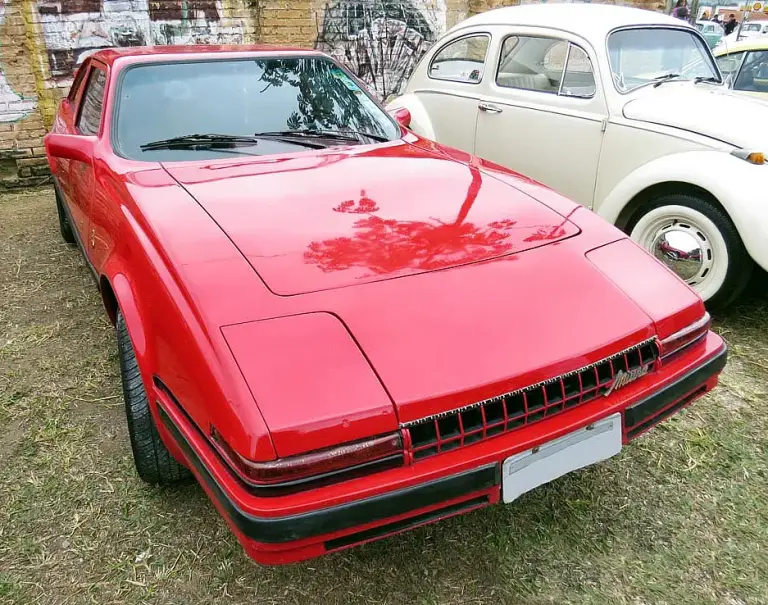
Two years after the launch came the 787, an improved and more sporting version of the Saga in which the Volkswagen AP 1800 engine began to be used. It kept the electronic equipment and the pop-up lights of the standard car but added performance, and it remained part of the range alongside the Saga.
Saga II
The first generation lasted until 1988. In 1989 Miura launched the Saga II with a new design and a wraparound rear window, which together with the side windows formed a single piece of glass. It was one of the two big launches of 1988 and 1989, the other being the Top Sport, and it carried the marque into its final years before series production ended in 1992.
Design and features
- Talking trip computer: the car announced its warnings and information by synthesized voice.
- Pop-up headlamps: hidden lights gave the Saga a clean nose.
- Four-wheel disc brakes: the mechanical highlight of the model in 1984.
- Dashboard television: part of a luxury package that also included leather seats and a fridge.
- Automatic speed control: cruise control was unusual on a Brazilian sports car of the period.
Miura Saga versions
- Saga 1.8 (1984–1988): the original car with the smaller engine.
- Saga 2.0 (1988): the same body with the 2.0-litre engine.
- 787 (1986): an improved, more sporting version with the Volkswagen AP 1800 engine.
- Saga II (1989): new design with a wraparound rear window forming one piece with the side glass.
The Saga stood next to the Sport and the later X8 in the Miura range. More cars from the marque are in the Miura collection.
Sources
- Miura Saga, Portuguese Wikipedia: production years, equipment, engines, Saga II
- Miura (automóveis), Portuguese Wikipedia: luxury equipment, the 787, place in the range