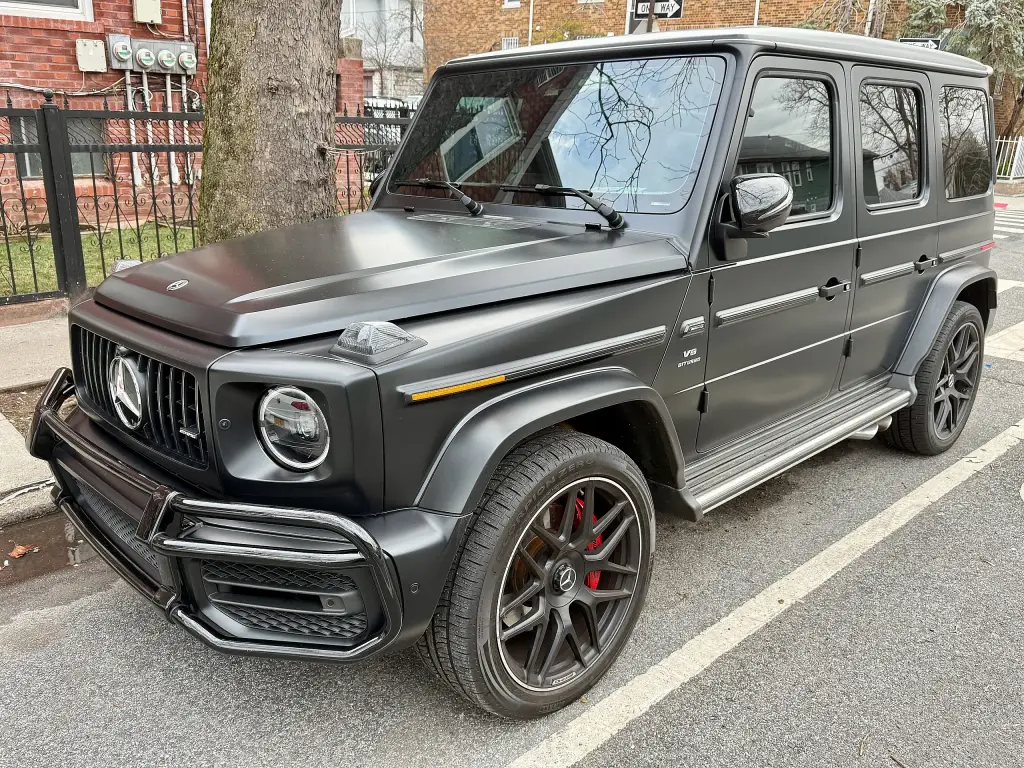
The Mercedes-Benz G-Class, colloquially the G-Wagon or G-Wagen (short for Geländewagen), is a four-wheel-drive luxury SUV sold by Mercedes-Benz. It was originally developed as a military off-roader, and later more luxurious models were added. In some markets it was sold under the Puch name as the Puch G until 2000.
Mercedes-Benz G-Class at a glance
| Maker | Mercedes-Benz (with Steyr-Daimler-Puch) |
|---|---|
| Development started | 1972, Daimler-Benz and Steyr-Daimler-Puch |
| Civilian sales | from 1979 |
| Style | boxy, body-on-frame |
| Differentials | three fully locking |
| Second generation | W463, 2018 |
| 400,000th built | 4 December 2020 |
| 500,000th built | April 2023, one-off agave green car |
| Production span | 47 years, only the Unimog is longer at Daimler |
| Military name | Wolf |
English Wikipedia is the only source used here, so the facts were not cross-checked against a second source; figures are the maker’s claims.
History of the Mercedes-Benz G-Class
From the Shah to the showroom
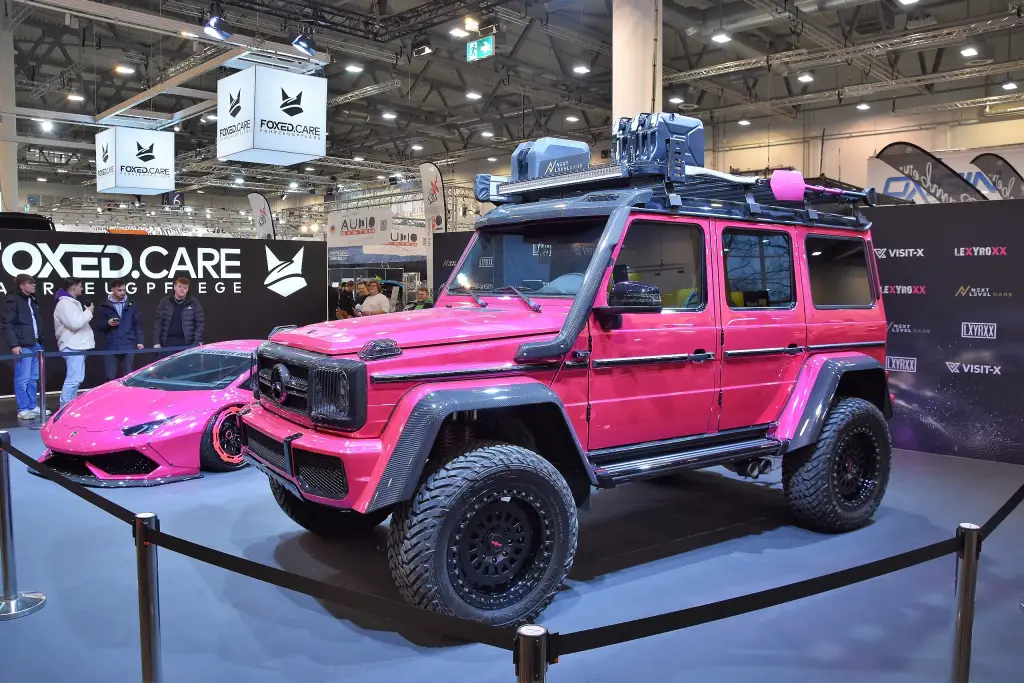
The G-Class was developed as a military vehicle after a suggestion by the Shah of Iran, Mohammad Reza Pahlavi, to Mercedes, and was later offered as a civilian vehicle in 1979. Development started in 1972 with a cooperative agreement between Daimler-Benz and Steyr-Daimler-Puch in Graz, with Stuttgart engineers in charge of design and testing and Graz of production plans. The first wooden model was shown to management in 1973. The first military to use it was the Argentine Army, beginning in 1981; at least one was captured in the Falklands and later served with the Royal Air Force. The Peugeot P4 was a French licence-built variant.
Still in production
The G-Class is known for its boxy styling and body-on-frame construction and has three fully locking differentials, a rarity among passenger vehicles. Despite the unibody GL-Class of 2006 as an intended replacement, it stayed in production as one of the longest-produced vehicles in Daimler’s history, 47 years, with only the Unimog longer. In 2018 the second-generation W463 arrived with a heavily revised chassis, powertrain, body and interior; the 400,000th unit was built on 4 December 2020 and the 500,000th, a one-off agave green car honouring the 1979 press photo of a jumping W460 240 GD, in April 2023. In 2023 Mercedes-Benz announced plans for a smaller “little G”.
Design and features
- Diffs: three fully locking.
- Frame: body-on-frame.
- Longevity: 47 years of production.
Mercedes-Benz G-Class versions
- W460/W461 (1979–): original generation.
- W463 (2018): second generation.
- AMG G63: seen in photographs; not described in the source read.
More Mercedes-Benz cars are in our Mercedes-Benz collection and more supercars in Exotic Cars.
Sources
- Mercedes-Benz G-Class, English Wikipedia: history, development, production